














Reject the False Idol of the Cold, Distant God


Usually, I have difficulty choosing a Lenten goal or devotional. This year, I found my spiritual and physical life interrupted and a new sense of what it means to be in the “desert of Lent.” That first week, I awoke in the ICU with a BiPAP mask strapped to my face.
I was in the hospital after dialing 911 amidst the worst asthma attack I’ve ever had. I don’t remember much between the call and being taken to the hospital, but I distinctly remember the reassuring voice of the ICU nurse explaining everything to me. I was thankful to be alive, but other thoughts would come to me in my hospital bed.
A strange thing happened at the end of the first day, when I decided I should pray. I was able to give thanks for the hospital staff and for the people who had been praying for me, but I paused when it was time to ask God to heal me. I was unable to form the words, and I felt a peculiar sense of dread. This was not me doubting the Lord’s existence but His goodness. I felt like Job, proclaiming that the Almighty had my heart faint, and I was in fear of what He had in store for me.
Spiritual Reading in Recovery
I didn’t have any of my books in those first days in the ICU. My brother visited me the next day and brought the only book he could find in my pile, a copy of Graham Greene’s The Power and the Glory. I did find comfort in the fictional account of a priest enduring calamities, but I still wrestled with the feeling I had on my first day.
However, I did discover one book on my phone that I needed to read: God Most Powerful by the exorcist, Fr. Gabriele Amorth. I have long been a fan of Fr. Amorth and have read this book before, but it was different reading it this time. While most of the good priest’s books concern spiritual warfare and his ministry as an exorcist, this book is a re-proclamation of a truth many of us forget: that God loves us and desires us to be with Him.
“When it comes to evil,” according to Fr. Amorth, “we must necessarily recognize the work of the angel of darkness, who preaches, again and again, a single message: ‘God does not love you.’” Somehow, I had internalized this demonic message. As Fr. Amorth notes, it is common for many of us to adopt a religious ideology that disfigures the face of God, one that sees Him as an invisible taskmaster that we are forced to oblige, “as if God had need of us and not vice versa.”
I have been Catholic for the majority of my adult life, and yet I had made a false idol. I am thankful for this revelation, for, as Fr. Amorth notes, “We begin to understand that God is truly God when we recognize that we do not know Him as well as we ought.” So often, we think we have God figured out, only for Him to reveal something great to our hearts.
Encountering God as He Truly Is
As I read, prayed, and meditated over Lent, I found that I had been failing to know the true God because I had erected a false one in His place. I was not approaching Him like a child to his loving Father, but more like a servant to what Fr. Amorth called “a cold and authoritarian Eternal Father.” As I struggled with this image, I had to wonder how much of my spiritual life had been hampered by this false image. However, I was also in wonder at the grace of God for reaching out to me even as I insisted on this false perception of Him.
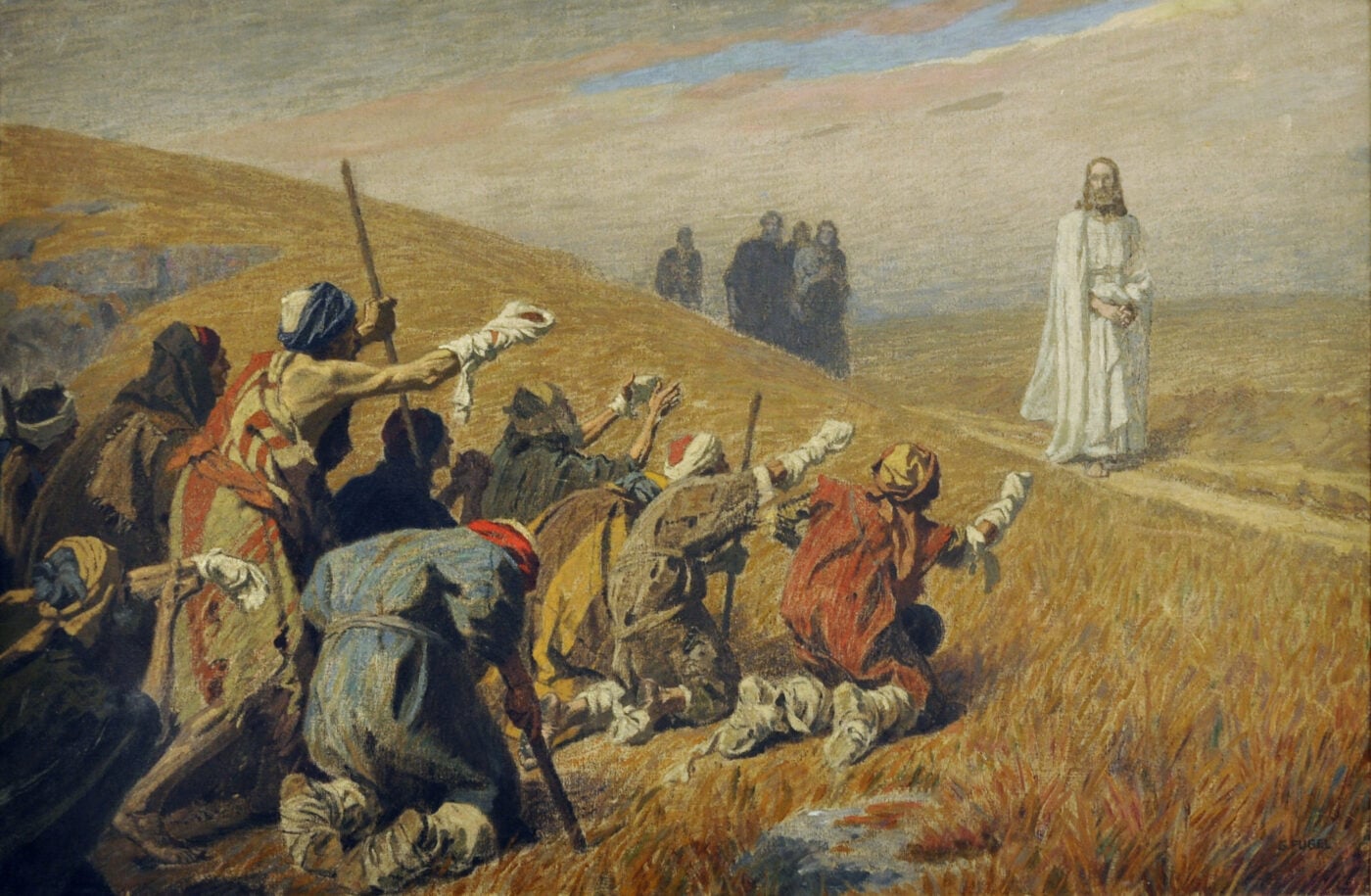
When we read the Gospels, we have to confront how lacking our image of God has been. Christ reveals a Father who is more like the father in the parable of the prodigal son, one who runs to meet his lost and broken child on the road. The Father revealed here and in other parables is not the one I had built up in my mind, but was, in fact, merciful and wants to proclaim to everyone, “My son was dead, but now he lives!”
“In Christ crucified, God’s concrete love for humanity is fully revealed,” proclaims Fr. Amorth. God knows us, knows our innermost thoughts, and He loves us. Truly, He loves us so much that He was willing to take on our humanity in order to redeem it.
As we continue to proclaim the joy of Easter, let us ask the Lord to reveal Himself to us as He truly is. Pray that the Father will embrace you as you are and that you’ll also praise Him for who He is.
“The joy of the Son is in knowing He is loved by the Father, precisely in His suffering on the Cross. The joy of the Father is in seeing before His own eyes the Son perfected—a man who faces death with full maturity.” – Fr. Gabriele Amorth, God Most Powerful
Photo by Jannik Zürcher on Unsplash