





















Conscience Is Not What You Think It Is, Part 1


Few words in contemporary Catholic discourse are used more often, and more carelessly, than conscience. How many times have we heard it? “I have to follow my conscience.” Very often, the phrase is treated as if it ends the discussion. No correction is possible. No appeal can be made. The individual conscience is presented as a final court of appeal, beyond criticism and even beyond truth.
However, that is not the Catholic understanding of conscience. The Church teaches that conscience is real, sacred, and binding. She also teaches that conscience must be formed, that it can be mistaken, and that it is not a law unto itself. If conscience is detached from truth, then morality collapses into mere good intentions, and good intentions are never enough to save us. As the old saying goes, “Hell is paved with good intentions.”
The confusion on conscience is doing great damage. It affects catechesis, confession, moral teaching, and even the way ordinary Catholics think about freedom. If conscience simply means “what I feel at peace with,” then almost anything can be justified. That does not bring freedom but chaos.
Conscience is not personal preference
Modern culture usually distorts conscience in one of two ways. On the one hand, conscience is reduced to psychology. It becomes nothing more than an internalized voice of parents, teachers, priests, or social pressure. On the other hand, conscience is inflated into personal authenticity: if I feel sincere, if I feel peaceful, if I feel true to myself, then my choice must be right. Neither view is Catholic.
The Christian tradition does not treat conscience as a leftover emotion, nor as a sovereign inner oracle. Scripture already points in a different direction. St. Paul writes that even the Gentiles, who do not have the Mosaic law, can still show that “the law is written on their hearts,” while their conscience bears witness (Rom. 2:14–15). Conscience, then, is not something we invent for ourselves. It is rooted in the moral structure of the human person. This is why conscience is sacred: not because it is private, but because it stands under truth.
St. Thomas Aquinas
St. Thomas Aquinas gives the classic Catholic account. For him, conscience is not a separate faculty or a mystical inner voice. It is an act of reason, cum scientia—literally, “with knowledge.” As he explains, conscience implies the application of knowledge to something concrete.
Conscientia, secundum ipsam nominis originem, importat ordinem scientiae ad aliquid: dicitur enim conscientia quasi cum alio scientia. (ST I, q. 79, a. 13)
In other words, conscience is the judgment by which I recognize that something I am doing, have done, or am about to do is right or wrong, obligatory or forbidden. That definition matters because it restores conscience to its proper dignity. Conscience is noble not because it expresses my inner self, but because it is ordered to the truth about the good.
Aquinas distinguishes this from synderesis, the habitual grasp of first moral principles—above all, that good is to be done and pursued, and evil avoided (cf. ST I, q. 79, a. 12; I-II, q. 94, a. 1). Conscience does not generate those principles; it applies them. But that application is not automatic. It requires prudentia, prudence, which Aquinas defines as recta ratio agibilium—right reason about things to be done (ST II-II, q. 47, a. 2). Thus synderesis gives the basic moral orientation, conscience (cum scientia) applies that moral knowledge to a particular act, and prudence judges rightly within the concrete conditions of action.
Conscience, then, is not enough by itself. It is part of the moral life, but not the whole of it. It must be formed by truth and strengthened by virtue.
I often put it this way: the moral life integrates the good and the just in prudence—bonum iustum in prudentia. This is what allows one to judge the concrete moral act in its wholeness: object, circumstances, and end (cf. ST I-II, q. 18, a. 4). It is never enough to isolate only one element. Too often people justify an action by appealing to circumstances alone, while neglecting whether the act is intrinsically evil or whether the intention is rightly ordered. Prudence holds all three together in the unity of moral judgment.
Yes, you must follow conscience, but there is more…
Aquinas famously teaches that a person must follow his conscience, even when it is mistaken (ST I-II, q. 19, a. 5). That line is often quoted today as though it settles everything, but it clearly does not. Why must one follow his conscience? Because to act against what one judges to be good is to will against the good as one sees it. Yet that does not mean the judgment itself is correct.
Aquinas immediately makes clear that conscience can be erroneous, and that a will following erroneous reason is not therefore always good (ST I-II, q. 19, a. 6). This is the point so often missed today. Conformity to conscience is a necessary condition for a good act, but it is not a sufficient one. My conscience must not only be sincere, but it must also be true. So, conscience is binding, but it is not sovereign.
This is why the formation of conscience is very important. A mistaken conscience does not excuse everything. Aquinas teaches that if ignorance is truly unavoidable, then a person may not be morally culpable. However, if ignorance comes from negligence, carelessness, vice, or refusal to seek what one is obliged to know, then that ignorance is itself blameworthy (ST I-II, q. 19, a. 5; ST I-II, q. 6, a. 8).
This is especially important in serious moral matters. Aquinas even says that failure to learn the divine law can itself be culpable (ST I-II, q. 88, a. 6 ad 2). This is especially true in different states of life. For example, as a priest I am obliged to know the teachings of the Church. I cannot go before an ecclesiastical tribunal and say that I did not know and be excused from my errors in guiding a soul. I am responsible for the souls God puts on my path. The Catechism says the same in different language: conscience must be informed and moral judgment enlightened; “feigned ignorance and hardness of heart” do not excuse (CCC 1783–1785; 1859–1860).
That should sober us. We live in a culture that constantly tempts us to excuse ourselves. We appeal to confusion, complexity, pressure, upbringing, or bad catechesis. Sometimes these do lessen guilt, but they do not erase responsibility. There are truths we are bound to seek. A Catholic cannot simply say, “My conscience says this is fine,” and imagine the matter settled.
Author’s Note: In Part 2, we will expand upon the need for conscience to be joined to virtue; its relationship to truth and freedom; and our duty to form our consciences.
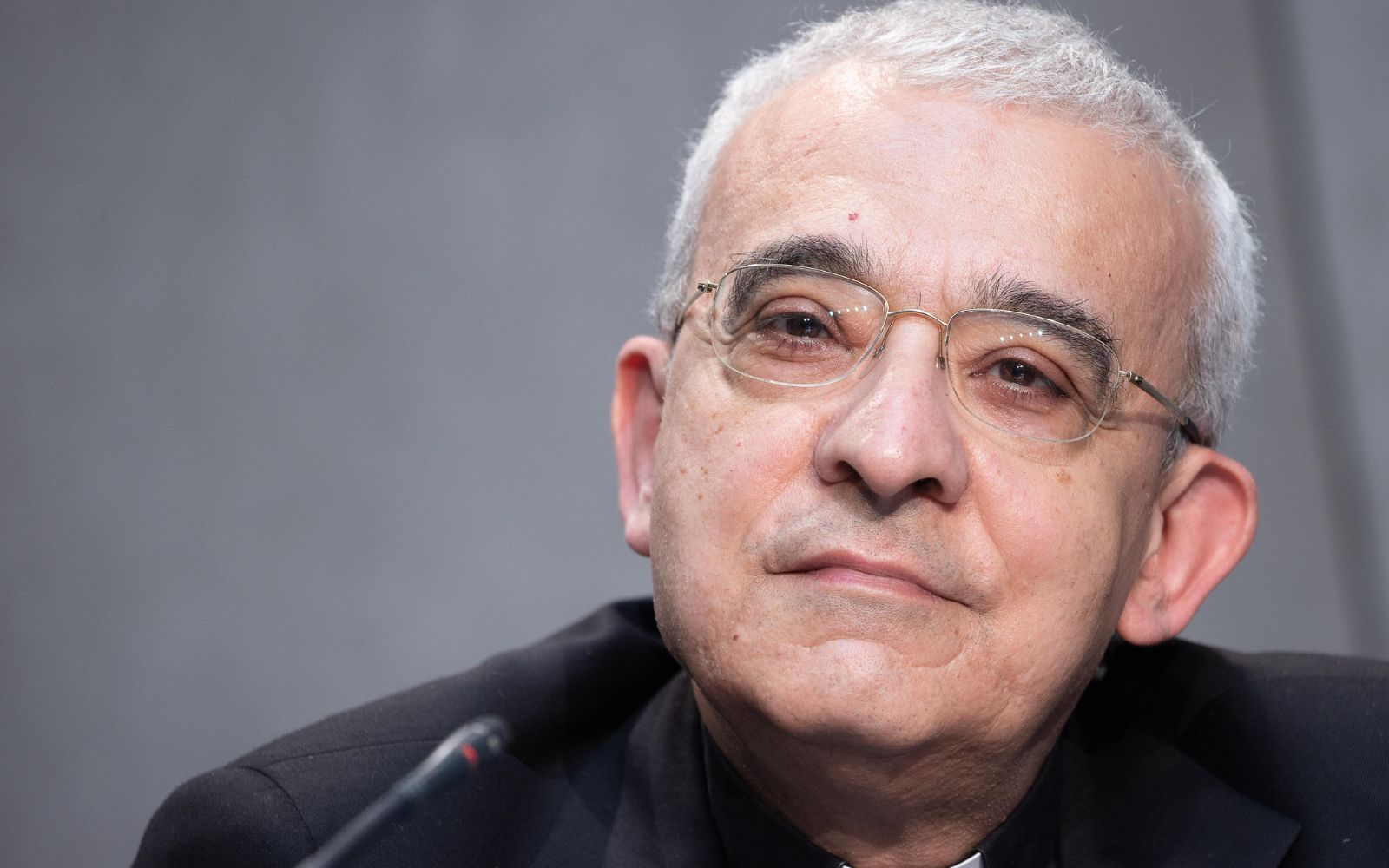
Editor’s Note: This is the first article in a new CE original series on Bioethics & Culture, by Fr. Francesco Giordano, tackling the challenging moral issues of our day.
Photo by Jose A.Thompson on Unsplash