














Indiana bishops put Eucharist at center of call to ‘integral ecology’ in new pastoral

(OSV News) — A new pastoral letter from the Indiana Catholic bishops calls on the faithful to see God-given human life and creation as interwoven, and to live “eucharistic lives as we care for both our human community and for God’s good world.”
On April 8, the Indiana Catholic Conference made public “Integral Ecology: A Sacramental Vision,” a 32-page document that is addressed both to Christians and to “all people of good will in the state of Indiana.”
Written during the 2025 Jubilee Year of Hope and finalized Holy Thursday April 2, the bishops’ pastoral “reflects on the social and ecological challenges of our time” through a Christian understanding of that virtue, according to a press release announcing the document.
The letter was commended by Cardinal Michael Czerny, prefect of the Vatican’s Dicastery for Promoting Integral Human Development, who extended Pope Leo XIV‘s blessing to the bishops.
What is ‘integral ecology?’
Drawing on an array of sources — including Scripture, papal teaching, saints’ writings, scientific research and government data — the bishops wrote, “The social, economic, and political reality of human life and poverty is not disconnected from environmental issues concerning polluted air, water, and land, decreasing biodiversity, and habitat destruction.”
Rather, the bishops said, “human ecology and natural ecology are united in what Pope Francis called ‘integral ecology,'” referencing the late pope’s 2015 encyclical ‘Laudato Si.’“
Likely coined by marine biologist Hilary B. Moore in 1958, the term “integral ecology,” as explained by Pope Francis, embraces a holistic view that care for fellow humans and for creation are interrelated as part of God’s design.
The Indiana bishops explained that integral ecology, put simply, recognizes: “We belong to the earth and to the Church.”
Noting that they had previously “written separately about ecology, poverty, and the Eucharist,” the bishops said their latest pastoral was composed “from the perspective of ‘integral ecology’ that unites all three realities together.”
The bishops said that “creation and redemption go together,” pointing to the Eucharist as the sacrament in which “we see and experience the fullness of being both ecclesial and ecological citizens.”
“The Trinity’s first gift of love is all of creation, and the second is our redemption in Jesus Christ through the Holy Spirit,” they wrote.
‘Noah’s Ark’ of Indiana ecosystems suffering
Surveying the state’s landscape from prehistoric times to present, including original Indigenous settlements and European colonization, the bishops highlighted the “Noah’s Ark of Indiana ecosystems.”
Those ecosystems can be delineated by 12 natural regions and by various watersheds, especially one common to all five Indiana dioceses — the Wabash River watershed, which flows into the Ohio River.
“Sadly, our state of Indiana, with its 63,000 miles of streams and rivers and inland lakes and reservoirs, has some of the most polluted water in the country,” the bishops lamented.
They specified that E. coli bacteria, found in human and animal waste is “the single greatest contributor to stream impairment,” rendering almost 75% of the state’s streams and rivers “unsuitable and unhealthy for human contact.”

The state has also lost significant biodiversity, with almost a quarter of the Wabash watershed’s 75 species of freshwater mussels now locally extinct, the letter said.
“One of the most drastic ecological changes in our state since settlement times has been the loss of wetland habitats,” added the bishops.
Ravages of industrialized agriculture
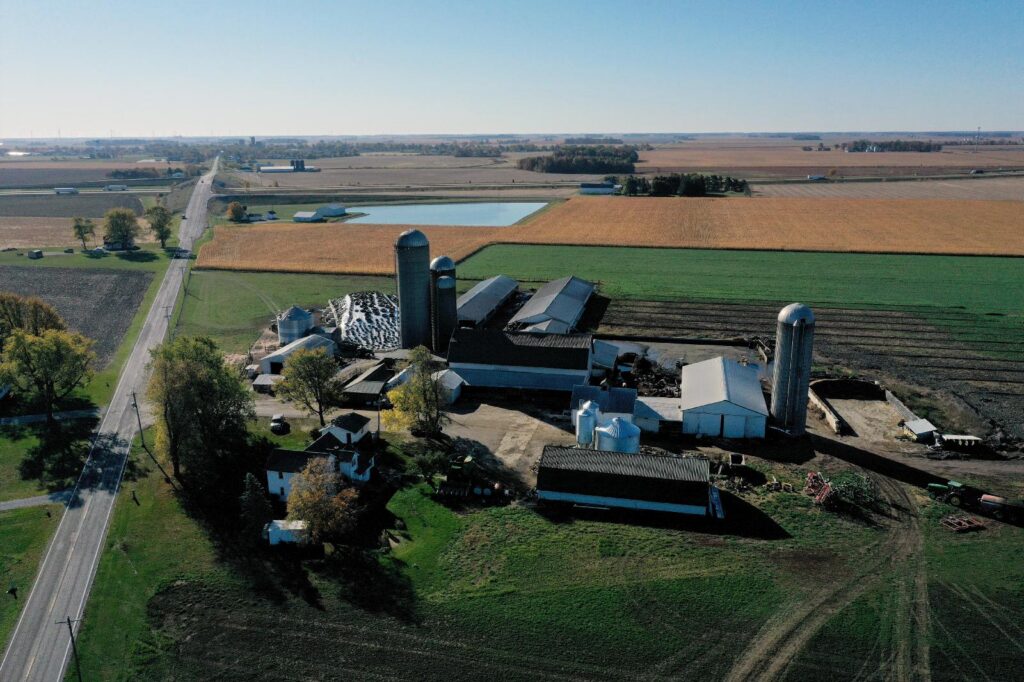
They also highlighted the ravages of industrialized agriculture, which — while generating “amazing productivity” — also has “significant relational, social, economic, and ecological repercussions.”
Among the ecological downsides are fossil fuel dependence, soil damage, pollution and runoff, and loss of genetic diversity, they said.
“Socially and economically, industrial agriculture prioritizes profit at the expense of the ecosystem, depopulates rural communities, and subjects farmers and their families to excessive debt and financial instability,” the bishops stated.
“Instead of an industrial agriculture model that separates human and natural ecologies, we advocate for an ecological agricultural model that fits the agricultural economy into the ecology,” they said.
Ecological and social crises in Indiana
The bishops also expressed “particular concern” for “the welfare of migrant farm workers who, like all migrants, are to receive ‘just and dignified treatment.'”
“They often depend on their employers for housing, food, and transportation; sometimes the living conditions are inhumane with overcrowding and with windows and doors lacking on trailers,” the bishops said. “They are at risk of exploitation, wage theft, human labor trafficking, and health risks from heat stress, tuberculosis from crowded living conditions, and pesticide poisoning.”
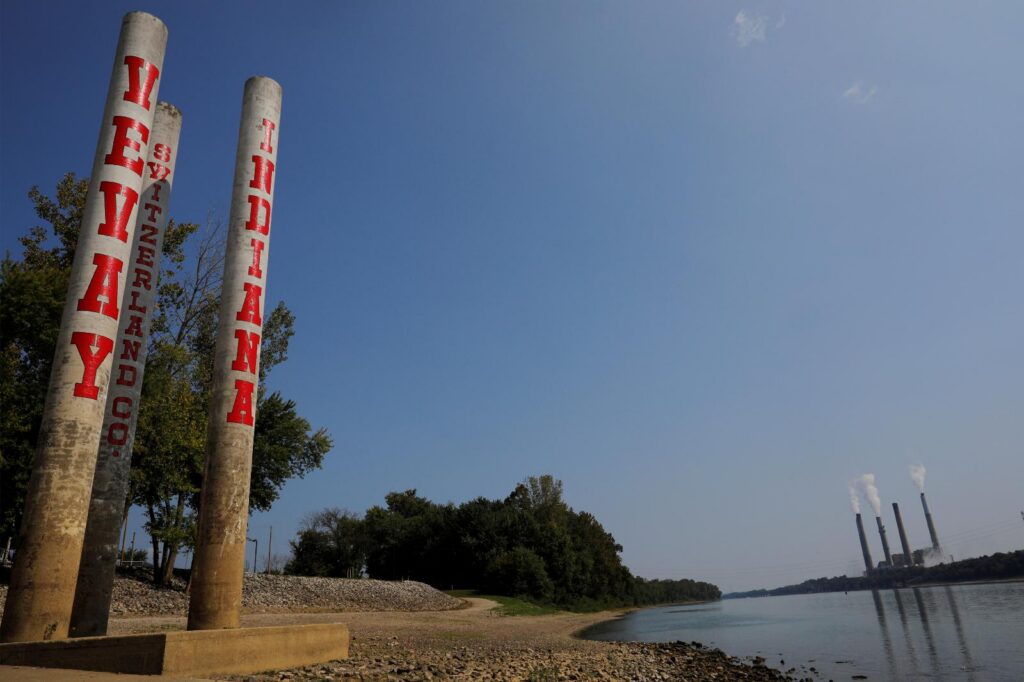
Noting that Indiana is one of the nation’s “top ten coal-producing states,” and the “third largest coal-consuming state in the nation,” the bishops said fossil fuels — while enhancing human living standards — have exacted a price in pollution, contamination and negative health effects.
In their letter, the bishops acknowledged the “great spiritual and moral challenge” of navigating “the relationship between technology and wisdom” in addressing such concerns.
The bishops said, “At the core of the ecological and social crises is a human heart enclosed in upon itself, alienated from God, our neighbor, and creation.”
Seeking healing in the Sacred Heart
In contrast, they said, “The Sacred Heart of Jesus seeks to draw each human heart into communion with Himself and through Him into communion with the Trinity.”
Exhorting the faithful to avoid consumerism, the bishops urged the faithful to put their faith into action through the spiritual and corporal works of mercy — and by recovering Sunday, the Lord’s Day, “as a sacred time of worship in the Eucharist, of rest, and of healing relationships.”
They underscored the importance of living the virtues — such as “temperance, fortitude, justice, and prudence” — in stewarding God’s gifts, while citing multiple examples of Catholic schools and institutions that have taken concrete steps to implement renewable energy sources such as solar panels.
“Nature is not just stuff, but a sign to us of God’s loving care and presence,” they wrote, adding, “Our response in faith to God for the gift of creation is thanksgiving and praise.”
Gina Christian is a multimedia reporter for OSV News. Follow her on X @GinaJesseReina.
The post Indiana bishops put Eucharist at center of call to ‘integral ecology’ in new pastoral first appeared on OSV News.