





.JPG/_jcr_content/renditions/cq5dam.thumbnail.cropped.750.422.jpeg?#)









The New Law, Nourishment of the Heart


The Sermon on the Mount raises the moral bar, as it goes beyond the mere letter of the Law into the spiritual depths of the heart. It challenges us to cultivate hearts attuned to the ways of God. Our righteousness is to exceed that of the scribes and Pharisees by not simply avoiding murder, adultery, and false oaths, but by living out the spiritual core of these commands from the heart.
Using the Spiritual Senses
As this Sunday’s First Reading points out, in the Lord’s Word there is the choice between fullness of life and death. In Christ’s Gospel teachings, St. John Paul II has observed that we have not so much an “accusation” but a “promise”—not an accusation against lust but a promise of the grace of integral purity. What God commands, He gives us the grace to live out. There is a promise of grace, flowing from our life in Jesus, that shapes our hearts to be like His. It also gives us a foretaste of what the Kingdom of Heaven will be like when we all will live in peace and concord with purity of heart and intention, putting God first and living fully in the Kingdom of Love.
What we just did there, using John Paul II’s insight, was a little allegorical, moral, and anagogical interpretation. It flows spontaneously from the Christian mindset and is already at work in the New Testament itself. The Sermon on the Mount is a portrait of Jesus’ own heart (allegorical), and through our union with Him we enjoy the grace to live out the high calling of our life in Him (moral), which points us to the fulfillment of this life of love in Heaven (anagogical).
It makes all the difference in the world to read the Sermon on the Mount, not as an ethical standard we can hardly measure up to on our own, but as the graced possibility of what is open to us now that we live in union with Jesus. We might ponder on what difference Jesus has made in our lives when our own moral resources have seemed to be insufficient or completely exhausted.
The Bible’s Very Purpose
Why did God give us the Bible? St. Augustine’s answer is that God gave us the Bible to help us grow in love of God and neighbor. Hence there is a grace offered in the living Word of God specifically to help us live out what we read about and to grow in love. St. Augustine even says that the right interpretation of a passage is one that causes us to grow in love of God and neighbor (De Doctrina Christiana 1.35).
We surely want to keep in mind other standards of truth as we read the Bible, but Augustine’s point holds; God’s purpose and end (telos) in giving us His Word is to make us grow in love of God and neighbor. So, when we pray with these demanding passages from the Sermon on the Mount, we should be ardently praying for the grace for the teachings to be actualized in our lives. We can trust in Jesus for this grace.
Nourished by His Word
In the Second Reading this Sunday, St. Paul speaks to the mature in Christ about the secret, hidden wisdom of God that illumines the eyes and heart in a mystical knowing and loving of God (cf. Eph. 1:17-18 and 3:14-19). This same secret, hidden wisdom is also revealed on the Cross. This connection is no mistake. The abundance of contemplation often comes to us precisely in the poverty and weakness of the Cross.
St. John of the Cross runs with the phrase, “a secret, hidden wisdom” to describe the mystery of contemplative prayer that unfolds precisely in the night of faith (Dark Night 2.16-17). Sometimes there is a subtle delight and consoling savory-ness to our contemplative engagement with the Word. At other times, we are very much in the arid and bare desert, but through persevering in prayer we find the gift of the hidden manna. Despite its blandness, this manna is the bread of angels. A meal that is not delightful still nourishes us! So it is with the Word of God; whether felt with consolation or not, we are nourished.
The three spiritual senses open up layers of the mystery of the Word and, as St. Gregory the Great notes, most of what we perceive cannot be put into words. It is about contemplative engagement with the Word, as God manifests Himself in a living encounter and releases His saving energies through His Word, whether we can say much about it or not.
So, as you pray with the Sermon on the Mount, taste and savor elements of Jesus’s heart that open up for you, especially as you abide in His Eucharistic presence. Rest in the secret and hidden nooks and crannies of God’s love. And pray ardently for the power of the Word to be unleashed as God’s grace flows forth to make our souls more fully like Jesus’ as we live out the Beatitudes.
Editor’s Note: This is the seventh article of a CE series on “Exegesis of the Word” by Fr. Ignatius Schweitzer, breaking open each Sunday’s readings for eight consecutive weeks. Catch up on previous articles here!
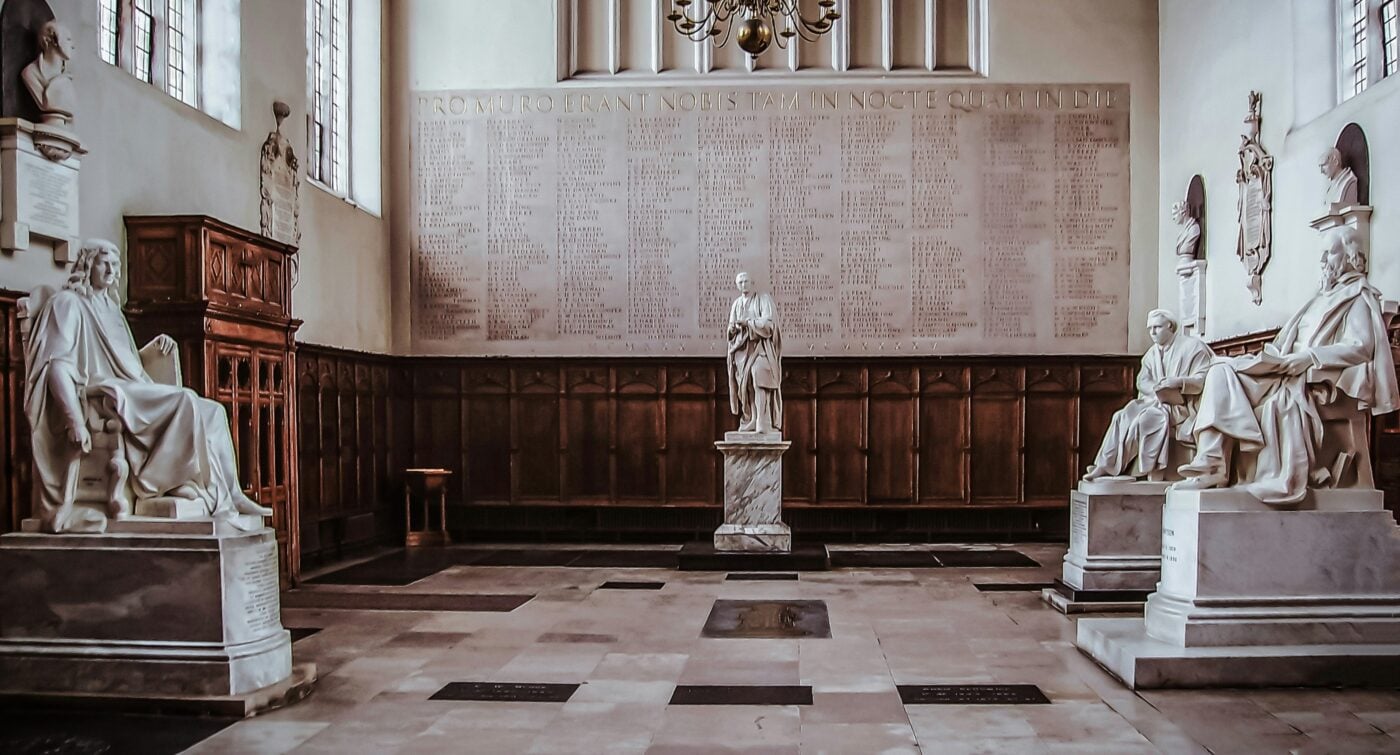
Photo by Andres Siimon on Unsplash