













Florida bishop: Alligator Alcatraz ‘not a solution; it’s an evil’

According to a Florida bishop, two Catholic dioceses in the state are struggling to establish pastoral ministry for inmates at the country’s newest immigration detention center — Alligator Alcatraz.
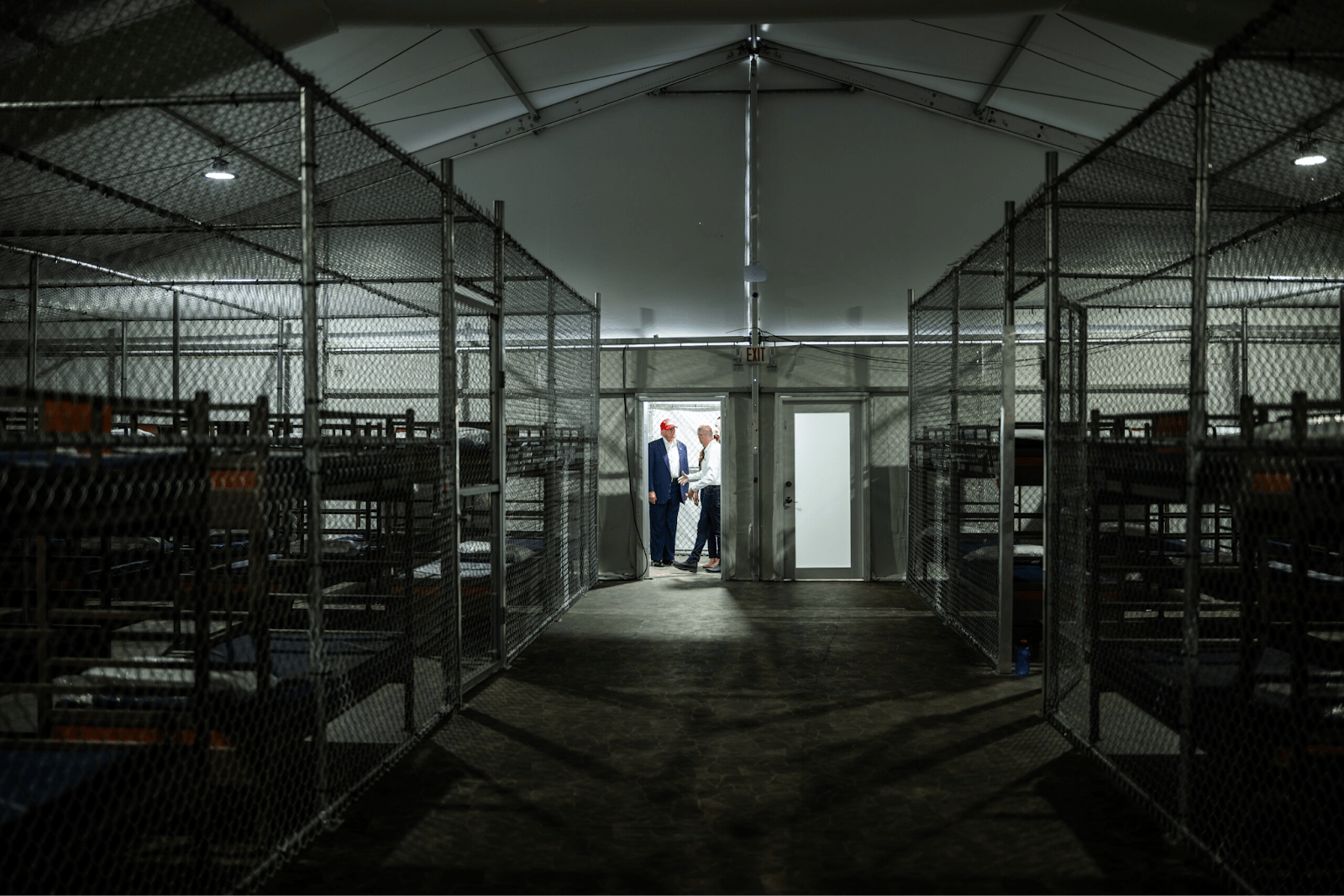
Located in the heart of the Florida Everglades, at the Dade-Collier Training and Transition Airport, immigration and government officials dubbed the new immigration detention center “Alligator Alcatraz” because of its remote location, surrounded by the Florida everglades and alligator-infested waters — a Floridian take on the infamous former federal penitentiary at Alcatraz Island.
Built in eight days, the center quickly became engulfed in controversy as government officials including President Donald Trump heralded it as a great achievement in an ongoing deportation campaign, and critics argued that the hasty construction would leave detainees exposed to the harsh Florida heat and rain.
Located in the Diocese of Venice but near the Archdiocese of Miami, Alligator Alcatraz has posed a pastoral conundrum as the two dioceses have been reportedly working together to establish ministry at the detention center but have not yet made inroads into chaplaincy there.
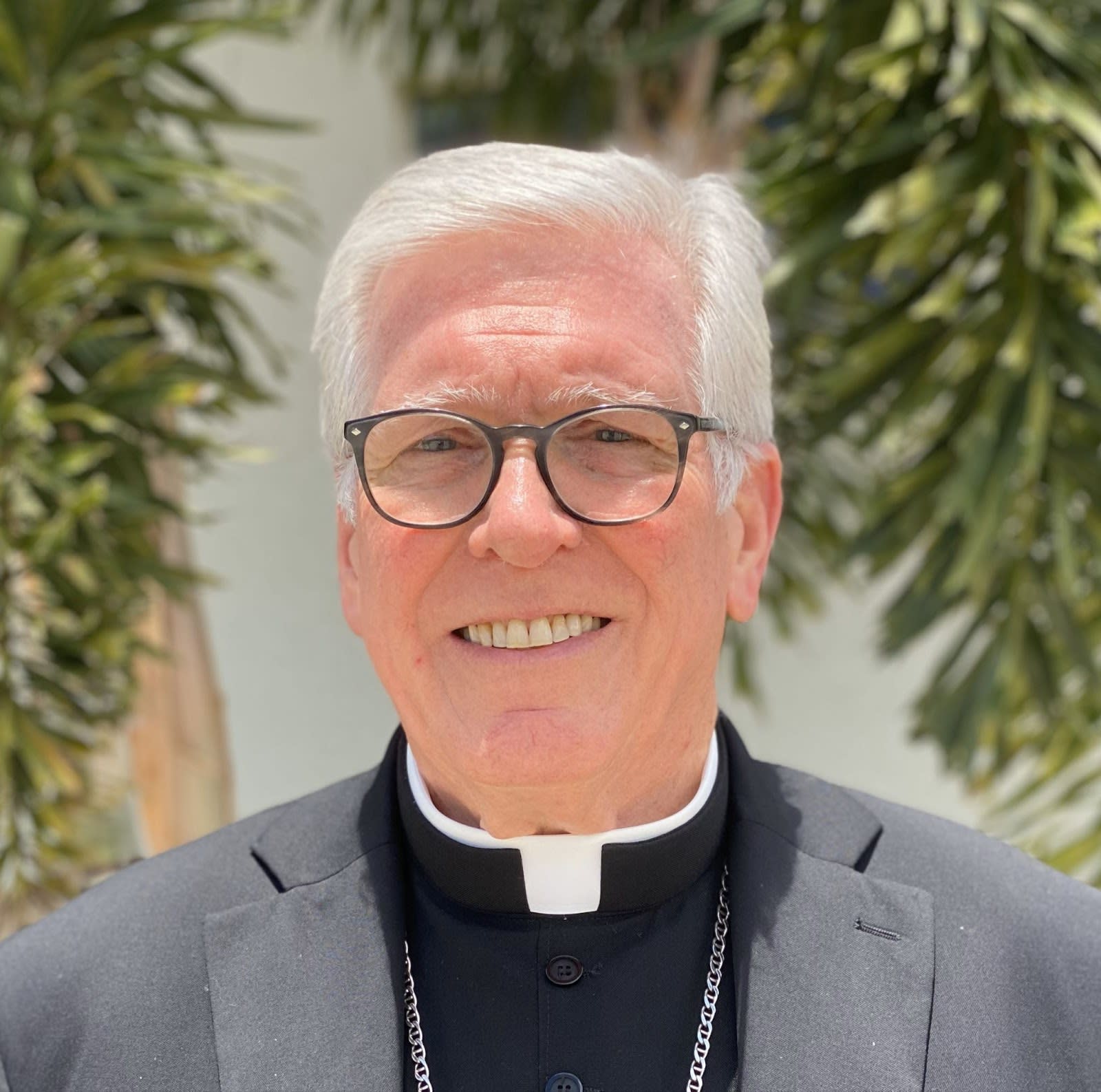
Bishop Frank Dewane of Venice talked with The Pillar about the pastoral challenges that “Alligator Alcatraz” presents, and his concerns about recent federal immigration policies.
This interview has been edited for length and clarity.
Bishop Dewane, what concerns do you have about “Alligator Alcatraz”?
Well, I think we have to be concerned for the wellbeing of each and every human being.
When we have to use terms like “Alligator Alcatraz,” and advertise the fact that there are pythons and alligators out there guarding it, this kind of language creates a hype that I think no human being really deserves.
I know that [the name] is supposed to speak about deterring people from escaping, but we have to look at decency and understand that yes these individuals may have violated a law, but they are not serious criminals.
We have to look at the fact that these are fathers, brothers, they have sisters, they have distressed relatives, their mothers, their parents are concerned about them.
Second, it is a very isolated area. If somebody were to need help out there it is going to take a great deal of time to get any medical attention, as they are far from any medical centers. It was quickly built in a very rural area subject to harsh weather conditions. The other day it rained out there and these facilities were flooded, and according to the news broadcast I heard, there were electrical cords and things in the water
This is the kind of facility these human beings — individuals made in the image and likeness of God — have been pushed into.
I think every human being has to raise their awareness and ask how we are treating someone else? They are not all criminals, far from it. But we are treating them as common criminals at best.
This detention center, these inhumane conditions that they are put in, it's not addressing at all the dignity of the human being. This whole idea of alligators and pythons and everything, are we back in the days of the Roman [Colosseum]?
I do not know what we are trying to prove. We consider Rome not to be a particularly civilized society.
I do not know why we are using these words — [Alligator Alcatraz] — or what we are trying to conjure up, but certainly it does not treat the dignity that resides in every human being.
The Church continues to propose reforms centered on respect for human dignity and promoting the common good of all. I don't believe this [facility] contributes to the common good of anyone.
I respect the role of the government to keep society safe, but the idea that we round up people who have entered the country illegally and put them in these facilities; I do not see the common good that's being done there.
I see an immigration system that is broken severely, and we are blaming those who came in because, maybe, we could not get our act together on the issue of immigration.
How does this new facility convey the government’s views on immigration?
Think about the Gulags back in Russia, Soviet Union, they did things like this at that time. They had a different issue, but they took people and they put them out in Siberia in a climate that is opposite what Florida is - it was very difficult to survive in.
You have geographic isolation. You have a group who were specifically identified. And we know of similar camps which have been in China, or in other countries.
I think we have to acknowledge what it is. It is taking a segment of society that's being blamed for a number of difficulties within the society in the day and put into an extreme punishment situation.
We can see [more easily] when other countries ignore that same dignity within the individual, but I think we have to take a look at ourselves.
At one point, before I was in the seminary, I worked and lived in the Soviet Union for a number of years, working for an American company. I can't help but say to myself: With what we are doing now down in Florida, and they're talking about building others, are we not somehow doing the same thing? That bothers me.
It bothers me a lot because I thought it was wrong then, and I do think it's wrong now. I thought that we could rise above things of that nature, but we have allowed it to happen. I do not know if it's greed, or what, but we have allowed whatever it is to kind of trap us.
How is the Diocese of Venice responding pastorally to the needs of people detained at Alligator Alcatraz?
The center just opened, and the difficulty is finding out who is in charge of the religious ministry in this center.
We are working with the Archdiocese of Miami also in that regard, because of the proximity between both dioceses. Right now we are trying to figure out who is in charge of this and who's going to respond to this, because we have left a lot of messages and there have not been return calls.
It has been made known to ICE that we are ready to extend pastoral ministry to this new location. But there has been an inability to be able to provide any clarity regarding clearance for religious services. Our people are clear to go into the state and federal institutions that exist within the diocese through our jail ministry.
Is it concerning to you that the two dioceses have not been able to make contact with ICE officials or authorities at Alligator Alcatraz in order to start offering pastoral care?
Yes, it is without a doubt concerning.
And that's how this concern has come about or how this activity has come about. But there are ongoing meetings between the state of Florida and ICE — I think with any bureaucracies, when you get involved with multiple agencies in charge, there are a lot of discussions of who is in charge of what.
I can imagine there are those discussions going on internally which is slowing down the process of allowing chaplains in.
The fact that the place was flooded this morning is concerning because it shows what is happening with those common areas. It can become very much a threat to the physical and spiritual health of all the people who are there.
And we go in not just to care for the inmates, but also to provide services to those who are working there, to the correction officials who do work within a facility. We go there to take care of everyone who is there.
Ministering to those who are incarcerated is a concern for the Church throughout the world.
I think if we look at the origin of many of these individuals being incarcerated, they are from traditionally Catholic countries. So we do have a concern to help make sure their needs are being met — and we know they’re not, because we can't, at this point, even get in.
We will continue in that dialogue to raise our concerns through the correctional channels that we have within the state of Florida. Hopefully they will be able to assist in making the appropriate contacts because they are individuals we’ve worked with for a long time already.
Immigration is a very controversial topic in the United States right now, especially among Catholics. Some Catholics point out that nations have a right to protect their borders, and that people who have immigrated illegally have broken the law, and should expect to be deported.
How would you respond?
Well, I think whatever we undertake in a targeted fashion must be humane and proportional. I think Alligator Alcatraz does not measure up to those words right now.
I do not believe every [such immigrant] is a criminal. Yes they entered illegally at a time, but our system is broken. Our system is truly non-functional. It needs to be reformed, it needs to be updated.
The bishops have spoken a long time about this phenomenon, [and what] needs to happen within our country. Any thoughtful observer can see the challenges that face us, and we have to enhance our immigration system. But it has to be done with respect, with human dignity and promotion of the common good.
I do not think that is happening right now.
The president says that undocumented immigrants are taking American jobs. And indeed, many people are concerned that such immigrants suppress wages unfairly, and that should be cause for deportation.
How would you respond to that claim?
I would go back to President Trump who has developed this “farm pass.” I grew up on a farm in Wisconsin. I know what farm work is like, I know what it entails. I do not know that we have existing within our population born here in the United States, many people who are going to work in those sectors. That's why when you look at the sector, it is loaded with immigrant workers.
It is a difficult kind of work and I think our young people do not want to do it, or very many Americans.
I did it for years growing up. It is very difficult and I do not think anybody is fighting [immigrants] for those jobs. I think the very fact that the president [has discussed] this pass for the agricultural sector speaks to the very point. People don't want those jobs.
Alligator Alcatraz seems to be the newest flashpoint for the culture wars surrounding immigration — some Americans herald increased deportation enforcement as a benefit for the U.S., and others decry it as a tragedy, a rejection of human dignity.
How would you encourage Catholics to navigate this complexity, and the division surrounding immigration, and places Alligator Alcatraz?
I think you have to begin by backing up a little bit and saying: “How did all of this happen? Are we really that inefficient at our borders?”
And I think the answer is “yes.” Okay. We failed there. We failed in lots of different ways.
Then we move on from that and ask, “How did we get our response to the immigration crises?”
Well, with quick political answers. Congress, we saw, has worked a long time to try different points.
If we look back 10 years, 20 years, something might've been able to solve the immigrant question a little bit, and the two political parties could not come together. Some of this is on political leaders, not willing to work together.
Now, we have to prioritize respecting individuals (and their dignity).
I think everyone acknowledges it is not a good system, but the blame then gets passed around and there is a lot of blame to go around. But in that whole process, solutions are not arriving. And this is not a solution. Alligator Alcatraz is not a solution. It is at best an evil along the way.
What solution to the immigration issues can the Church help provide?
The Church has put its voice up for a number of years on the fact that the immigration system is broken. And not only the Church, but all thoughtful observers are willing to see and acknowledge the challenges facing our country.
Serious reform is necessary to preserve safety and integrity of our borders and respect for individuals. But it is just not happening.
What can the Church do? The Church can preach about it and preach respect for individuals. We have to acknowledge these individuals may not speak our language, they do not look like what the majority of Americans look like, but they are human beings just as we are.
Nobody is better and the Church has to keep talking about and raising those instances.
As the bishop governing the territory where Alligator Alcatraz is located, what are your expectations for this controversial initiative?
We have to pray a great deal for a gift of peace. Only Christ can give the gift of peace.
We have to look at our society and ask how we can find peace in this situation? How do we find a common good? And this is not part of the common good. This is an attempt to meet maybe some political aim, and it's nasty at the end of the day.
We have to look for that peace, and that justice which is necessary.
Justice recognizes human dignity.
What's Your Reaction?
 Like
0
Like
0
 Dislike
0
Dislike
0
 Love
0
Love
0
 Funny
0
Funny
0
 Angry
0
Angry
0
 Sad
0
Sad
0
 Wow
0
Wow
0