

















Iowa priest theft prompted bishop’s sharp rebuke
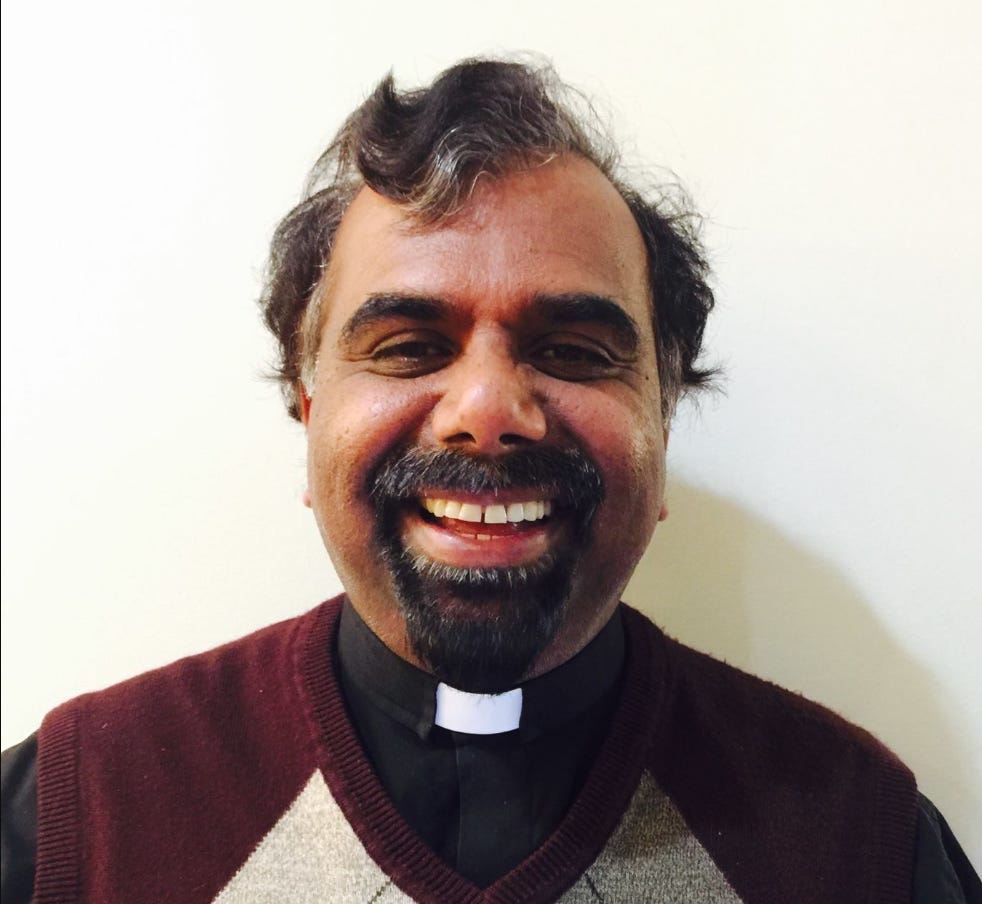
An Iowa priest has pleaded guilty to stealing money from a Catholic parish and placing it in a scam investment without consulting or informing the parish finance council.
A retired IRS investigator told The Pillar this week that amid a string of priest embezzlement cases across the country in recent years, the case of Father Thomas Thakadipuram is unusual in several ways – including the reaction of a local bishop, who reinforced the gravity of the priest’s crime, rather than petitioning for a lighter sentence.
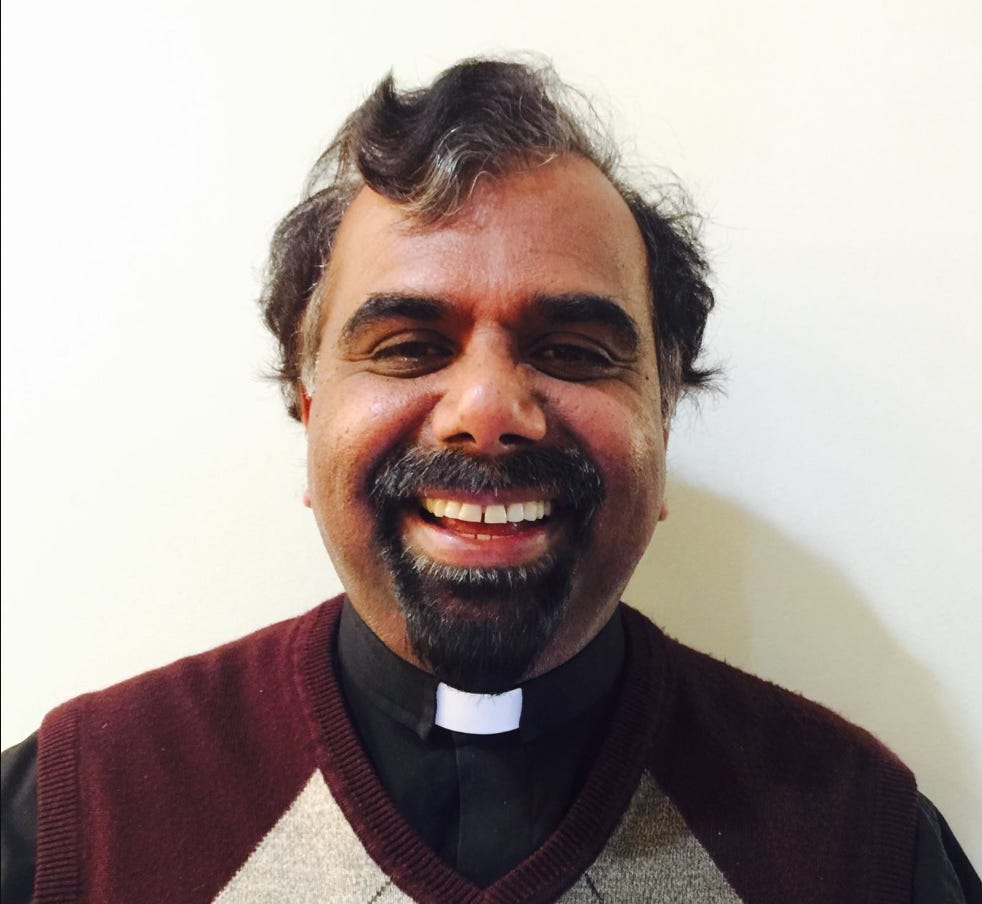
Thakadipuram, 62, was pastor of St. Mary Parish, Shenandoah, and St. Mary Parish, Hamburg – both in the Diocese of Des Moines – until February, when he was arrested and charged with six counts of first degree theft and one count of second degree theft.
Thakadipuram accepted a plea deal in October. He pleaded guilty to one count of theft in the first degree and one count of theft in the fourth degree.
The priest received both a 10-year prison sentence, which was suspended, and a 90-day prison sentence, which was suspended except for 14 days, with seven days credit granted for time already served.
He will serve three years’ probation and was ordered to pay $2,516.50 in retribution to the parish, as well as a $430 fine.
—
Prosecutors said that in January 2025, Thakadipuram misappropriated $164,000 in parish funds from St. Mary in Shenandoah, investing them in what turned out to be a scam investment, after he had lost hundreds of thousands of dollars of his own money and his family’s money to the scam.
Thakadipuram acknowledged taking the money, but said that as parish pastor, he had the canonical authority to do so.
Thakadipuram’s attorneys, asking the court for supervised probation rather than jail time, argued that the priest was the victim of a sophisticated scam, investing his entire life savings and some of his family’s money into what he believed to be a promising investment opportunity.
“Unlike many employee-theft cases, [he] did not spend the money for himself, did not ever intend for the church to lose any money in this,” his attorney said at the sentencing hearing.
But the state argued that Thakadipuram did not inform anyone at the parish or diocese that he was taking parish assets, which came from mature certificates of deposit. The parish finance council had voted to roll the proceeds over into new certificates.
State attorneys pointed to the parish finance council guidelines, which say the pastor should not go against the advice of the finance council, unless there is a serious reason for doing so, in which case he should clearly communicate his reasoning. In the case of certain extraordinary expenditures, the bishop should be consulted as well, the guidelines say.
Further, the state argued, the priest only used the church funds to try to recover his own money, when the scammers told him he could not pull his purported earnings out unless he invested more money.
“He didn’t even try to invest any of St. Mary’s money into this scheme until after he couldn’t get his own money out,” a state attorney said at the sentencing hearing, according to court documents.
When Thakadipuram realized that the money he had invested was gone, he told members of the finance council what had happened. However, several members of the parish community said in victim impact statements that the priest had a “cavalier attitude” about the incident, insisting insurance would pay for the losses.
—
The case follows a pattern of priests embezzling parish funds, said Robert Warren, a retired IRS investigator and professor of accounting at Radford University, who has conducted extensive research on priests who steal.
While the parish had internal financial controls, Warren told The Pillar, they “did not prevent Father Thakadipuram from transferring the proceeds of [several maturing certificates of deposit] to a non-parish account under his control.”
“A control that prevents this sort of behavior should be adopted ASAP,” said Warren, who has spent years advocating for tighter internal controls for parish finances.
The parish should have established procedures with the bank requiring at least two signatures before transferring money, he said. That way a second individual - possibly a finance council member - would need to sign off on the pastor’s actions.
Additionally, Warren said, “a procedure could have been worked out with the bank that all finance council members were given notice before an irregular transfer of this type was made.”
Warren noted that while the Thakadipuram case fits the mold of other parish embezzlement cases in some respects, it also deviates from the norm in several other ways.
For one thing, he said, it is common in cases of this sort to find parish and diocesan officials asking courts to issue light sentences for criminal offenders who have embezzled church money.
But according to court documents recently obtained by The Pillar, Des Moines’ Bishop William Joensen took a notably different approach.
As Thakadipuram faced sentencing for his theft, Joensen offered a strongly-worded victim impact statement to the court, emphasizing how much the financial crime had impacted the local Catholic community.
“This priest has apparently sequentially, deliberately forsaken his identity as both father and son, squandering an inheritance he has not produced,” Joensen said.
“The folly, presumption, arrogance, greed, and magnitude of sin are glaring … they are for me personally infuriating, among the other emotions I continue to experience…we pray justice is served.”
Warren noted that the bishop also “worked closely with the finance council to quickly insulate the parish from potential further harm by eliminating Father Thakadipuram’s access to parish funds, and visited the parish to inform them of the theft and shared a meal with them to hear their thoughts and concerns.”
Still, Warren said, it is not clear what the future holds for Thakadipuram. In other similar cases, he noted, the offending priest is often returned to ministry.
The Diocese of Des Moines released a statement after Thakadipuram’s sentencing, indicating that it plans to “seek justice in the canonical forum” — suggesting the likelihood of a canonical trial — and noting that Thakadipuram currently maintains the ability to function as a priest.
Thakadipuram indicated at his sentencing hearing that he would like to return to ministry. While Warren said that many priests convicted of similar crimes seem to return ministry quickly, the situation in Des Moines could be unique, as canonical penalties are infrequently applied in many U.S. dioceses for financial crimes.
But as to civil penalties, Warren questioned whether the sentence the priest is now facing will be enough to serve as a deterrent against future financial crimes at Catholic parishes.
“The punishment imposed by the Court — 14 days in jail, restitution of 2,516.50, and a $430 fine — may serve as a sufficient particular deterrent to prevent Father Thakadipurm was reoffending, but I doubt that it serves as a sufficient general deterrent for priests facing personal financial ruin because they invested their life’s savings in a ‘too good to be true’ crypto internet scam.”