








Unmarked graves on land once owned by Catholic slaveholders trigger search for descendants
(OSV News) — Sometimes “silent as the grave” isn’t just a metaphor.
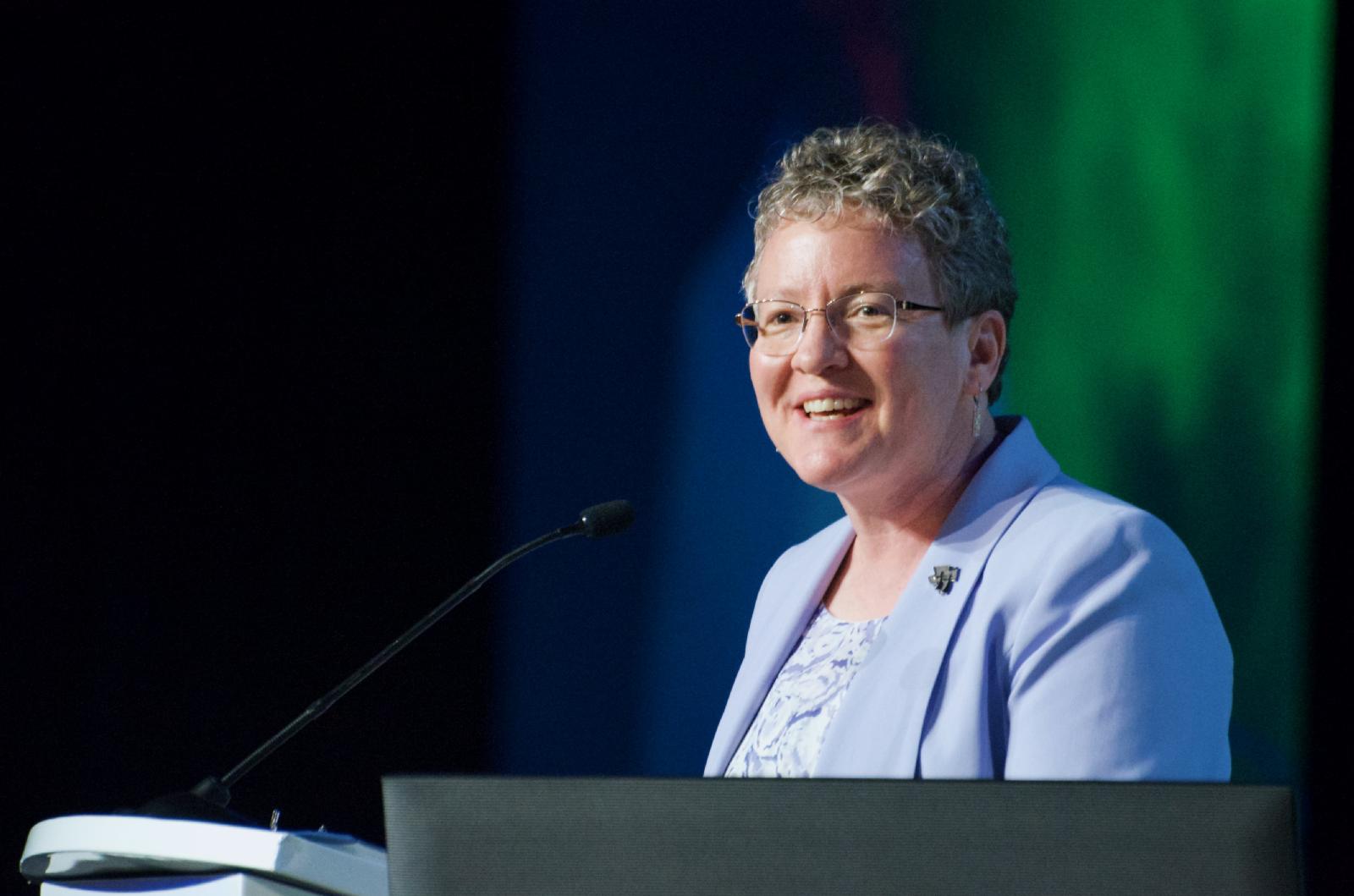
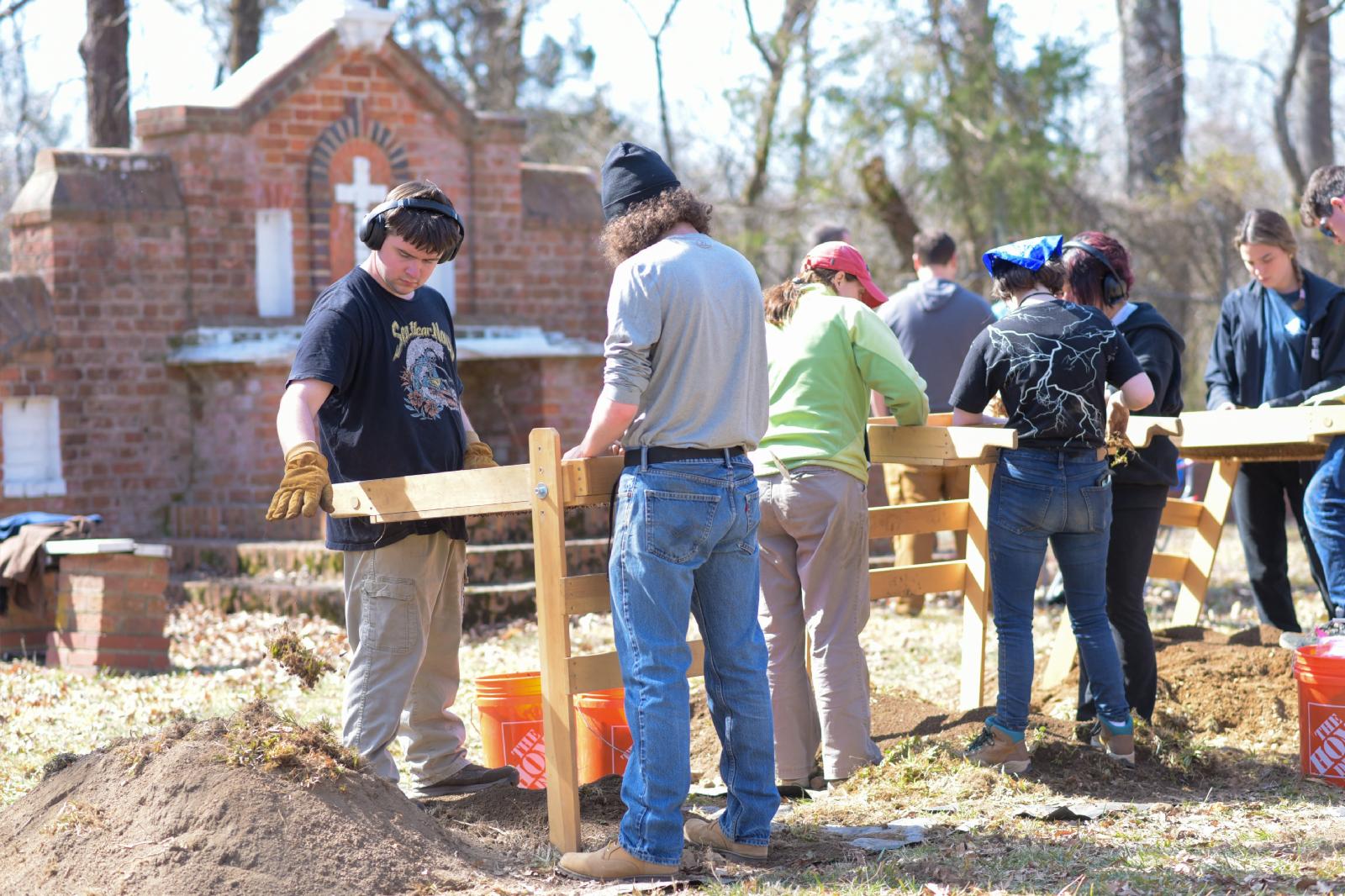
A team of student and professional history detectives — led by Laura Masur, assistant professor of anthropology at The Catholic University of America — have discovered what appear to be additional gravesites in a family cemetery on land once belonging to the Brents, one of early and colonial America’s prominent Catholic families. They were the first to settle in Virginia during an era when practicing Catholicism was prohibited.
The 17th-century Brent Cemetery parcel — owned by the family until 1841 and since 1974 by the Diocese of Arlington, just outside Washington — has been an intermittent and careful archaeological project for decades. There may be 90-plus graves on the property, which is located in Aquia, Virginia.
And it’s quite possible that many of them — some identifiable by unetched fieldstone markers characteristic of the poor or those in bondage — could contain the remains of the African Americans enslaved under the Brents.
The occupants of most of the plots, likely dating from 1670-1775, are still a mystery — and that’s where the public can help both the Arlington Diocese and Catholic University in their collaborative quest to give both an identity and a voice to the voiceless.
Catholic University and Diocese of Arlington partner to investigate Brent Cemetery
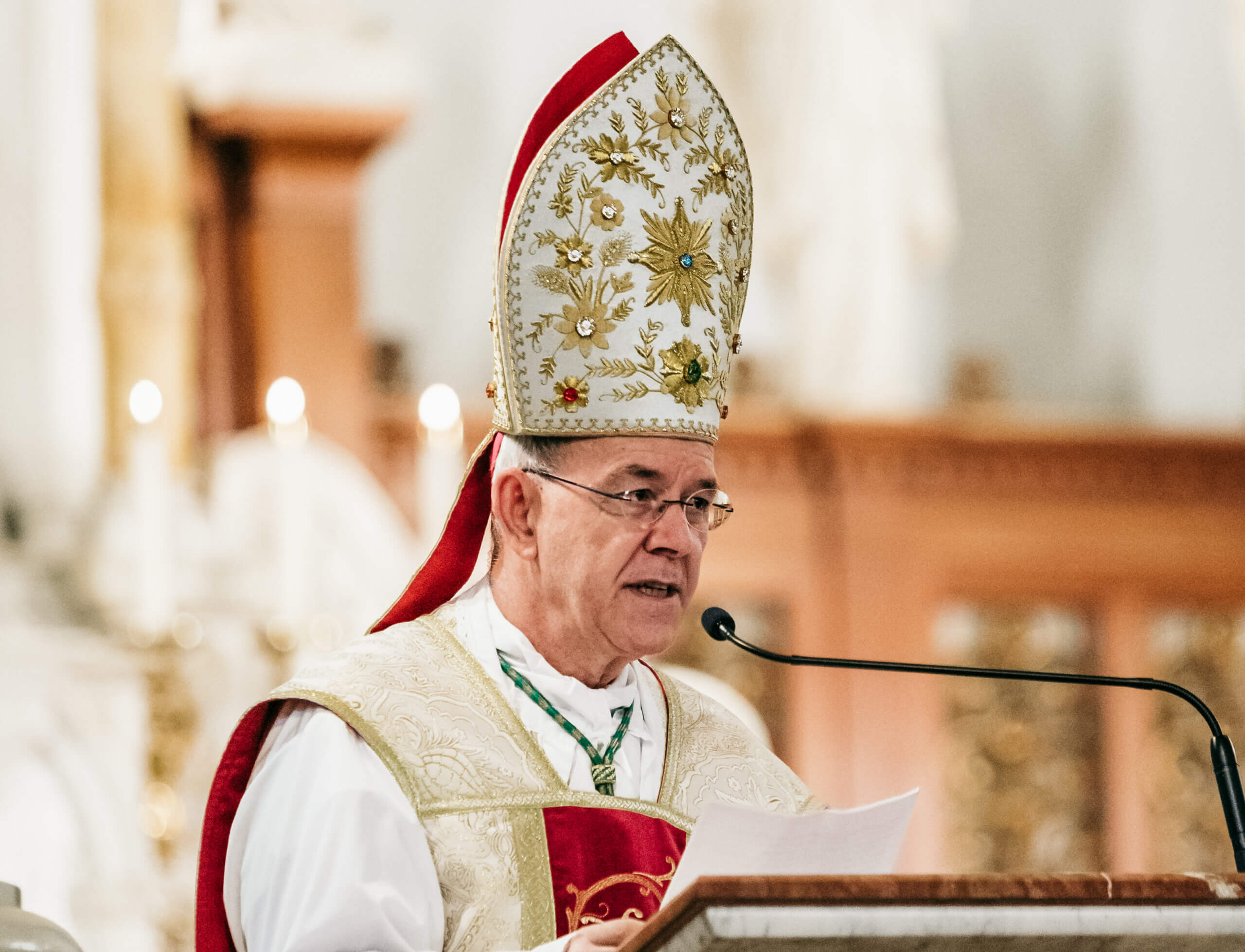
“We are deeply grateful to The Catholic University of America for their partnership as we seek to better understand the history of Brent Cemetery,” Arlington Bishop Michael F. Burbidge said in a statement provided to OSV News. “Every grave marks the final earthly resting place of a human person, known and loved by God, who came before us. It is our great responsibility as a diocese to conserve, honor, and steward Brent Cemetery as sacred ground.”
“We pray that, in time,” Bishop Burbidge continued, “descendants of those buried at Brent Cemetery centuries ago may come forward so that together we may more fully honor the lives and legacies of these first Virginians, our brothers and sisters, created in the image and likeness of God and entrusted to our remembrance.”
After a 2021 cemetery boundary survey using ground-penetrating radar, known as GPR, “what we found,” said Lindsay Alukonis, director of archives for the Arlington Diocese, “was that the property had more questions and a deeper history than we understood at that time.”
“But,” she added, “we also understood that we needed to connect with someone like Dr. Masur, who could read the report and who can guide the project in a positive path forward.”
Anomaly identified in 2021 GPR survey points to possible graves for enslaved Virginians
Last March, Masur — a national expert on the archaeology of Catholic churches, cemeteries and Mid-Atlantic plantations, as well as the contributions of enslaved persons to American society and the Catholic Church — set to work with a cohort of her students to explore an anomaly identified in the 2021 GPR survey.
Was it the foundations of a building? Maybe even a Catholic chapel?
That’s when they found not only artifacts — but what appear to be extra graves.
George Brent’s 1694 will mentions that 25 enslaved people belonged to the family.
To Masur, two reasons there appear to be graves of enslaved Black Virginians stand out.
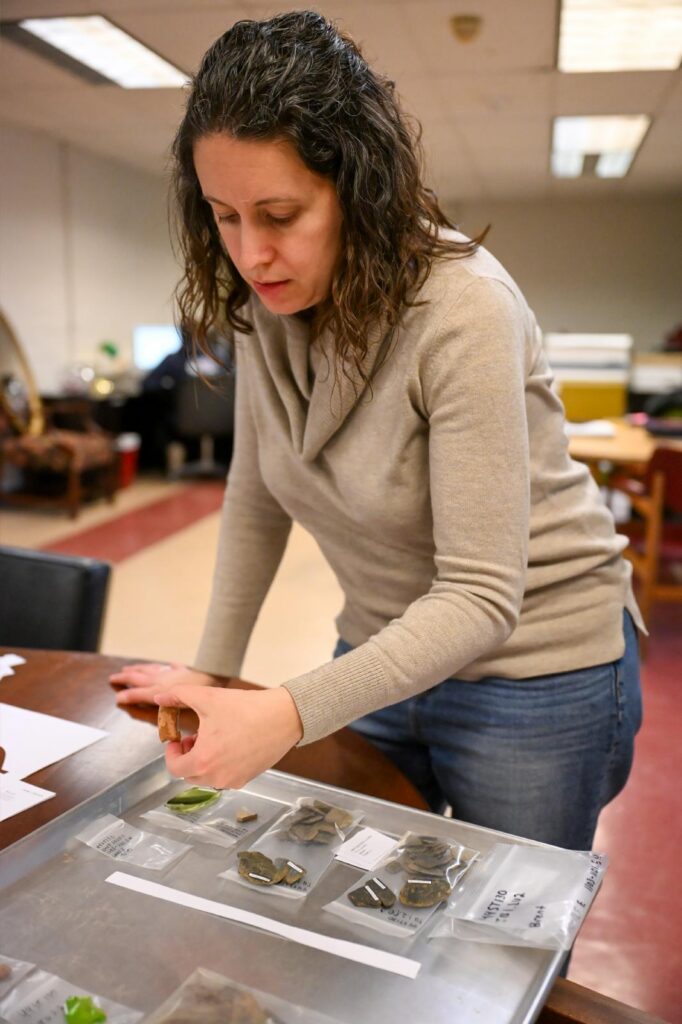
Some are on a slope leading down to a nearby body of water, “the first real clear indication that they’re enslaved people and it’s not just a cemetery for the family,” said Masur. “The fact that they’re marked by field stones is pretty typical of enslaved burial grounds in the area. So that’s another clue.”
“But what we can we can call a smoking gun,” concluded Masur, “is the fact that there is actually a grave marker for (an enslaved) woman named Flora, that was photographed earlier in the 20th century in the cemetery — and Flora is listed by name in George Brent’s will. So it’s all of these pieces of evidence together that strongly suggest that enslaved people are buried there.”
There is no evidence the cemetery was used after the 18th century, and the Diocese of Richmond bought the land from private owners in 1924. The Diocese of Arlington, the cemetery’s current custodians, was carved out of the Richmond Diocese in 1974.
History of Catholic slaveholders in the Americas
If the two things seem ironic — that Catholics held slaves, and that a family cemetery in the slave-owning era wasn’t rigidly segregated — there are historical explanations.
The Cushwa Center for the Study of American Catholicism at the University of Notre Dame notes the Catholic Church was the first and largest corporate slaveholder in the Americas. Besides individual Catholic families, numerous religious orders also held people under slavery.
The picture of Catholic enslavement during Colonial America is complicated further as a number of the African victims — and African leaders of resistance to European slavers — were themselves Catholic. During this period, some African kingdoms, such as Congo and Ndongo (in today’s Angola), had Catholic rulers fighting for their freedom against Portugal’s enslavement, while enslaved African Catholics are believed to have organized the 1739 Stono Rebellion in South Carolina. The successful Haitian Revolution (1791-1804), was ignited and led by Toussaint L’Overature, a devout Black Catholic, and was assisted by Polish Catholic legionaries. It inspired Black Catholics to attempt a similar, but failed, uprising near New Orleans in 1811.
“There have been Catholics of African descent in the Americas for as long as there have been Catholics in the Americas,” said scholar and professor Matthew J. Cressler, who teaches college courses to incarcerated learners through Georgetown University’s Prisons and Justice Initiative.
In 1770, some 40% to 60% of Virginia’s population consisted of people who were enslaved.
Yet in terms of cemeteries, “there’s not a lot of clarity that there was clear segregation until you get to the tail end of the 19th century,” Masur explained. “Some of that segregation becomes clearer after emancipation, in the Jim Crow era.”
Discussions of next steps: identify or leave untouched?
It’s those paradoxes — the lived reality of history and anthropology — that spark the momentum of archaeological research.
Ultimately, the diocese and the university decided upon a community-based discussion about decision-making moving forward, to determine if the goal is to identify and memorialize as many graves as possible, or simply not disturb the site and preserve its entirety as sacred.
They need to hear from anyone who has a connection to the Brents — especially those who might have any kind of family documentation such as genealogies, wills, probate inventories or personal papers that weren’t public documents. The hope is to gather resources, pull them together, and then identify and reach out to present-day descendants of the Brents and their enslaved population.
“I’m excited to be able to find people for whom this is a sacred site,” reflected Masur. “And I hope that we’re able to approach a really appropriate way to respect and honor and memorialize all those who are buried there.”
Alukonis agreed.
“I think something that is said in every meeting about where we go from here is, ultimately we just want to honor the dignity of every human person that is buried there,” she said. “That is what is really driving this work.”
Kimberley Heatherington is an OSV News correspondent. She writes from Virginia.
The post Unmarked graves on land once owned by Catholic slaveholders trigger search for descendants first appeared on OSV News.