















ICE ‘mega centers’ for mass detention ‘challenge the conscience,’ says USCCB bishop
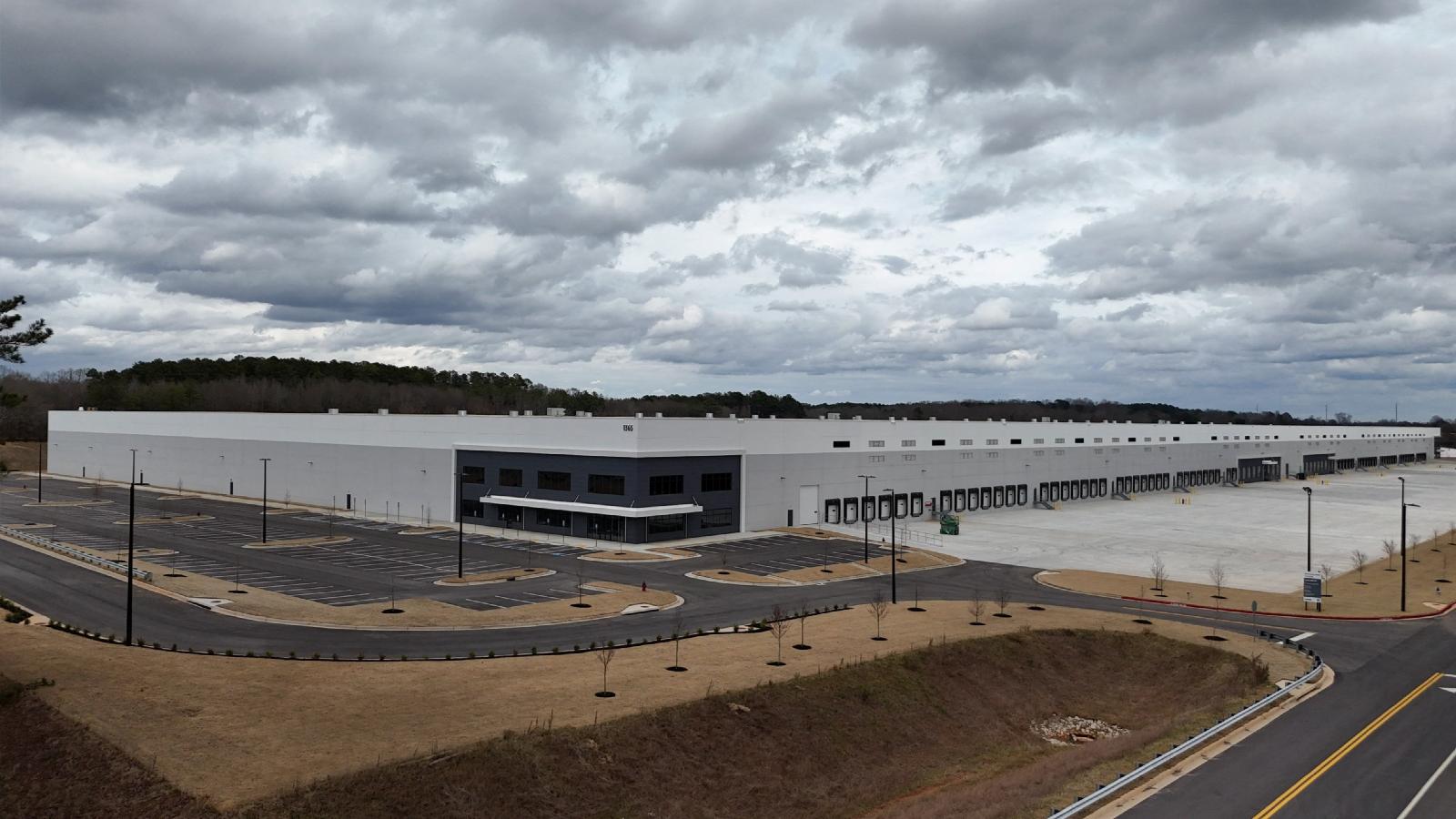
(OSV News) — A Texas bishop and head of the U.S. Catholic bishops’ migration committee is sounding the alarm over the Trump administration’s plans to acquire massive warehouses all over the country, each capable of interning thousands of people, in the name of its sweeping — and at times deadly — crackdown on immigration.
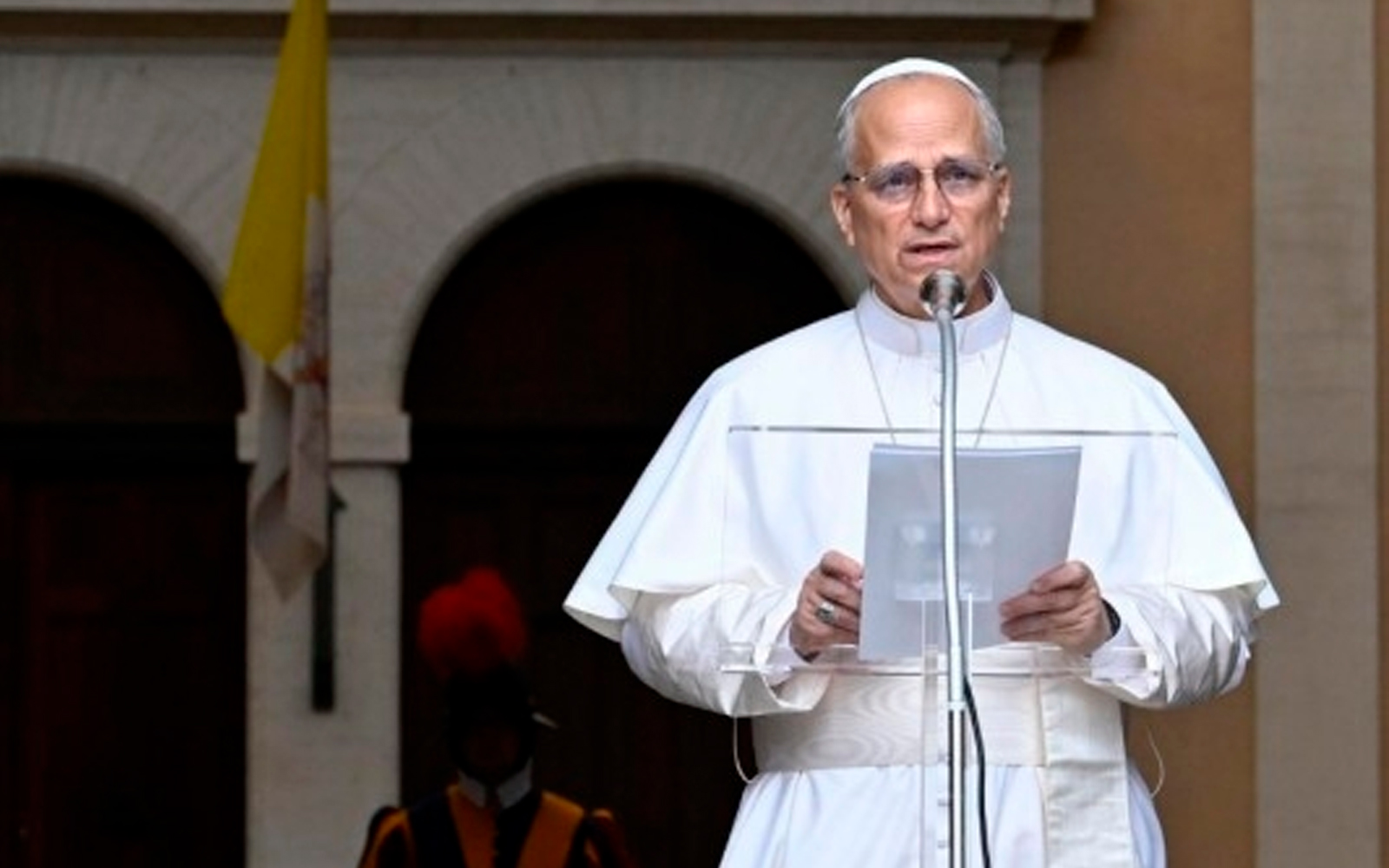
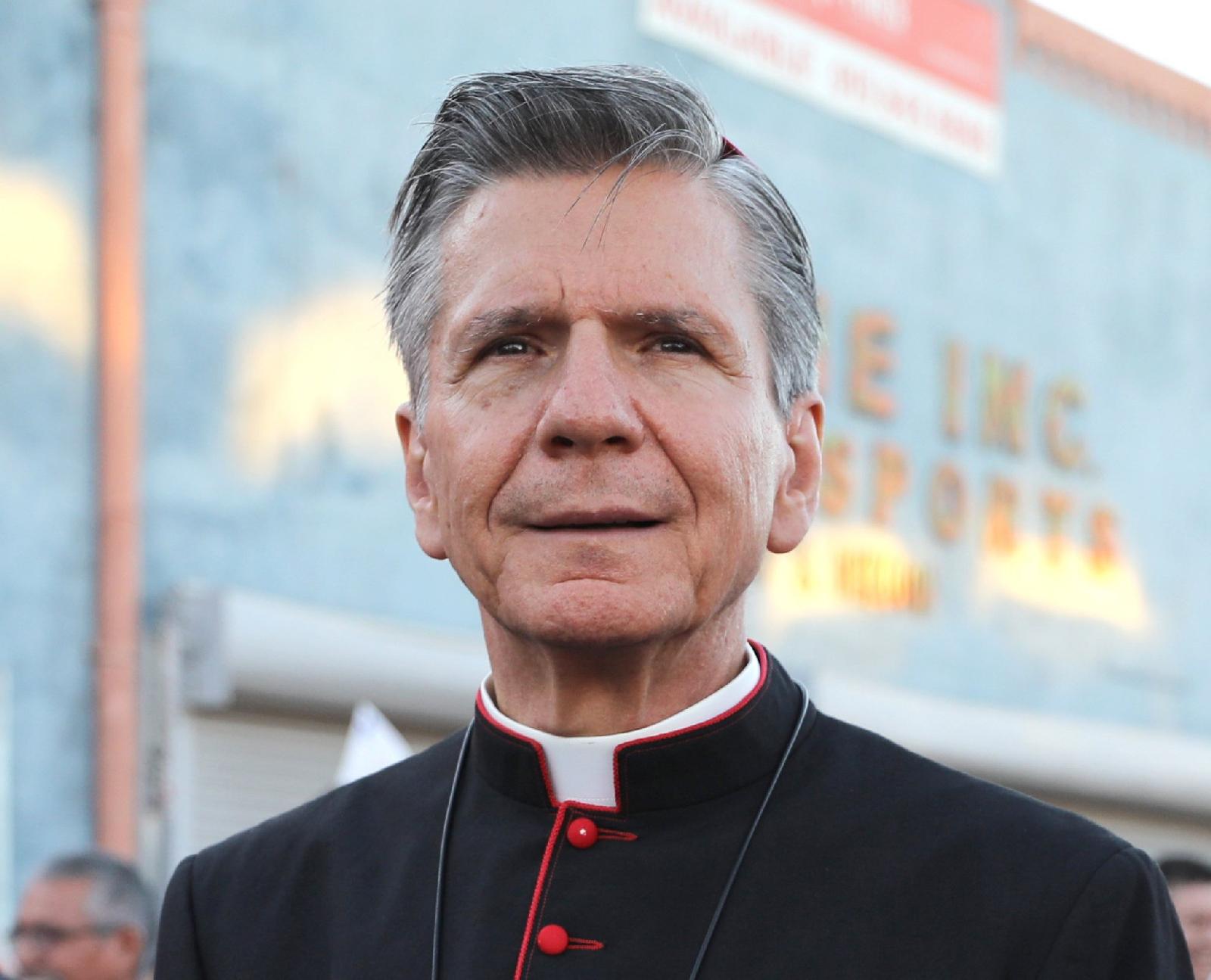
“The thought of holding thousands of families in massive warehouses should challenge the conscience of every American,” said Bishop Brendan J. Cahill of Victoria, Texas, chairman of the U.S. Conference of Catholic Bishops‘ Committee on Migration, in a Feb. 20 statement released by the USCCB. “Whatever their immigration status, these are human beings created in the image and likeness of God, and this is a moral inflection point for our country.”
The New York Times, citing internal Department of Homeland Security documents it had obtained, reported Feb. 18 that the administration is seeking to purchase some 20 warehouses for the detentions, with the goal of 92,600 total beds. Immigration and Customs Enforcement, or ICE, called it a “necessary downstream requirement” for the planned tempo of its enforcement and arrest operations in 2026 after a “surge hiring effort” that added 12,000 officers.
At least eight facilities already acquired for new detention centers
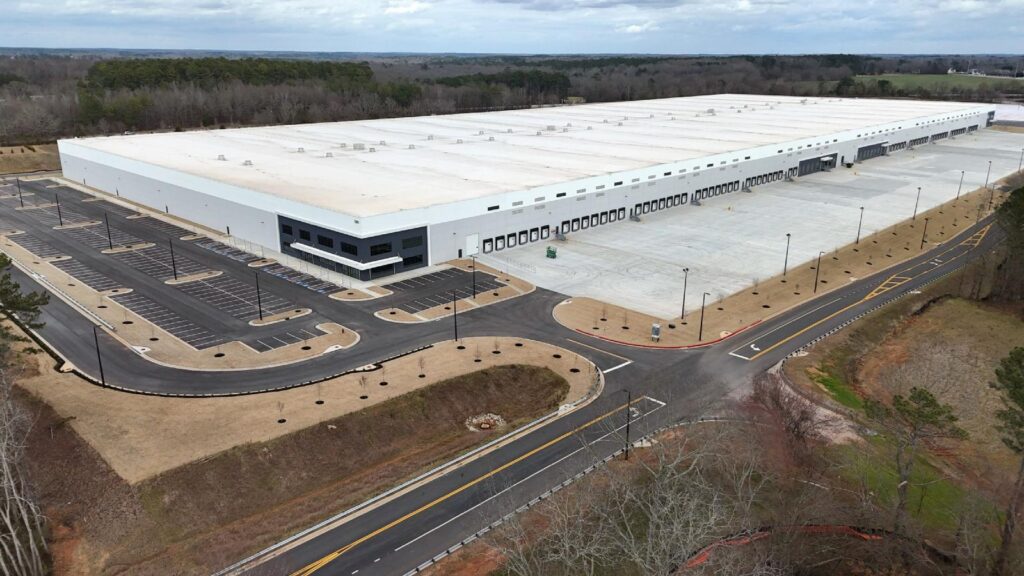
All of the new facilities are set to open by Nov. 30, 2026, “ensuring the timely expansion of detention capacity,” ICE said.
So far, at least eight facilities — located in Georgia, Maryland, Pennsylvania and Texas — have already been acquired by the Trump administration.
The statement released by the USCCB drew particular attention to eight “mega centers” that would be each “capable of detaining 7,000 to 10,000 people.”
Warehouses are also being considered in Missouri, New Hampshire, New Jersey, North Carolina, Tennessee and Utah.
A majority of the people targeted by ICE for mass detention and eventual deportation are expected to be Catholics in six out of 10 cases, according to a 2025 joint Catholic-Evangelical report published by the USCCB and World Relief. It also found Christians make up 80% of those at risk of President Donald Trump’s mass deportation effort. The report also found nearly one in five Catholics (18%) in the U.S. are either vulnerable to deportation or live with someone who is.
In a Feb. 13 document, ICE detailed its “Detention Reengineering Initiative,” aiming to “meet the growing demand for bedspace and streamline the detention and removal process.”
Along with “eight large-scale detention centers,” the plan includes “16 processing sites” and “the acquisition of 10 existing ‘turnkey’ facilities” where ICE already operates.
The estimated cost for the ICE’s “new detention center model” will be $38.3 billion, to be funded by congressional allocations under the Trump administration’s “One Big Beautiful Bill Act.”
“No precedent in American history” aside from Japanese internment camps
But the USCCB preface to Bishop Cahill’s statement noted, “Aside from the internment camps used to incarcerate Japanese Americans in the 1940s, such facilities have no precedent in American history.”
During World War II, the federal government at the order of President Franklin D. Roosevelt incarcerated more than 125,000 Japanese Americans to remotely located camps throughout the nation, claiming they posed a security threat following the Empire of Japan’s 1941 attack on Pearl Harbor.
Some 70,000 of those interned were U.S. citizens, with 1,600 of the people imprisoned dying during their incarceration. Interment also economically ruined families who lost property and businesses as a result.
The final camp was closed in 1946, and in 1988, a formal apology and reparations were issued under President Ronald Reagan. Only in 2022 was a full, accurate list of victim names made available thanks to the work of Duncan Williams, a scholar at the University of Southern California Dornsife.
Bishop Cahill calls the expansion plans “deeply troubling”
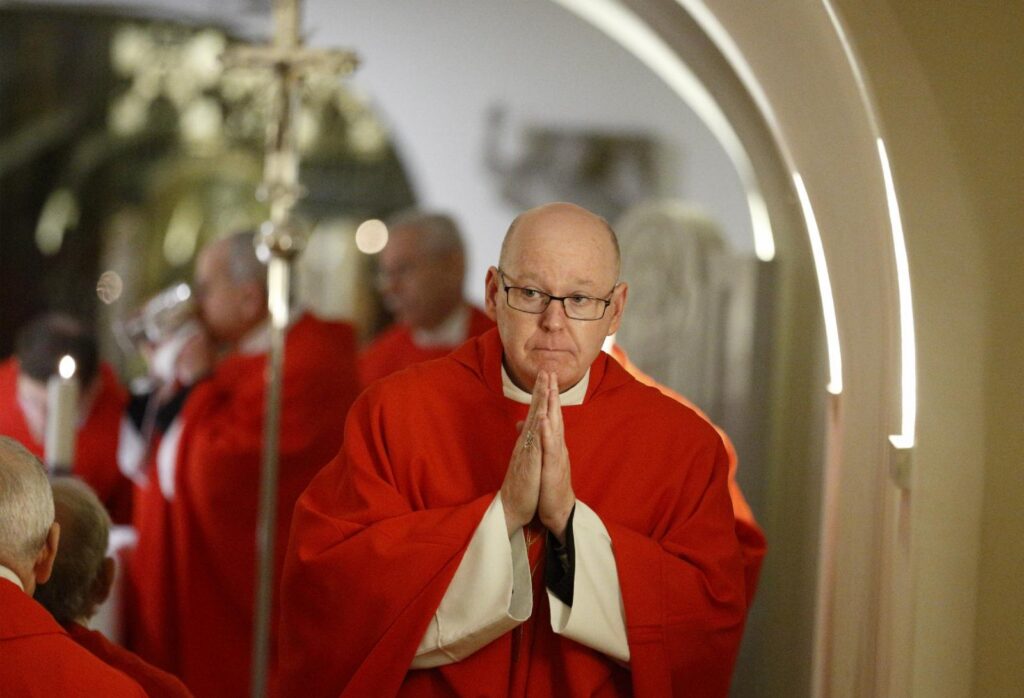
In his statement, Bishop Cahill described the Trump administration’s ICE detention facility expansion plans as “deeply troubling.”
“The federal government does not have a positive track record when it comes to detaining large numbers of people, especially families, and the proposed scale of these facilities is difficult to comprehend,” he said.
A number of immigration advocates have deplored conditions at ICE detention centers, citing unsanitary conditions, lack of basic care, and instances of violence and death, as well as denial of pastoral visits and access to legal counsel.
Last year, 32 people died while in ICE detention — the largest number in over two decades, according to a Jan. 4 report by The Guardian. As of January, six people have died in ICE custody.
As of Feb. 7, 68,289 persons were in ICE detention, with 73.6% of detainees having no criminal conviction, according to Syracuse University’s Transactional Records Access Clearinghouse.
Bishop Cahill said that “the private prison industry is who stands to gain the most from this supercharging of immigration detention.”
He pointed to the USCCB’s special pastoral message on immigration, issued during the conference’s annual fall meeting in 2025.
“Last November, my brother bishops and I unequivocally opposed the indiscriminate mass deportation of people and raised concerns about existing conditions in detention centers,” he said. “We specifically highlighted a lack of access to pastoral care for detainees. On many occasions, we have also opposed the expansion of family detention, recognizing its harmful impacts on children in particular.”
Catholic teaching on immigration and mass deportations

Catholic social teaching on immigration seeks to balance three interrelated principles: the right of persons to migrate in order to sustain themselves and their families; the right of a country to regulate its borders and immigration; and a nation’s duty to conduct that regulation with justice and mercy.
The Church’s teaching, the bishops’ special message noted, “rests on the foundational concern for the human person, as created in the image and likeness of God (Genesis 1:27).”
The bishops’ condemnation of “indiscriminate mass deportation” also has a reference point in the Church’s magisterial teaching at the highest level. St. John Paul II’s 1993 encyclical “Veritatis Splendor” (“Splendor of Truth”) and 1995 encyclical “Evangelium Vitae” (“The Gospel of Life”) both quote the Second Vatican Council’s teaching in “Gaudium et Spes,” that condemns specifically “whatever is offensive to human dignity, such as subhuman living conditions, arbitrary imprisonment, deportation” among others. It calls them “a disgrace, and so long as they infect human civilization they contaminate those who inflict them more than those who suffer injustice, and they are a negation of the honor due to the Creator.”
Papal teaching in “Veritatis Splendor” reinforced the Council’s moral condemnations, stating these acts are examples of “intrinsic evil” incapable of being ordered to God or the good of the human person.
Bishop Cahill implored the Trump administration and Congress “to lead with right reason, abandon this misuse of taxpayer funds, and to instead pursue a more just approach to immigration enforcement that truly respects human dignity, the sanctity of families, and religious liberty.”
Gina Christian is a multimedia reporter for OSV News. Follow her on X @GinaJesseReina.
The post ICE ‘mega centers’ for mass detention ‘challenge the conscience,’ says USCCB bishop first appeared on OSV News.