









.JPG/_jcr_content/renditions/cq5dam.thumbnail.cropped.750.422.jpeg?#)

















What is Your Reason for Doing Good?


Whenever I ask people about their spiritual and moral lives, I usually get answers like: “I go to Mass sometimes.” “I tell the truth sometimes.” “I am honest sometimes.” “I am chaste sometimes.” “I pray sometimes.” “I forgive sometimes.” Why do we so easily settle for inconstancy in doing the good things?
Jesus uses two images to tell us how we are to be His disciples in this world: “You are the salt of the earth…You are the light of the world.” These two images show that we must strive for constancy in doing good if we are going to be Jesus’ faithful witnesses today. We become spiritually useless when we fail to reflect at any moment the goodness that we have received from God as a gift, for “If salt loses its taste, with what can it be seasoned? It is no longer good for anything but to be thrown out and trampled underfoot.” We also cannot allow anything to cover our goodness, for “A city set on a mountain cannot be hidden.”
This constancy in doing good is important because it is through good deeds that we allow the divine to break into our daily lives and our world. In short, we perpetuate the Incarnation of the Word through our good works, as Jesus commanded, “Your light must shine before others, that they may see your good deeds and glorify your heavenly Father” (Mt. 5:13-16).
For us to be constant in goodness, we must seriously examine our motives for doing the good that we do. When we have a poor motive for doing good, then we will do so only when we have favorable conditions or only when we are going to be appreciated for it. We will do good only when it is convenient and not stressful. We will do good only when we know that others will do good to us in return or when it will make us feel good. We simply cannot do good all the time when we have poor or unclear motives.
The following are four solid reasons for doing good all the time.
1. Out of Gratitude to God
God does good to us always and, by so doing, He communicates to us His own goodness. Just as the salt cannot give itself saltiness or the lamp light itself, we have no ability for goodness apart from God’s actions. All the good that we have are gifts from God. Our desire and resolve to do good, all the graces that we need for accomplishing it, and the reward for doing so are all God’s gifts to us, “For God is at work in you, both to will and to work for His good pleasure” (Phil. 2:13).
St. Paul had such a deep gratitude to God for the gift of His Son that he was willing to do all the good he could and endure all the evils in his life and ministry. He was ready to do good even in his weakness because he “resolved to know nothing except Jesus Christ and Him crucified” (1 Cor. 2:1-5). This is the power for us to do good when we are grateful for God’s goodness to us in Christ.
Are we truly grateful for all God’s gifts to us, especially the gift of His Son on the cross for our salvation? Do we realize that Jesus Himself is always doing something good in our lives because “He lives to intercede for us” (Heb. 7:25)? Are we willing to show this gratitude through loving deeds to others for God’s sake? Only a humble and grateful heart can be constant in doing good.
2. To Edify Others
Because of our social nature, we have the power either to strengthen others in goodness or to scandalize them. Jesus asks us to let our light “shine before others” because of the power of good example. There are so many examples of evil in our world, and people are encouraged to follow suit. We all need to be strengthened in goodness by the words, prayers, and examples of others.
The greatest act of charity that we can do to someone today is to strengthen them in goodness by our own words and examples. The greatest act of evil that we can do is to scandalize them and enhance their choice of evil. This is why Jesus warned us strongly against scandal, saying, “It would be better for him if a millstone were hung around his neck and he were cast into the sea, than that he should cause these little ones to sin” (Lk. 17:2). The more determined we are to edify our neighbors, the more that we will be constant in goodness.
3. To Give Glory to God
As earlier said, the desire to do good, the grace to do good, the opportunity to do good, and the reward of doing good are all gifts from God. It is thus appropriate to direct all our good deeds to His greater glory. We do good to bring others to know and love God more through His goodness that we reflect to them, “For we are God’s handiwork, created in Christ Jesus to do good works, which God prepared in advance for us to do” (Eph. 2:10).
When we are bent on giving glory to God and not our own self-promotion, we easily face difficulties that come along with doing good, and we are ready to be ignored, criticized, rejected, persecuted, or hated by others. We are ready to suffer anything and sacrifice all for the sake of doing good only if we are bent on giving glory to God alone. We cannot be constant in our resolve when we are seeking our own personal benefit.
4. For Our Own Spiritual Health
The prophet Isaiah tells us that our practice of good works enhances our spiritual life in many ways. When backed by works of justice, our prayers will become more powerful before God, and we will begin to have a sense of His loving presence with us: “Then you shall call, and the Lord will answer you; you shall cry for help, and He will say: Here am I.”
We will also experience healing for the wounds of our sins and hurts: “Then your light shall break forth like the dawn, and your wound shall quickly be healed.” We will also receive light to dispel all darkness and confusion, “Then light shall rise for you in the darkness, and the gloom shall become like the midday” (Is. 58:7-10). All these spiritual benefits come from a life bent on reflecting God’s goodness all the time.
My dear brothers and sisters in Christ, all the evils in the world today are the result of bad witnessing to Jesus because we are not determined to be constant in goodness. We pick and choose our moments of fidelity and moments of rebellion. So, we sometimes allow God to make Himself present in our world through our good works, and we sometimes allow the evil one to be more active through our evil deeds or failure to do the good that we ought.
We must not settle for doing good sometimes but aim for doing good always. We can only hope to be constant in goodness because God’s grace is constant and His love is unconditional.
By the power of this constant love and grace, we must strive to be constant in all the good that we do and the evils that we endure for the love of God. This is what it means to be salt of the earth and the light of the world. It calls for our constancy in all the good that we do, even in repenting from our sins!
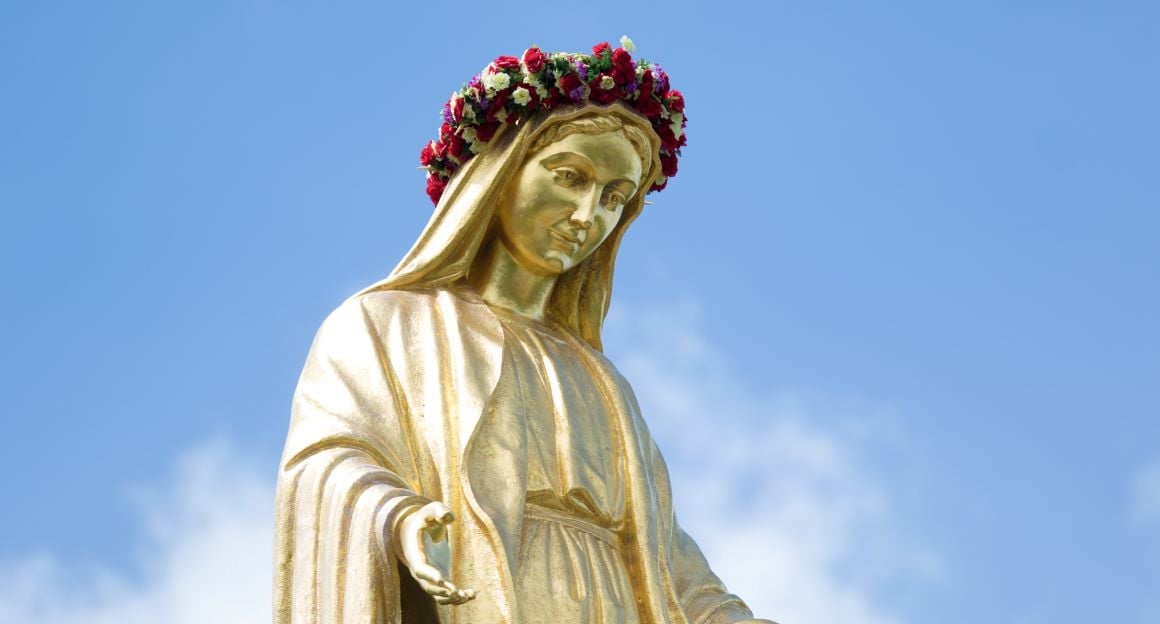
We can ask our Blessed Mother Mary to bring us into her constancy in goodness. She did good to all persons and in all conditions because of her loving gratitude to God, “He who…has done great things for me” (Lk. 1:49). She can also help us do good to edify others, as she did in the wedding feast in Cana, and do good to give glory to God, as she did, standing at the foot of the cross, beneath her dying Son.
We will become Jesus’ faithful witnesses only when we become more constant in doing the good we should do under the influence of God’s grace.
Glory to Jesus!!! Honor to Mary!!!
Photo by Carlos Magno on Unsplash