























The Pattern of Temptations and How to Overcome Them

As we begin Lent, Christ’s three temptations in the desert give us the pattern by which we too are tested. Hence this Gospel is paired with the First Reading about the testing of Adam and Eve in the Garden of Eden. Where they fail, Jesus is victorious. Jesus’ temptations, like our own, are a testing of our trust.
In this article, we will uncover the core of each temptation by focusing on the Scripture verse that Jesus responds with. As we consider the inner core of each temptation, you might ponder what this can look like in your own life and ask the Lord Jesus to meet you there. In each of these three tests, we will discover the possibility of a blessing hidden within.
A Note on Spiritual Exegesis
While modern historical scholarship rightly looks to the past to examine historical setting and context, spiritual exegesis looks forward from the text into our present life as we live the mystery of Jesus. We live out these mysteries, in which Jesus chose trust and obedience in the trials of life, through His grace, which moves us forward in our destiny by the power He won for us.
It is not that we interpret the passage and then apply it. Rather, the application to our lives belongs to the living Word of God itself, and it is the moral sense that opens up to us how it is to be actualized in our lives today.
The First Temptation
The first temptation is for Jesus in His physical hunger to turn the stones into bread, but He responds that “Man does not live by bread alone but by every word that proceeds from the mouth of God.” Material things, like bread, are so palpable and immediately accessible that they threaten to suppress the spiritual, like the Word of God. The Old Testament verse that Jesus quotes is about Israel failing to trust the Lord for their material provision with the manna. Their material concerns drowned out the more primary spiritual concerns, as can happen to us easily today.
Yet here is the blessing hidden within this test. The more we hunger for every word that proceeds from the mouth of God, and the more we give it primacy in our lives, the more our deepest hungers and desires are fulfilled. The desert is a place of hunger, but it is also a place of profound encounter with God. Our deepest desires come to the forefront and find nourishment with every word that proceeds from the mouth of God.
The Second Temptation
In the second temptation, the devil brings Jesus to the parapet of the Temple and suggests He casts himself down so God will miraculously save Him. It is a temptation to perform this amazing deed to win followers. The Scripture verse that Jesus responds with comes from when Israel tested the Lord at Massah. At Massah, Israel grew weary of waiting for the Lord. Thirsty from lack of water, they grumbled against Him, who eventually did meet their need with water from the rock, though in His own time. The Lord provides but on His terms and in His timing.
The core of the temptation is to lose patience in waiting for God’s timing and to try to force the hand of the Lord. Israel did this and put the Lord to the test. However, in the desert, Jesus did not succumb to the quick-and-easy miracle to win the crowds to Him. St. John Chrysostom comments on this, noting that Jesus says, “‘You shall not tempt the Lord your God,’ teaching us that we must overcome the devil not by miracles but by forbearance and long-suffering.” It is hard to wait on the Lord and to trust in God’s providential plan. Yet the blessing hidden in this test is that when we do wait on the Lord in patience, trusting in Divine Providence, we will see God’s infinite wisdom, His patient wisdom, accomplish what is best.
The Third Temptation
In the third temptation, the devil offers Jesus all the kingdoms of this world and their glory, if only He will bow down and worship him. Jesus responds by saying the true Lord and God alone is to be worshipped and served. The Scripture verse He quotes concerns Israel’s need not to follow other gods when they live among other nations. They are to choose not the world’s ways, however glorious they may be, but the way of the Lord. Jesus is offered a similar alternative: the way of the world or the way of the Cross? This is our test as well.
The blessing hidden here is that in embracing the self-transcendence of the Cross, putting God and His service first, we find our true selves, as sons and daughters of God serving in His Kingdom—where to serve in love is to reign.
In this three-fold test, we are armed with faith, hope, and charity. We are armed with faith in the spiritual, which we cannot see. We are armed with patient hope, waiting for God. And we are armed with the love of the Cross, putting God’s ways first. In our Lenten desert, we meet the figure of a man wearied by testing: Jesus Christ. And with Him, we can win the victory.
Editor’s Note: This is the eighth and final article of the CE series “Exegesis of the Word” by Fr. Ignatius Schweitzer, breaking open each Sunday’s readings for eight consecutive weeks. Read the whole series here!
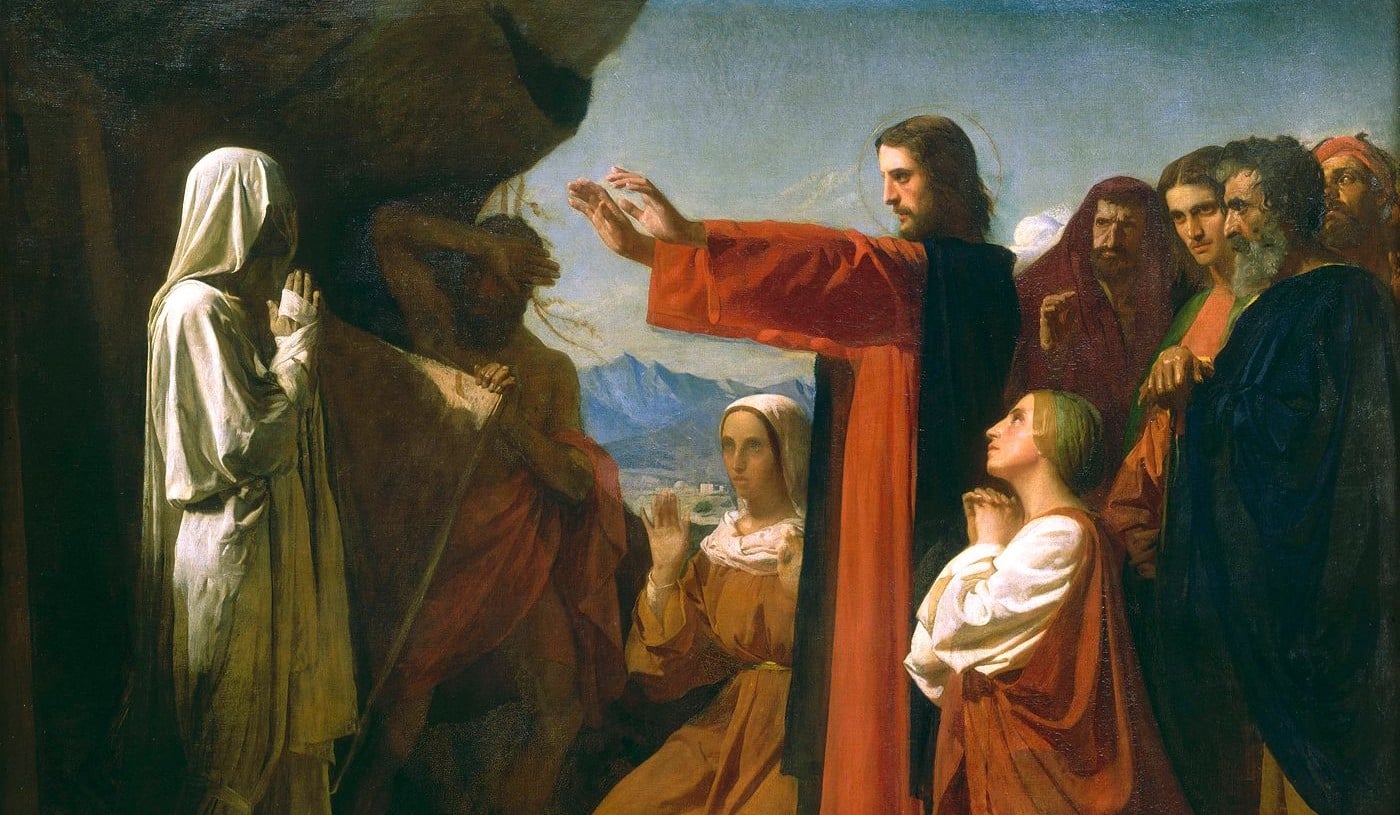
Image from WikiArt