























The Enduring Promise of Epiphany


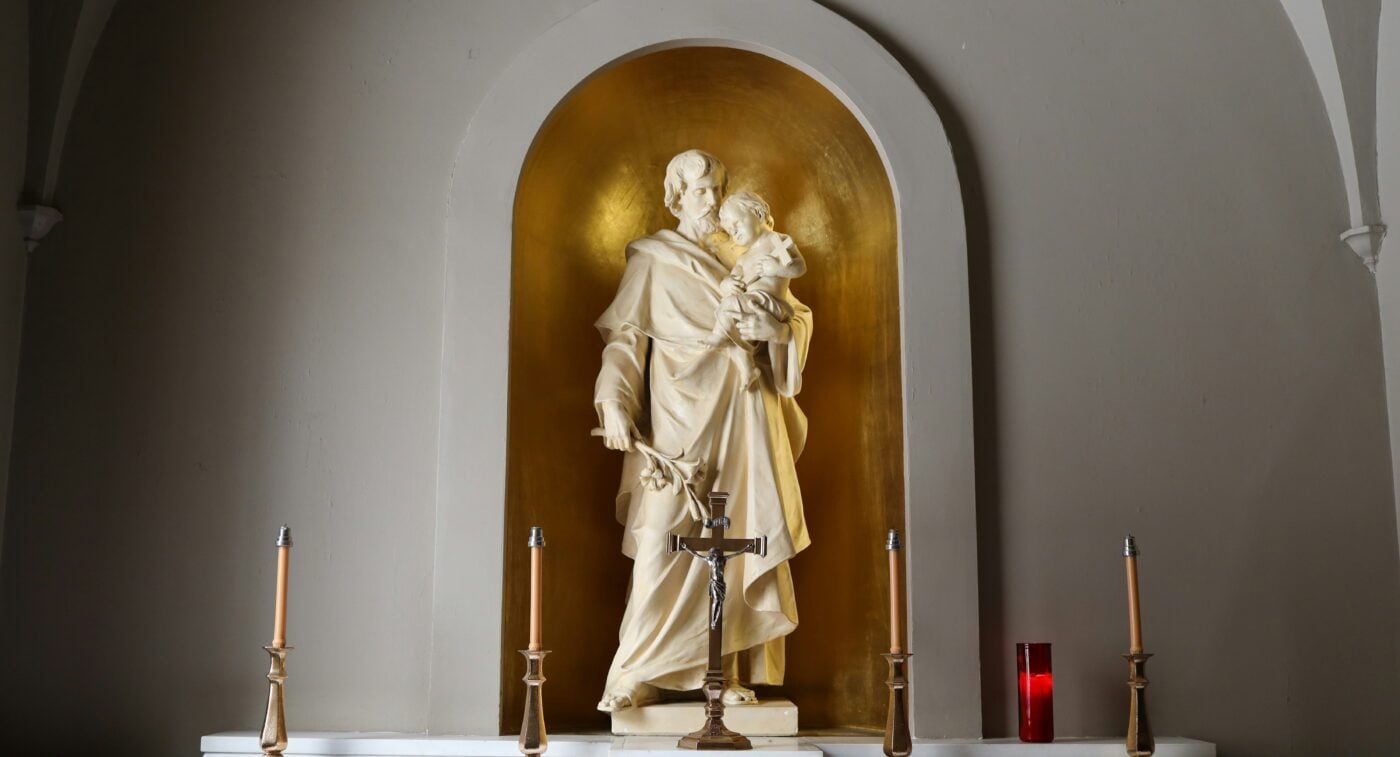
One detail of the Feast of the Epiphany deserves renewed attention. Epiphany is, in a particular sense, the feast of gold.
We know well that the Magi brought three gifts to the Christ Child—gold, frankincense, and myrrh—each rich in meaning. Yet gold holds a distinctive place. Historical accounts tell us that in royal or wealthy households it was once customary on Epiphany to sprinkle food with fine, gold dust. Gold, in minute quantities, is edible. It has no taste, but it transforms what it touches by making it radiant.
And this is the defining characteristic of gold: it shines.
Gold draws our attention to splendor. Ancient philosophy, beginning with the Pythagorean tradition, already recognized that beauty is not arbitrary but grounded in harmony and proportion. Yet harmony alone does not explain why something shines. The Christian tradition, drawing on Plato and purified through theology, came to see splendor (claritas) as an essential dimension of beauty—not as something self-generated, but as something received. As St. Thomas Aquinas would later articulate, beauty is marked by integrity, harmony, and clarity: a radiance that manifests form because it participates in light.
This is not a superficial or merely aesthetic category, but a deeply theological one. Splendor does not originate in itself. It exists only insofar as it receives light and reflects it. Place gold in complete darkness, and it does not shine at all. Its brilliance depends entirely on light received from another source.
Here we touch upon a central intuition of the Catholic Faith. Christian truth is not only true—that is, intellectually satisfying—but also beautiful. It is radiant. It shines because it is full of God. The truth of the Faith does not impose itself by force; it attracts by splendor. For this reason, the Church has always insisted that truth and beauty belong together. We need only recall one of the great encyclicals of Pope St. John Paul II, Veritatis splendor—the splendor of truth.
The journey of the Magi makes this visible. They set out toward Christ, leaving behind their lands, their comforts, and their certainties. But their movement toward the Child is inseparable from another movement: their openness to receive Him. They go toward Christ, and at the same time they welcome Him.
This double movement—going toward God and receiving God—defines the Christian life.
To be a Christian is not merely to acknowledge that God exists. That is easy. The real challenge lies elsewhere: in allowing God’s light to become constitutive of one’s life. St. Paul expresses this with striking clarity: “It is no longer I who live, but Christ who lives in me” (Gal. 2:20). This is the life of grace.
It is difficult. Conforming one’s will to the will of Christ is far more demanding than making abstract statements about faith. Yet only this conformity allows a human life to shine. Only the one who receives God’s light can reflect it.
This is why Epiphany is the feast of shining gold. The Catholic Faith itself is like gold: precious, radiant, and luminous—not by its own power, but because it reflects the light of God. Christians are not called to generate this splendor, but to serve it. In our fragility, our poverty, and our unworthiness, we are invited to become instruments through which this light reaches the world.
This logic was grasped with remarkable clarity by Bl. Alfredo Ildefonso Cardinal Schuster, the Benedictine monk who became Archbishop of Milan. Schuster insisted that the Church does not renew the world by absorbing the chaos of the city, but by offering it the fruits of contemplation. A monk in the episcopal city, he believed that Milan would be evangelized not by becoming more worldly, but by receiving from the Church a life steeped in the Word of God. The city, in other words, is transformed not when the Church mirrors it, but when the Church shines with a light she herself has received.
All we have to worry about is collaboration with grace. After all, water can only nourish soil that is ready to receive it. If the soil is sealed, the water runs off without penetrating. Likewise, if gold is covered with grime, it cannot reflect the light.
The Magi offered gold to Christ. Today, the Church is asked to do something analogous: to offer the world lives that shine—not with borrowed glamour or self-manufactured brilliance, but with the quiet, enduring radiance of truth received and faithfully reflected.
That is the enduring promise of Epiphany.
Photo by Yukon Haughton on Unsplash