







The Time Has Come for Easter Union


On November 29, 2025, on the eve of the Feast of St. Andrew, Ecumenical Patriarch Bartholomew I and Pope Leo XIV signed a historic Joint Declaration at the Phanar in Istanbul, where both leaders reaffirmed their commitment to the goal of restoring full communion between the Roman Catholic and Orthodox Churches. They expressed a shared desire to find a solution for all Christians to celebrate Easter on the same day every year, following the “providential” occurrence of a shared Easter in 2025. This is an auspicious time to act and increase the hope that Ecclesia will revive!
By way of background, the First Council of Nicæa—the first ecumenical council—took place between May 20th and June 19th, 325.
One of its purposes was to resolve the disagreements that arose within the Church of Alexandria over the nature of the Son in His relationship with the Father, resulting in the Nicæan Creed, later supplemented by the Council of Constantinople in 381, leading to the single Nicene-Constantinopolitan Creed common to all Churches.
Another purpose was to resolve the controversies regarding the calculation (computus) for the celebration of Easter, which led to multiple celebrations of Easter on different dates. The result was the unanimous decision that the Feast of Easter should be celebrated on a single day.
The following is a passage on the keeping of Easter from the Letter of the Emperor to all those not present at the Council (Found in Eusebius, Vita Const., Lib. iii., 18-20):
…consider well, that in such an important matter, and on a subject of such great solemnity, there ought not to be any division. Our Saviour has left us only one festal day of our redemption, that is to say, of his holy passion, and he desired [to establish] only one Catholic Church. Think, then, how unseemly it is, that on the same day some should be fasting whilst others are seated at a banquet; and that after Easter, some should be rejoicing at feasts, whilst others are still observing a strict fast. For this reason, a Divine Providence wills that this custom should be rectified and regulated in a uniform way…
It is clear that we are not fulfilling the mandate of the First Council of Nicæa that Easter should be celebrated on a single day. There is talk of reaching an agreement to achieve a single day in all the Churches, yet still we are not there.
If the Orthodox Churches were to change the current computus, a Council among them would be required to reach an agreement. Perhaps the Catholic Church should take the initiative and change its current computus to coincide with that of the Orthodox (and Byzantine Catholic) Church and thus fulfill the mandate of the First Council of Nicæa to have a single date for Easter—an essential step for the unity of the Church. This would be an exemplary act of humility and charity toward our brothers and sisters in the Orthodox Church.
The Second Vatican Council already provided for the revision of the liturgical calendar—particularly Easter—in the Appendix to the Constitution Sacrosanctum Concilium on the Sacred Liturgy: “…provided that those whom it may concern, especially the brethren who are not in communion with the Apostolic See, give their assent.”
Let us recall that Pope Francis stated on January 14th, 2014, that the miracle of unity had already begun:
And go forward, we are brothers. Let us spiritually embrace one another and allow the Lord to finish the work He has begun. For this is a miracle: the miracle of Unity has already begun. A famous Italian writer, Manzoni, says in one of his works, through a simple man, this phrase: “I have never seen the Lord begin a miracle without finishing it completely.” He will completely finish this miracle of Unity.
The beginning of this movement toward unity can be seen in these three events:
- Bartholomew I, Patriarch of Constantinople, primus inter pares of the Orthodox Church, attended the inauguration Mass of Francis’s pontificate on March 19th, 2013, the Feast of St. Joseph, ending a separation of almost a thousand years since the Schism of 1054.
- At the end of his speech during Francis’ visit to Bartholomew I in Istanbul on November 29th, 2014, on the eve of the Feast of St. Andrew the Apostle, Francis approached Bartholomew I, embraced him, and asked for his blessing. The Bishop of Rome bowed before him to receive it. The Patriarch blessed him and placed a holy kiss (Rom. 16:16, 1 Cor. 16:10, 2 Cor. 13:13, 1 Thes. 5:26) on his head—a testimony of the commitment to walk together as brothers, faithful to God.
- The historic Joint Declaration mentioned above.
We pray that the restoration of unity between east and west be enthusiastically pursued by Pope Francis’s successor, Leo XIV. The time has long since arrived, 1,700 years after the fact, to be docile to the Holy Spirit and fulfill the mandate of the First Council of Nicæa for full communion between the Roman Catholic and Orthodox Churches.
Author’s Note: This article was adapted from its original publication in Spanish here.
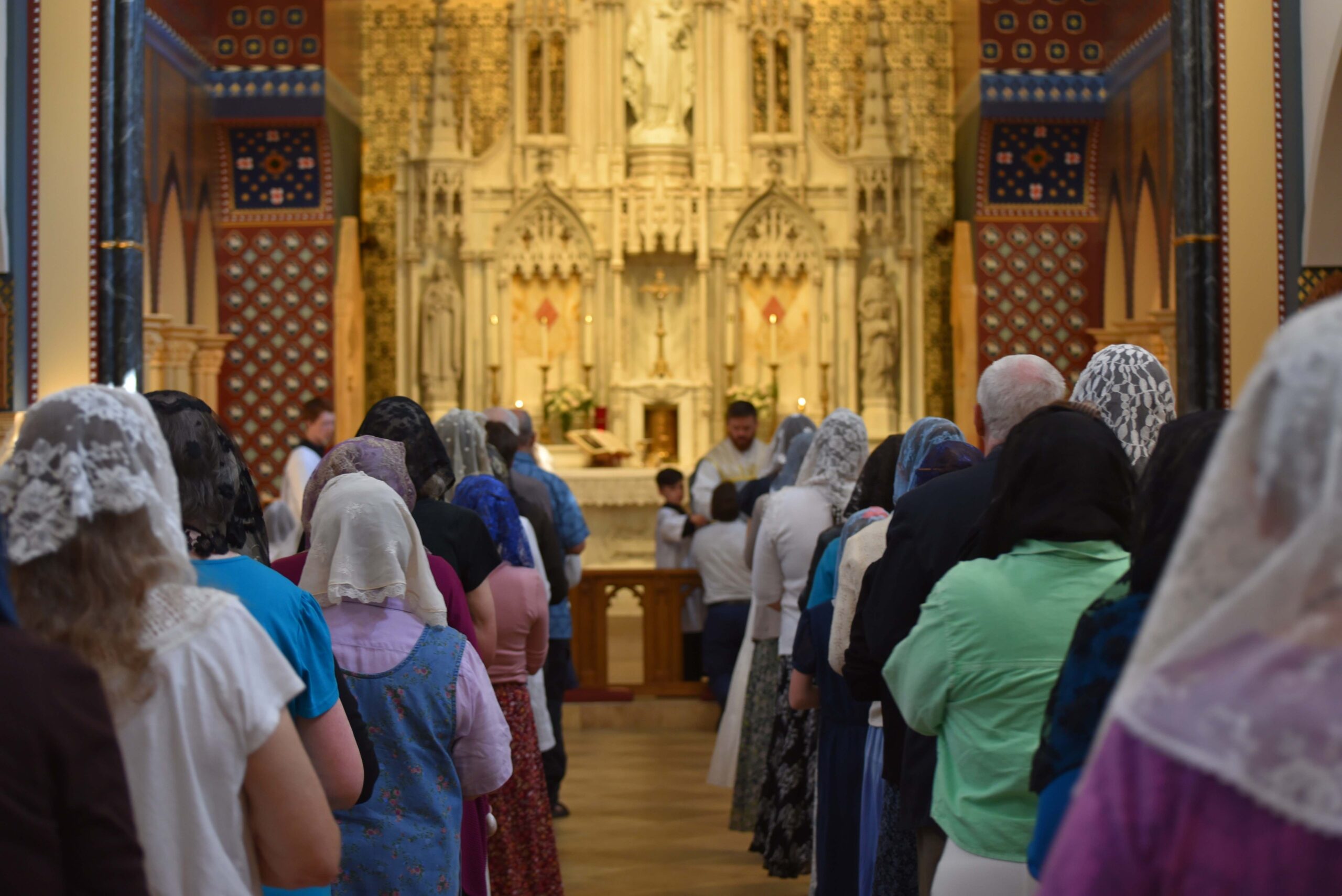
Photo by Alexis Baydoun on Unsplash