










What Is Your Priority?


If you are old enough to have taken a Franklin Day Planner or a similar course to improve your time management skills, you are probably familiar with the idea of discerning what your truest priorities are. In fact, there are many spaces in popular culture today where we speak about our priorities and how we can efficiently achieve them.
The thing is, the word “priorities” didn’t exist before the 20th century. Priority did not have a plural form because, by definition, it referred to the one thing that came first and was, in at least some sense, most important. John Mark Comer spoke about this in a recent podcast. Paige Espitia recently wrote about Unhurried Love, another theme Comer sheds light on.
The mutation of the word priority reveals the fractured focus that has been emerging in humanity since the industrial revolution. This fractured focus promotes the erroneous belief that we can do everything, be everything, achieve everything we want to, if we put our mind to it, get organized, and get busy.
The underlying belief is that we can have priorities. We don’t have to focus on One Thing and create a life around that focus. We don’t have to choose. We can have it all. Perhaps it can be argued that this has led to real advancement in the ways we live. But, even if that is true, what has been the human cost of dividing our focus?
The most important thing is to keep the most important thing the most important thing.
You may recognize this management mantra from the 1980s. When we apply it to our whole life, including our spiritual life, it takes on new gravitas. The saying itself begs the question, in singular, what is your priority? As Christians we desire to live a life with God. The more we do so the more His will becomes our priority. No other “priorities” can cohabitate this top position with God’s will. If something does, that thing is called an idol. With our Priority, the word becomes meaningless in plural.
If we picture a juggler, we can get an idea of why plurality of priority cannot produce true human flourishing. The juggler’s hands move quickly and barely touch each ball. His eyes are constantly moving. His bodily focus is on maintaining a certain balance amidst the chaos of motion. As a party trick, juggling may be entertaining. As a way of life, it means that no single thing ever receives focus but is instead, constantly being moved along, displaced by the next. Further, one mistake brings the whole system tumbling down.
Do the Next Right Thing
In recovery circles, a saying that is used to help keep things simple is, “Do the next right thing.” As opposed to juggling multiple priorities, the theory behind this saying is that there is always only one priority: the right thing. This right thing can only be perceived in a life ordered around God. The integrity of such a life yields vision to see which of our responsibilities (as opposed to priorities) needs our attention next. As opposed to juggling, doing the “next right thing” is more akin to swimming in a stream. The current, trust in God, orders our tasks, our days, and our lives.
Sometimes trust in God means we are doing things that may not seem urgent, may not seem important, may not seem like a priority. When we let go of our will and our need to control, we can trust that God, who sees beyond human sight, knows best how to use our time at each moment. The longer we choose to live in the current of trust, and reflect on it, the more we will see how God’s choices for our time yield a far richer life.
Plan but Remain Open
Of course, we all need to plan our lives. Of course, we must organize our days and our work. But when God’s will is our priority, we remain open, trusting, and flexible to those plans being adjusted or even tossed out the window by the God who loves us and knows our eternal needs best.
I can do all things through Christ who strengthens me. (Phil. 4:13)
As we remain open, we will see the truth of this verse evident in our lives. It is not by human dominance over time, space, and the material world that all things are possible. It is when God’s will flows through our yielded wills that all things become possible.
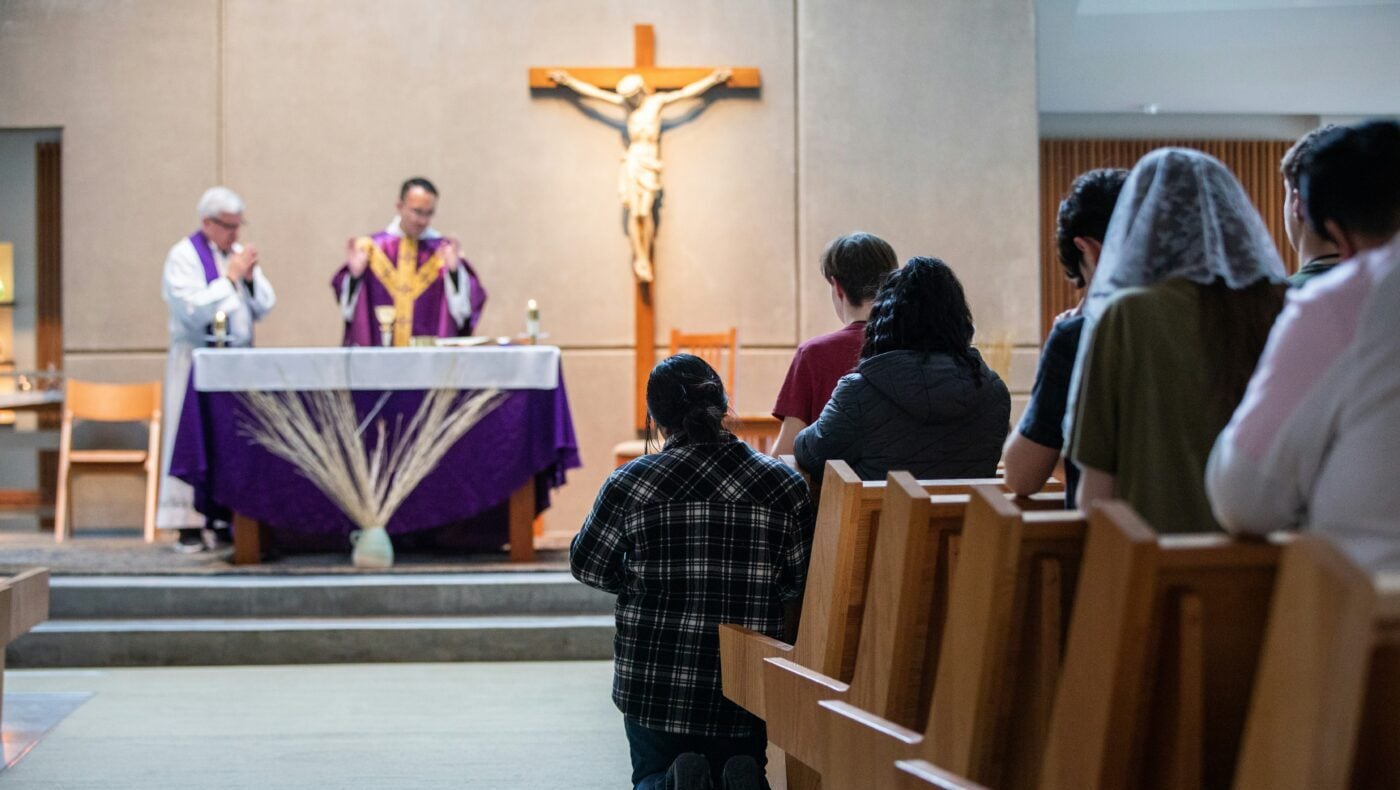
A priest preparing for a homily will usually pray with and study the readings for the Mass. Perhaps he will fully write out his homily as preparation. But often the most effective words are given through a priest who, having done his due diligence, sets the planned words aside, choosing instead to speak the words the Holy Spirit gives him in the moment. So can our whole lives be when we do the next right thing, keeping God’s will as our only priority.
Our God is a Prior Who Loves Us
In religious life the person responsible for the management and spiritual life of the community is often called the prior. The meaning of prior here is the one who comes first, the leader. This is not a position of privilege and ease, but of authority and responsibility. Their duties may include guiding the community in prayer, disciplining members, assigning work, managing the budget, and keeping the overall vision of the community in accord with the charism of the order.
A prior’s most important duty, however, is simply to do whatever is needed to guide the souls in his care to heaven. The relationship the prior has with his members is one of authority, but also of concern and love. The concern isn’t that the members actualize all their desires, but that they find the fulfillment of their desires in doing God’s will.
In a similar way, we can say that God is not just our priority, He is our prior. He is concerned with our day-to-day lives and with every hair on our heads. But His overarching concern is that our eternal souls one day be perfectly united with Him in heaven. Because He created us, He is in the unique position to guide us every step of the way. Because He loves us infinitely, He will guide us with the greatest care and concern if we make His will our priority.
Leaving the priorities of the age behind and entrusting our time and our work to God, our priority and our prior, will lead us away from a life of juggling competing desires. Our lives will feel more fully human and integrated as we choose to take care of our responsibilities by swimming in the current of trust by His grace, one stroke at a time.
Lord, help us to receive the freedom of a life lived trusting in your will, our priority. May we become fonts of your living water so others can move from the struggle of juggling to the joy of swimming in the current of trust. Amen.
Photo by Vitaly Gariev on Unsplash