













Archbishop defends chancellor appointment for convicted priest
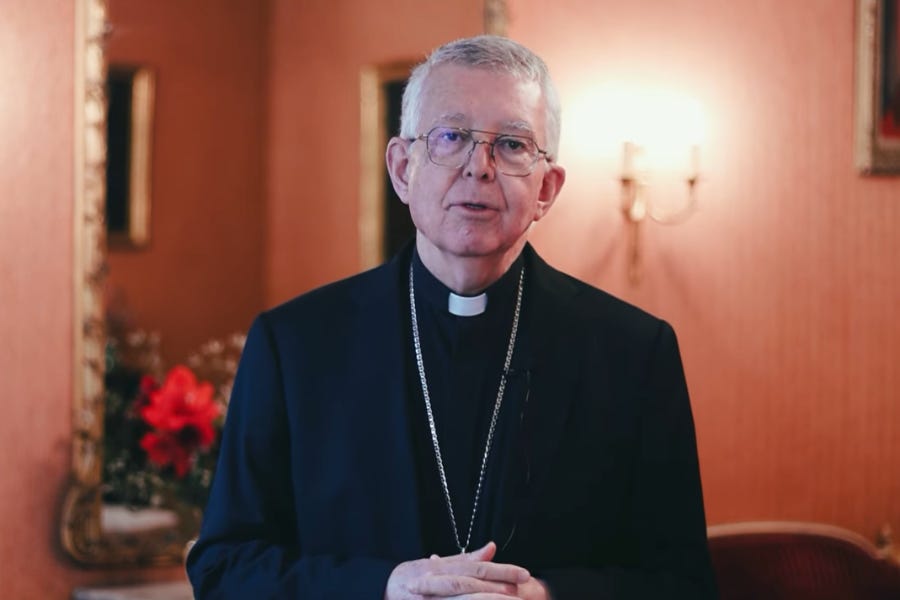
An archbishop defended Thursday his decision to appoint a priest convicted of rape as archdiocesan chancellor, amid an outcry from French Catholics.
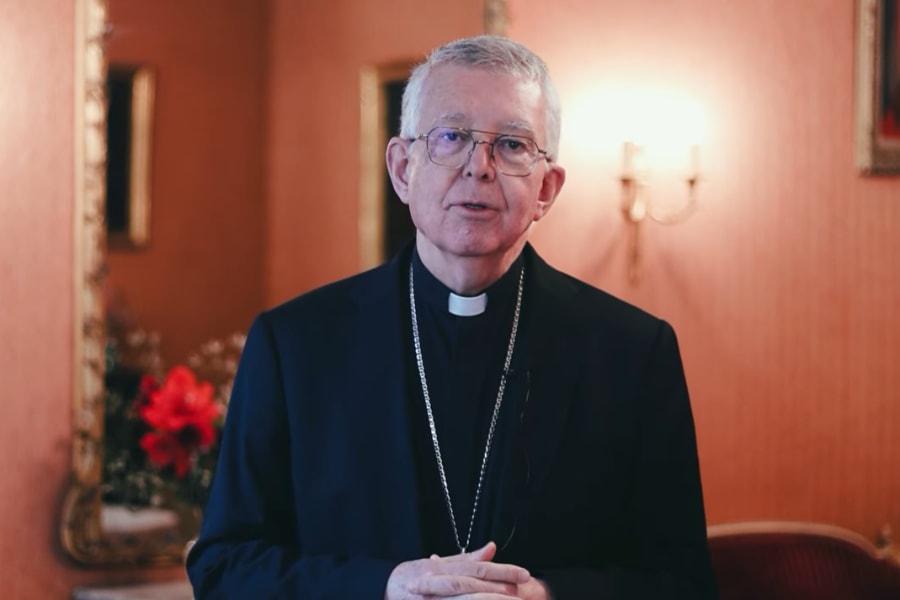
Archbishop Guy de Kerimel argued July 10 that the nomination of Fr. Dominique Spina as chancellor of the Archdiocese of Toulouse was an expression of mercy and did not amount to a promotion.
Spina, originally a priest of the Diocese of Bayonne, was convicted in 2006 of the rape of a teenage boy in the 1990s, whom he met while serving as a school chaplain. He was sentenced to five years in prison, with one year suspended. After his release, he transferred to the Toulouse archdiocese, then led by Archbishop Robert Le Gall.
De Kerimel, who has led the Toulouse archdiocese since 2022, said: “Rape is a crime, and there is no question of relativizing a crime. It is our absolute duty to do everything possible to ensure that the victim is recognized and supported in their life journey; they must move forward to rebuild by discovering that they are not primarily or solely a victim, even though these wounds cause lifelong pain.”
The archbishop said the Church, including the Toulouse archdiocese, had “put in place the necessary means to prevent the abuse of minors,” including listening points for victims, training for priests and laity, and the use of canonical procedures.
He noted that he personally received “many victims, and I weep with them.”
“We have reported cases to the courts and sent files to Rome. All this was also done for Fr. Spina, in his time. Rome did not dismiss him from the clerical state, i.e., the Dicastery for the Doctrine of the Faith judged that he could still carry out a ministry,” he wrote.
The archbishop recalled that Spina had served in recent years as an archdiocesan archivist and as vice-chancellor, overseeing matters such as baptism and marriage notifications.
“After the resignation of the current chancellor, I decided to maintain continuity of mission and appoint Fr. Spina as chancellor, while keeping his work in the archives,” de Kerimel explained.
“As chancellor, and as before, he will continue to work in his office at the archdiocese; he therefore has no contact with young people, and lives very discreetly. The chancellor is a man of the shadows in a diocese, he has no leading role, and this can in no way be understood or presented as a promotion, as certain press organs have sought to do. It’s a continuation and extension of a service he was already performing to a large extent.”
The archbishop noted that media coverage of the appointment, announced June 2 and effective Sept. 1, cited a provision from canon law that chancellors must be “of unimpaired reputation and above all suspicion.”
“I think we can say that of Fr. Spina today, if we believe, as Christian faith and simple humanity invite us to do, that a person’s conversion is possible,” de Kerimel wrote.
“This, of course, presupposes being able to rely on clear signs of conversion and life change.”
He went on: “Is it possible to show mercy to a priest who sinned gravely 30 years ago, and who has since demonstrated self-sacrifice and integrity in his service and his relationship with his superiors and fellow priests?”
“Pope Francis said that God is Mercy, that’s his Name. And we Christians are witnesses to God’s mercy.”
De Kerimel argued that Spina’s victim had been recognized and given justice, noting that Spina had served four years in prison.
“Both society and the Church must desire and ensure the safe reintegration of those convicted,” the archbishop said.
“Mercy is not opposed to justice, but it goes further. If there is no mercy, we are the most unfortunate, for there is no salvation possible for any of us. Not to show mercy is to lock the abuser into a social death; it is to re-establish a form of death penalty.”
The Catholic Church in France has struggled in recent years to get to grips with a burgeoning abuse crisis.
The Independent Commission on Sexual Abuse in the Church (CIASE) estimated in 2021 that as many as 330,000 children were abused from 1950 to 2020 in the French Catholic Church.
In response, the French bishops promised to undertake “a vast program of renewal” of their governance practices.
In 2022, French Cardinal Jean-Pierre Ricard admitted to abusing a 14-year-old girl in the 1980s.
Prominent figures within French Catholicism have faced posthumous accusations of sexual misconduct, including Abbé Pierre, founder of the Emmaus charity, Fr. Georges Finet, co-founder of the Foyers de Charité, Fr. Marie-Dominique Philippe, founder of the Community of St. John, and Jean Vanier, a Canadian who founded the L’Arche community in France.
Following his ordination as a priest of the Diocese of Bayonne, Spina was a high school chaplain and parish priest in the town of Pau. He was also diocesan vocations director before facing criminal charges.
Multiple rapes occurred between 1993 and 1994 when the victim was 16 years old and a student at Notre-Dame de Bétharram, a Catholic school engulfed in a series of sexual abuse scandals that took place from the 1970s to the late 1990s. French Prime Minister François Bayrou has been accused of failing to act to prevent abuse at the school when serving as education minister in the 1990s — an accusation he denies.
The victim later entered diocesan seminary, and allegations were investigated after the victim told the seminary’s rector what had happened.
Spina was removed from his role in 2000 when an investigation was opened, and arrested in 2002. In 2006, he was convicted of rape and began serving his prison sentence.
Archbishop de Kerimel concluded his July 10 statement by calling for reflection on Ezekiel 33:12, which says that “the justice of the just will not save them on the day they sin; the wickedness of the wicked will not bring about their downfall on the day they turn from their wickedness.”
De Kerimel said the prophet Ezekiel “calls us to mercy, which is our only hope.”
What's Your Reaction?
 Like
0
Like
0
 Dislike
0
Dislike
0
 Love
0
Love
0
 Funny
0
Funny
0
 Angry
0
Angry
0
 Sad
0
Sad
0
 Wow
0
Wow
0