




















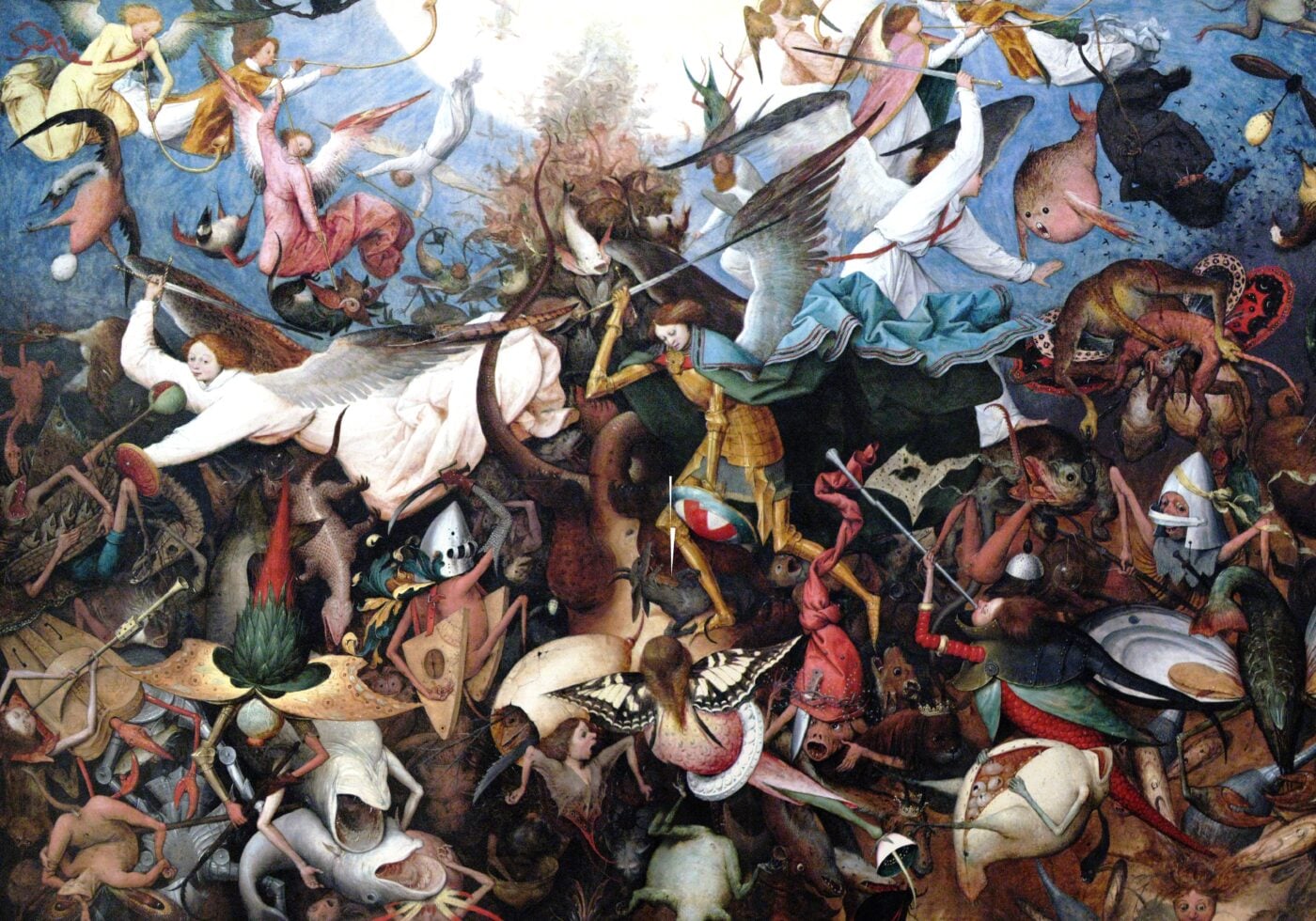


Faust, False Fire, and the Terror of Demons


On March 19, 1859, Charles Gounod’s Faust received its premiere at the Théâtre Lyrique in Paris. That date matters far beyond the opera house because this work carried into music one of the most haunting stories ever given to Europe. Gounod’s opera drew its substance from Johann Wolfgang von Goethe’s Faust, especially Part I, through the French adaptation of Jules Barbier and Michel Carré. Goethe’s Part I came in 1808, and Part II followed in 1832 after his death. Later, the opera grew further in prestige and, by the turn of the twentieth century, had become one of the most widely performed operas in the world.
Nevertheless, the story itself reaches even deeper into the soul of the West. Faust is the learned man who has tasted knowledge, pursued experience, and pressed against the limits of human striving, yet he still feels hollow. Therefore, he turns toward forbidden power, and he enters a pact with Mephistopheles, the demonic tempter who offers access, pleasure, prestige, and excitement in exchange for disaster.
Goethe transformed an older Faust legend into a vast spiritual drama about desire, pride, temptation, guilt, seduction, ruin, judgment, and, finally, the question of salvation itself. In Gounod’s hands, that drama becomes intensely human, especially through the tragedy of Marguerite, whose innocence is crushed through Faust’s selfish hunger.
That is precisely why Faust still pierces the conscience. This story says that a man may gain culture, education, pleasure, and even access to hidden things, and yet lose his soul through the slow surrender of his will.
It says that evil rarely enters dressed in ugliness. Rather, it comes clothed in promise, refinement, fascination, and subtle invitation.
Consequently, a society that calls itself secular and still plays with crystals, horoscopes, occult imagery, ritualized self-invention, and neopagan fantasy needs Faust more than ever. Our age publicly dismisses transcendence and then privately hungers for enchantment. Our age mocks the sacred and then reaches for counterfeit sacraments. Our age rejects God and then seeks power through substitutes. Goethe saw that sickness long ago, and his diagnosis still cuts deeply into the modern conscience.
Indeed, the genius of Faust lies in its understanding of the divided human heart. Faust says, “Two souls, alas! are lodg’d within my breast.” That single line has endured because it tells the truth about fallen man. We feel the pull of heaven, and we feel the drag of self. We long for communion, and we chase possession. We hunger for purity, and we flirt with corruption. We crave covenant, and we drift toward control.
The drama of Faust is therefore the drama of Genesis after Eden, the drama of Israel amid idols, the drama of every baptized soul who knows that sin always asks for one more surrender. When I read Faust, I do not merely see a reckless scholar from another century. I see the human person wounded by the ancient lie that life can be seized apart from God and still remain full, beautiful, and blessed.
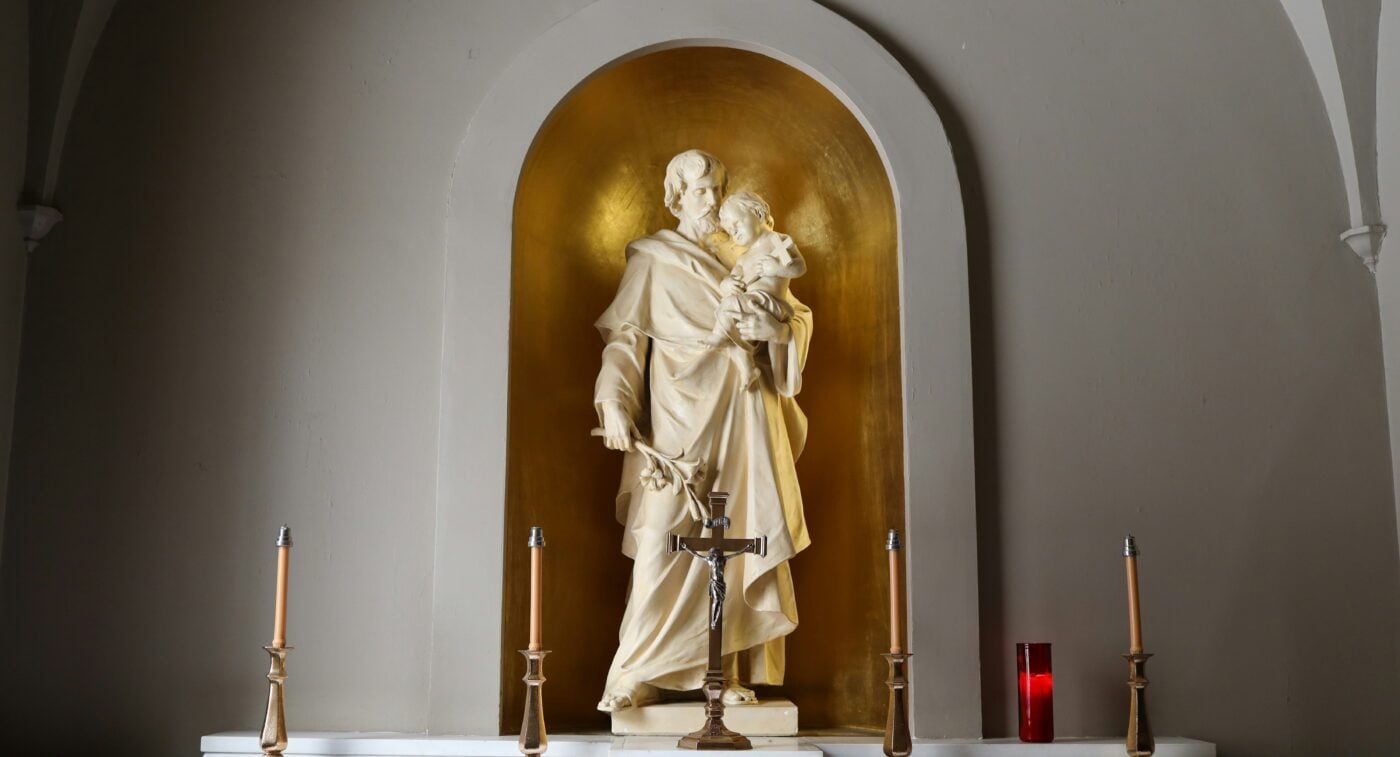
And here, very fittingly, St. Joseph enters with profound force. The Church calls him “Terror of demons” in the Litany of St. Joseph, and that title is neither ornamental nor sentimental. It arises from his vocation as guardian of the Redeemer, spouse of the Virgin, protector of the Holy Family, and faithful servant of the Father’s will.
Joseph does in silence what Faust refuses to do in brilliance. Joseph receives rather than grasps. Joseph obeys rather than bargains. Joseph protects rather than exploits. Joseph remains pure in a world full of spiritual danger. Joseph keeps company with Jesus and Mary, and therefore hell trembles before him. The Litany also calls him guardian, defender, servant, and protector, which means that his fatherhood carries a distinctly spiritual authority.
Therefore, when Faust says, “Two souls, alas! are lodg’d within my breast,” Joseph gives another image of manhood altogether. In Joseph there is interior integrity. In Joseph there is ordered love. In Joseph there is a heart gathered under God. He never seeks hidden knowledge through dark powers. He never reaches for mastery through rebellion. He never treats another person as material for his own hunger. Instead, he receives his mission in faith, rises in obedience, takes the Child and His mother, and guards the mystery entrusted to him.
Thus, Joseph becomes a luminous answer to the fractured spiritual condition that Faust reveals. Faust embodies the soul seduced by appetite and pride. Joseph embodies the soul anchored in covenant fidelity, holy chastity, and paternal courage.
Moreover, this is why the Western world has never been able to let Faust go. The legend generated plays, poems, music, philosophical reflection, and artistic reinterpretation because it names a permanent temptation within civilization itself. Europe built universities, cathedrals, symphonies, and great cities, and it also repeatedly flirted with power severed from worship, desire severed from truth, and mastery severed from moral order.
Faust remains important because he is more than one man. He is cultured rebellion. He is spiritual ambition turned inward. He is intelligence corrupted by appetite. He is civilization attempting transcendence without repentance. That is why this story shaped European consciousness so deeply, and that is why it still speaks forcefully to a West that has grown weary, spiritually curious, morally unstable, and quietly vulnerable to old seductions with new packaging.
Accordingly, Faust would be an extraordinary message to recover in our age. It reminds us that demons still tempt, that souls still matter, that sin still disfigures love, and that fascination with the forbidden still destroys the innocent. At the same time, St. Joseph reminds us that God has already given His people a protector whose purity, humility, and fatherly strength terrify the kingdom of darkness. So then, in an era of atheistic slogans and occult flirtation, of self-made identity and spiritual confusion, Joseph should be invoked more frequently and loved more deeply. He teaches men how to be whole. He teaches families how to live under divine shelter. He teaches the Church how to keep watch near Jesus.
So yes, Gounod’s Faust deserves to be remembered today. It tells the truth about temptation with grave beauty. Yet even more beautifully, St. Joseph tells the truth about holiness. Faust descends through the seduction of divided desire. Joseph walks quietly in the light of ordered love. One reaches toward darkness and finds ruin. The other receives God’s will and becomes dreadful to demons. In that difference, one finds a lesson urgently needed for our age and, very personally, for every soul that still longs to belong entirely to God.
Image from Wikimedia Commons