














Kudos for My Guidance Director


Pope John Paul II, in his international best-seller, Crossing the Threshold of Hope, states that “The fundamental dimension of man’s existence…is always a co-existence.” As I look back on my life, I realize how indebted I am for the many people who entered my life at the right moment and opened doors for me that I could not open by myself. It is only too clear to me that a person does not blaze a path for himself without the help and direction of others. Mere individuality is a deprivation.
When I was in high school my future was a blank. My mother would ask me, on almost a daily basis, if I finally determined what course of action I would take in the future. I had no answer for her, much to her disappointment.
My parents were poor in finances, but not poor in spirit. My father never earned enough money to pay taxes, and my mother, duty-bound to her three children, never worked a day outside the home. The idea of college, given its expenses, did not seem plausible.
Mom and dad thought I had a promising future as a “piano player.” I use that term as opposed to a “pianist” because the latter term, however desirable, would be nothing more than a dream. Nevertheless, I knew in my heart that I was not equipped for a career in music.
I did not do very well in high school. During study room I worked hard at writing poetry. I rarely brought a textbook home where my singular passion was for the piano. One day I was called into the guidance office. The invitation was a surprise to me since my class at B.M.C. Durfee High School numbered over 400 students. My guidance counsellor told me that I should be doing better. I agreed with him but took his advice more as a complement that an incentive to work harder. I was pleased, however, that he talked about college, as if I were a valid candidate.
It is the vocation of a guidance director to guide. Thomas P. Cullen was up to the challenge. He informed me that Stonehill College, just a half hour’s drive away, was offering an exam and that I might use that opportunity and see what happens. I took the exam and was awarded a four-year scholarship. My path had been set. I graduated four years later and, due to the kindness of Holy Cross Fathers, was strongly recommended for graduate school where I earned a Ph.D. in philosophy. It was at graduate school that I met my future wife who would be the mother of our five children who, in turn, would produce 14 grandchildren.
In retrospect, I believe that my meeting with Mr. Cullen, the guidance director, was providential. I shudder to think what my future would have been without his guidance. He has passed to another world where, no doubt, he is among many who were the beneficiaries of his astute guidance. I regret not having the opportunity thank him. My kudos have come late. But, without question, though I could not have realized it at the time, our meeting holds first place among all the meetings I have ever had.
Mr. Cullen exemplified what Pope John Paul II said about “co-existence.” We do not navigate through life alone. Others co-exist with us on our long journey. They are placed there by God. We exist to help each other. This is made possible by the fact that we co-exist with them. It is of paramount importance, then, that we be open to each other so that we can perceive the light which we could not find by ourselves alone.
Pope John Paul II spoke of the pre-eminent problem in the modern world as the crossroads between alienation and participation. Karl Marx spoke a great deal about alienation, but his concern was the alienation between the worker and his work. John Paul was talking about the alienation between human beings. A providential participation among people is made possible because we are made to be co-present to each other.
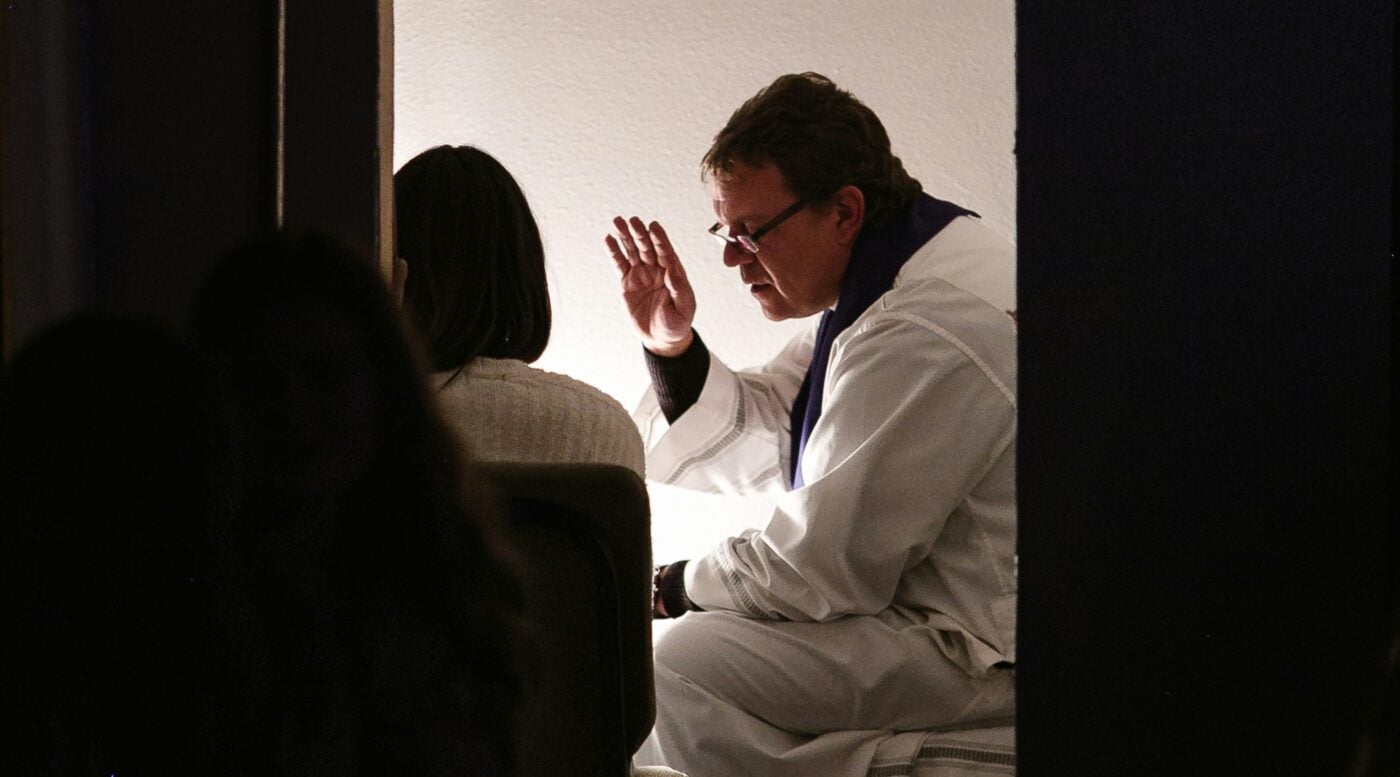
A priest, as well as a guidance counsellor, offers direction. Bishop Fulton J. Sheen wrote a book entitled, Go to Heaven. By contrast, telling people to go the other way is an egregious misdirection. We should all help each other to get to heaven. That is a simple directive that indicates the goal, though not the means to attain that goal. Martin Buber’s I-Thou offers another example of how we co-exist with each other. And it is because we co-exist that we can help each other to find God. In his book, Daniel, he writes about how God sends certain counsellors into our lives and that we should always be open in order to recognize such visitations.
I can divide my life into two parts: the time before and the time after my meeting with Mr. Cullen. In the first part I was wandering; in the second part I was traveling. He was my pilot, although, in his mind, no doubt, I was just another high school student who needed guidance. And this is why it pains me not to have given him the proper thanks he deserves. I fancy, however, that heaven is a place where people give each other belated thanks.
Photo by Jan Tinneberg on Unsplash