












How Canada’s clergy navigate the pastoral challenges of assisted suicide

Nine years ago, the Canadian government legalized a Medical Assistance in Dying program, making physician assisted suicide widely accessible across Canada for those who qualified for the program.
To date, roughly 75,000 people have died from MAiD, including many Catholics.
Across the United States, 11 states have legalized some form of assisted suicide and more than a dozen others have proposed legislation to do so. Across the Atlantic Ocean, the UK made headlines last week after members of parliament voted in favor of a bill that would legalize assisted suicide at the national level, sending it to the House of Lords for a vote.
For priests and those working in pastoral ministry, physician assisted suicide presents a number of pastoral challenges.
Deacon Larry Worthen is no stranger to these complex situations.
For 10 years, he has stood on the front lines of the battle over physician assisted suicide in Canada, helping bishops and priests navigate the implications of MAiD for the Catholic Church.
Ordained for the Archdiocese of Halifax in 2012, Worthen is executive director of the Christian Medical and Dental Association of Canada, a national organization which aim to help medical professionals live their faith.
Worthen spoke with The Pillar about the thorny pastoral challenges Canada’s MAiD laws present.
The following interview has been edited for length and clarity.
What are some of the pastoral issues that priests are facing on the front lines in Canada?
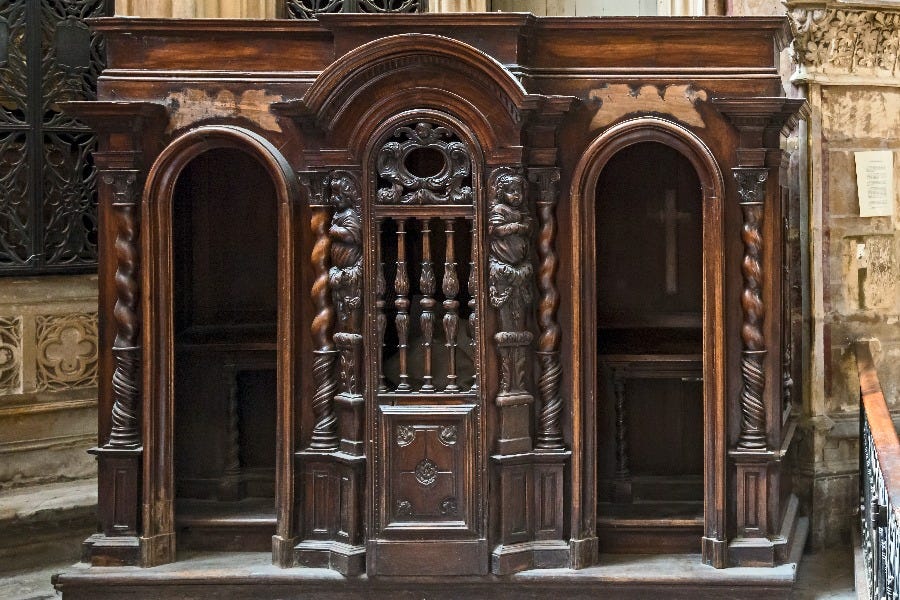
Priests can be called to the hospital to provide last rites, viaticum, confession and anointing for a person considering MAiD - without knowing that this is their plan.
Either before or after they go, they can find out that the person intends to die by MAiD within the next few days. The teaching of the Church says that no one should receive those sacraments if they are intending to commit a mortal sin.
If these priests find out before the anointing that the person intends to use MAiD, then they have a very awkward conversation with the patient and possibly their family about why the person cannot receive last rites.
If they find out after the anointing, then they feel very betrayed that they have prayed for the person to have a peaceful death when at the same time the person is choosing to do something contrary to the faith.
The other thing that can happen is someone can die by MAID and then the family can come to the Church and ask for a funeral. That is [challenging] because there is a section in canon law that deals with this that says that you cannot provide an ecclesiastical funeral for someone who has committed notorious sin in a publicly known scandal.
Bishops in Canada have been dealing with this in various ways, but it certainly is problematic from a pastoral and from a priest perspective, no matter how you cut it.
Is this something that priests come across frequently? Are there a lot of Catholics in Canada who are choosing MAiD?
Yes, this is happening in parishes.
There was a study done in 2014 by Angus Reid, which is one of Canada's preeminent pollsters, that surveyed people who had attended Mass at least once in the previous month. Of that number, 70% were in favor of legalizing assisted suicide.
The feeling is that the 30% of people who are opposed to assisted suicide may actually be dwindling, because we have now had MAiD for almost 10 years in Canada, and in the press we hear constant stories about how great it is. So the people in the pews are hearing how great it is from the media, and they are not hearing the downside of MAiD.
Does the strong public support for MAiD, even among Catholics, make it difficult for priests to preach on this?
I have detected a reluctance among clergy to preach on this topic, because they feel that they are not competent to be entering into this because they do not understand how MAiD works. Some have even asked me, ‘Will I be sued if I try to convince a patient not to take MAiD?’
When you talk about this issue, you would have to show pastoral sensitivity in the homily so that you were seen as exhibiting the mercy and the love of Christ. Then, you would have to explain to people how it is possible that the choices we make can permanently affect our relationship with a loving and caring creator.
That is something that we do not often talk about in terms of homilies. We do not often talk about the implications of sin.
So you have to be very careful to do that in a very sensitive way. But you also have to be firm in the explanation that the 10 Commandments are the 10 Commandments, and those commandments require adherence. It's not something that can be waived.
When I preach on this, I tell people, this [moral teaching] is not something the pope dreamed of. This comes from the boss, the numero uno. It comes from God.
We can not kill people.
It doesn't matter what the circumstances are, it is beneath human dignity.
It is very, very hard for that message to get across in a way that is sensitive, compassionate, and accurate.
Has the clergy in Canada received guidance on these issues from the bishops, the bishops’ conference, or the Vatican?
Well, Samaritanus bonus - the 2020 letter from the Dicastery on the Doctrine of the Faith - was a response, I believe, in part to the issues in Canada.
There is nothing from the national Canadian Conference of Catholic Bishops, but individual bishops in various regions have published documents. The specific one that I am most familiar with is one that came out of Alberta, Canada which reiterates the requirements of Samaritanus bonus, but it also specifically discusses funerals.
Funerals have become the biggest area of contention because the Vatican did not clarify when you should give a funeral and when you should not.
The problem from a Catholic perspective is that if you look at Samaritanus bonus, it says that euthanasia is intrinsically evil. That means it does not matter about the circumstances under which MAiD is conducted. It is always, in every way wrong.
It is also grave matter. In the past,...we have said that for a “normal suicide” well, the person was [perhaps] not competent when they made the decision to commit suicide, therefore we questioned their moral culpability.
But with MAiD it's completely different. In order to get MAiD, you have to be competent and you have to be aware of what you are doing.
It is like the Canadian government has developed a mortal sin; it is like a mortal sin machine.
We can not say that everyone who receives MAiD in Canada is going to experience a rupture in their relationship with the Lord. We can not judge human acts, but it removes a lot of the gray area that could be an opportunity for people to receive mercy.
Thus, our pastoral care must be driven from the perspective of making the laypeople aware of the spiritual risks of this procedure.
How would you deal with a family whose relative just went through MAiD and they ask for a funeral Mass for that person?
What is the pastoral approach in that situation?
Well, that is a very tough one.
The question in my mind is to what extent was Christian faith real in this person's life, and to what extent will their burial affect the thinking of their family, the people at the funeral and the regular Church community about the Church's teaching on euthanasia? I think that is the primary concern.
The person is already dead. You could always have a Mass to pray for the person's soul. But the question concerning a funeral is scandal.
Jesus talks about how it is better for you that a millstone be tied around your neck and you'd be cast into the sea than to cause one of these little ones to stumble. That is what scandal is.
We have to keep that in mind in these situations. There is a tendency to want to be seen as compassionate, to be seen as a nice guy. But you have to think about the salvation of the other people.
For instance, you could have a situation where the Catholic in question was adamant that they wanted to die by MAiD and they did not see anything wrong with it and their family totally supported them in that circumstance. What are you saying by having a funeral?
In our diocese, someone who died by MAiD is not permitted to have a funeral Mass, but they are permitted to just have a Liturgy of the Word. That is the way our bishop has decided to handle it.
The problem that the bishops have is they want to create rules to make it easier for the priest to discern what's right. The problem with any rule you make up is there's going to be an exception. I like the policies best where the bishops just lay out the rules and then they say abnormal or unusual cases can be taken to the bishop for a decision based on particular circumstances.
What do priests do when they arrive at the hospital to administer last rites and viaticum, only to discover that the person is ready to receive MAID? What do they say in that situation?
There is no guidance about what to say.
The guidance is simply you must not give it.
I think this would be one of the most difficult things you would have to deal with as a member of the clergy.
If it were me in that situation, I would be praying immediately, asking the Lord for guidance. You do not know whether the patient even has the capacity to have a dialogue with you, but if they are able to speak with you, what I would say is that from my own pastoral experience, what's important is listening to the patient and asking questions.
For me, the most important question to ask is why is it that you want to take this step?
I think that what is driving a lot of this is fear and the grief process that people go through with loss. To some extent the MAiD option short circuits that natural grief process.
I have had a situation with a guy who was doing extremely well with his dying process and then had a number of very serious losses all in the same week which totally overwhelmed him.
When I talked to him, he was totally in tears.
Now, if he had talked to a doctor who was pro-MAiD, that doctor could have ended his life. Instead, he talked to me and I just listened to him and he talked about what his fears were, what his concerns were, and we were able to work that through them so he could process it.
Once he processed it, he simply walked out the other side of it.
He still had the same limitations. But we were able to talk through it, and then I was able to help him to see that he still had hope. I prayed with him and I said, the Lord is there with you at this difficult time as you are making this transition. I said, maybe you are just overwhelmed with grief. That seemed to be enough to help him to be able to move to the next stage.
How does Canada’s MAiD program compare to what is being rolled out in various locations in the United States?
The situation in the United States and Canada are worlds apart. The states in the U.S. that have legalized assisted suicide have legalized assisted suicide, which means giving the patient a lethal prescription which the patient administers themselves.
In Canada, it's full-blown euthanasia, which is a lethal injection that is given to the patient by the doctor.
Canada’s scope for who can receive is also much broader than in the States. In states like Washington, Oregon and California, you have to be dying in the next six months in order to be able to get assisted suicide.
In Canada, there's no requirement for death to be foreseeable, and it's open to persons with disabilities, persons with chronic conditions. Being on the autism spectrum, for instance, is a reason for euthanasia, and the laws are already on the books for it to be expanded to mental health.
From a legal perspective, in Canada, euthanasia was legalized by one judge making one court decision in British Columbia. The concern with what happened here was that the judge not only struck down sections of our criminal code, but they also created the criteria. This is really problematic because once that was approved by our Supreme Court, then all legislation provided by Parliament must correspond to that criteria. That is the biggest legal issue that we are facing is that the legislation was not duly considered by Parliament. It was decided by one judge.
What would you say to American Catholic priests, deacons and those working in pastoral ministry as we start seeing these questions increasingly arise in public discourse and in parish life?
I would give them a strong exhortation to fight this movement any way possible.
I think that the USCCB should have a program that would be implemented in every diocese that would explain to parishioners what is wrong with assisted suicide, because this is a grave evil in this country.
It's like Pandora's box. Once the lid is open, even a little bit, there is literally no way to stop the growth.
In Canada, we should have had educational programs 10 years ago to explain to the Catholic faithful what about euthanasia is wrong. It is like if you have a child, you immunize them against the disease. Well, we have to immunize our faithful against this disease. And I don't think our Church leaders understand how our faith is being undermined at the grassroots level by these very secular attitudes that are creeping into the Church.
The Christian Medical and Dental Association of Canada has a program called Dying with Christ, living with Hope. It's a three-evening program, two hours each evening, that is intended to help parishes recognize the risk of euthanasia and teach them the evil behind it. We hope that when they see what has happened in Canada, they can realize the risk of legalization.
The other focus of the program is to help parishes reorganize so that they can support the vulnerable in their midst. For instance, in my parish, there was a ministry for taking communion to the sick. Well, that's a very admirable ministry, but in the past 10 years, it has become even more important.
Now those visitors are an early warning system for the priest, because if you are taking communion to Mrs. So-and-So, and Mrs. So-and-So is down in the dumps and her treatment is going nowhere, and she's getting discouraged, and her family's all out of town; Mrs. So-and-So then needs to be put on the list so that she's visited and supported because she could very well be a candidate for MAiD.
We need a huge mind shift in the way we even organize our pastoral ministries. We need to renew our whole focus on dealing with the vulnerable in our midst. I really believe that this is where we're being called, and our society is headed in the other direction because the complete secularization of the world ends up harming vulnerable individuals.
What's Your Reaction?
 Like
0
Like
0
 Dislike
0
Dislike
0
 Love
0
Love
0
 Funny
0
Funny
0
 Angry
0
Angry
0
 Sad
0
Sad
0
 Wow
0
Wow
0