










In Imitation of the Silent Father: Our Choices as Lessons


A man approached my car at a stoplight. I don’t know what he wanted. I didn’t wait to find out. I rolled up the window, clicked the locks, kept my eyes forward. My daughter was in the back seat. I told myself I was protecting her. I’m still not sure if that’s true.
Actions speak louder than words.
I usually go to great lengths to avoid clichés in my writing, but there’s something powerful about their simplicity and how they stick with you. This one endures because it captures a fundamental truth about human nature. We trust what we see more than what we hear.
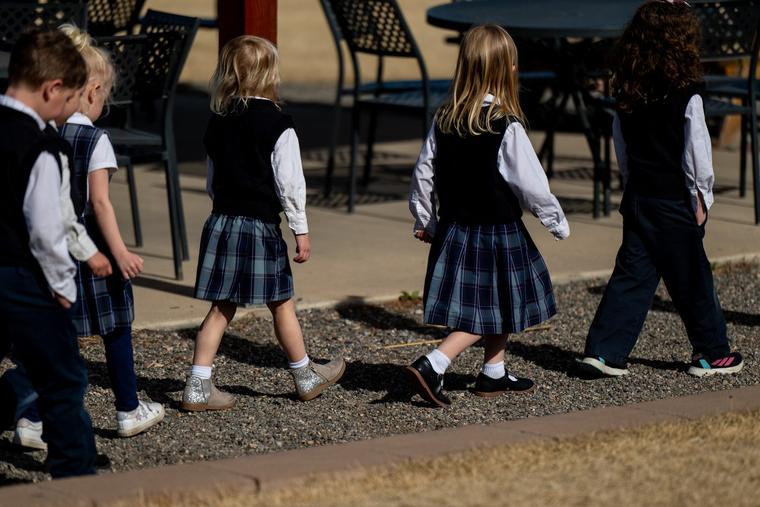
My children watch me far more carefully than they listen to me.
Sometimes I know exactly where I’ve failed them. When I tell them to be kind, but they witness me being impatient with the neighbors or their mother, the lesson they absorb isn’t from my words. It’s from my behavior. When I preach about honesty but they catch me in a small lie to avoid an awkward situation, my credibility erodes faster than any lecture can rebuild it. If it can be rebuilt.
Other times, I’m less certain. Was the locked door wisdom or fear? Protection or prejudice? I still don’t know. But my daughter saw it either way. She’s filing it somewhere, drawing conclusions I may never hear.
My choices become lessons. So do my reactions, especially the moments where I hold onto integrity and the ones where I let it slide. My children are writing the story of who they want to become partly based on the story they see me living. That knowledge transforms even mundane moments into profound opportunities for influence. The tone I take with their mother. Whether I hold my temper when things break down. What I do when plans fall apart.
Maybe that’s why this cliché persists. It reminds us that our lives are always speaking, whether we intend them to or not.
St. Joseph understood this. His silence in Scripture speaks volumes. Quiet strength rooted in contemplation, expressed through steady action. His wordless obedience to God’s will, despite the extraordinary circumstances, reveals a man fully submitted to divine providence.
Consider what that submission looked like in practice. An angel appears in a dream telling him to take Mary as his wife despite the scandal. He obeys. Another dream warns him to flee to Egypt in the middle of the night with an infant and a recovering mother. He obeys. Years pass in foreign exile. Years of waiting, of not knowing when or if they’d return home. Then another dream. Go back. But when he learns Archelaus, Herod’s son, rules Judea, he pivots to Galilee, settling in Nazareth instead of Bethlehem. At every turn, Joseph receives just enough light for the next step, never the whole map. And at every turn, he moves.
Joseph’s task was daunting. He wasn’t just protecting any child. He was raising the Son of God. He must have sensed that his character and choices would shape the human experience of the Word made flesh. The weight of that responsibility had to be staggering.
And yet, Joseph fulfilled his calling through ordinary fatherly actions. Teaching Jesus his trade. Providing for his family. Showing Him how to be a man.
Pause on that first one. Joseph taught Jesus carpentry. The Word who spoke creation into existence, who called light from darkness and shaped the mountains, learned to plane a board under Joseph’s patient instruction. The hands that would one day be nailed to wood first learned to shape it in a Nazareth workshop. There’s deep mystery here. God chose to experience human limitation, including the limitation of having to be taught. And He entrusted that teaching to Joseph. Every corrected grip on a chisel, every demonstration of how to judge the grain, became part of how the Son of God experienced human formation.
He had no manual for raising the Messiah. He simply lived with integrity and trusted that his faithful example would be enough.
Joseph shows us that a father’s most important words may be the ones we never speak aloud but rather the daily witness of how we love, how we work, how we pray, how we forgive, how we respond when life doesn’t go as planned.
Joseph trusted that his actions would teach the Word of God what it meant to be human. That’s both a profound privilege and a template for every father trying to shape young hearts through faithful living rather than perfect words.
What does his example demand of us? Not eloquence. Not grand gestures or dramatic sacrifices that make for good stories. Joseph’s fatherhood was built on smaller stuff. Consistent presence. The discipline of follow-through. Trust that the next step would be enough even when he couldn’t see the destination. He didn’t need to understand the full plan to act faithfully within it. For those of us who want a manual, who want certainty before we commit, Joseph offers a different model. Hands open, feet moving, heart anchored in a God who reveals only what we need, when we need it.
I don’t have that certainty. Not yet. Most mornings, I don’t even have that trust. But I can keep showing up.
Tomorrow morning, when I wake up, when I’m tempted to rush through breakfast, snap at the slow internet, complain about work or my aching back, I’ll remember that my children are watching. They’re learning not just from my instruction, but from my unguarded moments. From the thousand small choices that reveal who I really am. And the next time a stranger approaches my window, I’ll remember that too.
In those times, I want to follow Joseph’s example. To speak through steady presence, consistent character, and the quiet confidence that comes from trusting God with outcomes I cannot control.
My words will fade.
The father they saw me be?
That lesson will echo through generations.
Author’s Note: This piece first appeared on C.E. Albanese’s Substack, where you can find more spiritual reflections and stories.
Photo by Brett Jordan on Unsplash