


















Letting Go of Outcomes, Adversaries, and Anxious Love with St. Catherine of Siena


In the biography of St. Catherine, we hear that this holy saint once complained to God with sorrow and frustration that her prayers and offerings could not prevent the loss of salvation for certain souls. In her great anguish, God responded with perhaps the most famous quote of all time attributed to her Dialogue with the Lord:
“Daughter, thou art she who is not. I am He who is.”
In other words, God answered Catherine’s prayer by showing her the purpose of her anguish: to teach Catherine to abandon her self-will and to surrender instead to the will of God. There could be no greater exercise than to trust in the goodness and mercy of the Lord, even in the face of our most challenging trials.
And yet, there is a second aspect to Catherine’s insight with regard to our neighbor that is also important for us to understand: as painful as it is to let go of our anxious attachment to what we think is best for those we love, it is just as challenging to let go of our resentments when it comes to those we find difficult to love. In both cases, the ultimate lesson for us is the same: God is offering us the opportunity to learn that He is “who is,” and we are “who is not.”
Why We Must Love our Adversaries
Whatever happens to you, never think that it comes from men, think that it comes from God and is for your own good. (The Dialogue of St. Catherine of Siena)
All of us have people in our lives who offend us, cause us anxiety, and worst of all, seem to bring out the worst in us. We don’t like who we are in their presence! It can seem that the best recourse we have is to avoid them entirely, lest we subject ourselves to the temptation to react with caustic words, manipulate our circumstances, gossip, murmur, or ruminate on our resentments.
But in situations such as these, if anger, anxiety, or resentment threatens to overtake us, it is because we are forgetting one thing: God is the one who allowed them in our lives.
What’s more, the Lord did not send these souls to us only because He needs someone to intercede for their conversion of heart. We must also recognize the opportunity God gives us to see the face of Jesus in their face.
But how do we manage to do such a thing when they resemble nothing like the tender, merciful Savior we know and love?
“This is why I have put you among your neighbors: so that you can do for them what you cannot do for me—that is, love them without any concern for thanks and without looking for any profit for yourself. And whatever you do for them I will consider done for me.” (The Dialogue of St. Catherine of Siena)
There is a greater purpose when prickly souls make us feel awful! This is the way in which we can prove our love for the Lord. It is the ones who point out our flaws, offend us, compete with us, take us for granted, or even complain about our acts of service who offer us the opportunity to love without receiving a single thing in return. In other words, when we love ones such as these, we participate in the kind of love that God has for us.
Of course, loving our adversary will be impossible without the grace of God revealing His purpose in these challenging relationships. For today, let us keep this purpose wrapped tightly in our hearts and minds as we encounter those prickly people throughout our day.
The Trusting Love that Saves Souls
And now, let us turn our attention back to those for whom our love comes naturally. Jesus calls us to share the Good News with ones such as these too, and to see His face in theirs, just as He does with our adversaries. But in their case, the challenge for us is often to let go. Specifically, to let go of the outcome of our prayers and offerings for them.
It is an enormous temptation for us to fall into sorrow and frustration when our prayers for them seem to be going unanswered, just as it was for St. Catherine of Siena. But let us take heart in the words of Our Lord to this dear saint: God is He who is. We are who is not. This is a rather poetic way of saying that outcomes are not up to us; they never were.
This is not to say, of course, that our prayers, our offerings, and our actions are pointless. But we must understand that the point of our prayer is union with God. Even St. Catherine of Siena herself, Doctor of the Church, had to come to understand this mystery in her own soul. Our prayer is meant to increase our trust, thereby increasing the peace of Christ in our hearts, and, most of all, increasing our love for God and neighbor—which then enables us to let all things go in a supreme act of surrender to God’s will.
Through her sorrow for the sins which she sees her neighbors commit against Me…inasmuch as they have infinite desire, that is, are joined to Me by an affection of love…their every pain, whether spiritual or corporeal, from wherever it may come, receives infinite merit, and satisfies for a guilt which deserved an infinite penalty.
In these words to St. Catherine, Jesus’ instruction is two-fold: one, He explains that our sorrow and contrition can “satisfy” a guilt on behalf of another person’s sin; and two, Jesus has given us the way to do so “infinitely.” This means that, by our sorrow over their sin, we have the opportunity to procure for that soul the merit of eternal life!
This is both astonishing and mysterious. But how can it be? We do not save souls by visiting the sacrament of reconciliation on their behalf, of course. Our contrition over their sins is not enough. There is one specific factor we must add to our sorrow, without which, we will not offer infinite merit for their soul.
What is this missing factor? Love.
It is our love for Jesus, united to our sorrow and contrition for the sins of our neighbor, which has the power to win over that neighbor’s soul. When we experience contrition with an “affection of love,” we are not ruminating on the past or about the future. Rather, we offer an affection of love that trusts. It is for this reason that our love for Jesus is so critical when it comes to participating in His plan to save souls.
The graces of My mercy are drawn by means of one vessel only, and that is—trust. The more a soul trusts, the more it will receive. (Diary of St. Faustina)
Author’s Note: This article was adapted from a chapter in 26 Steps with the Saints: Examining the Lives of the Holy Ones.
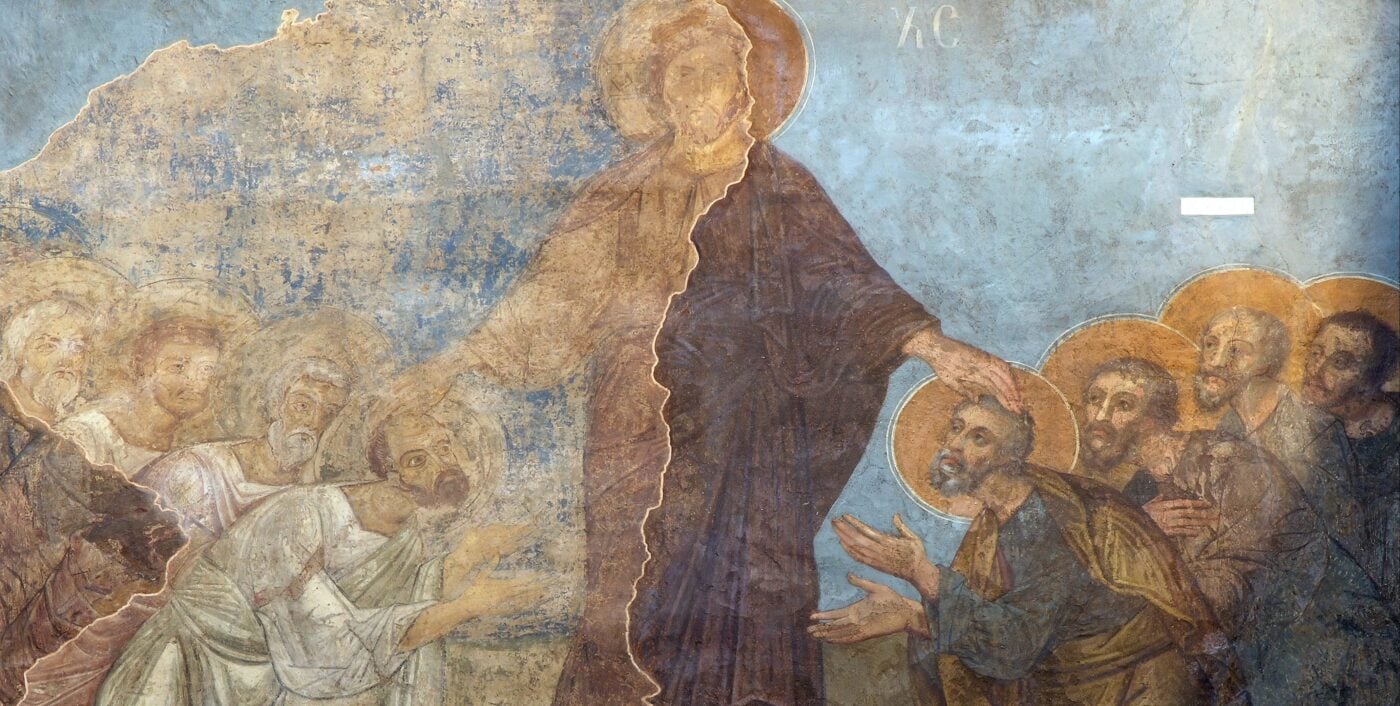
Image from Wikimedia Commons