

















Yes, Religion Has a Place on Campus


Recently, a friend and fellow student at Florida International University sent me an article from PantherNOW, FIU’s student newspaper, which posed a striking question: “Should Religion Have a Place in FIU?”
My friend isn’t particularly religious like I am, but even he was bewildered at the idea that anyone would say “no” to that question. And yet, that was the case that author Linette Garcia was making.
In the piece, Garcia criticizes FIU for investing in the construction of a multi-faith chapel on campus, while student housing remains limited. Garcia argues that a university should be “a space for intellectual growth, not spiritual guidance,” and that religion should exist as “a personal, off-campus sphere.”
But is that true?
Should religion be kept separate from higher education? And is that even possible?
Setting aside FIU’s construction choices, universities have always been places of religious inquiry and reflection. This role is essential to what a university is meant to be.
This question has been debated by intellectuals throughout history. St. John Henry Newman, a 19th-century theologian and Oxford scholar, addressed it in his 1873 work, The Idea of a University, arguing that higher education should instill “universal knowledge” of all disciplines, including theology.
“Religious Truth,” Newman writes, “is not only a portion, but a condition of general knowledge.” Excluding it, he contends, risks “unravelling the web” of university education. Engaging religious ideas isn’t seen as a distraction from intellectual growth, but a fundamental part of it.
That connection remains relevant today. With the growing interest in religion among young people, its presence in student life is more important than ever.
Recent news reports have shown a surge in Gen Z baptisms. This past Easter, record numbers of young converts entered the Catholic Church nationwide. These reports suggest that many young people are searching for a sense of meaning that goes beyond academics.
Some question whether these trends truly amount to a “revival.” Still, many students are noticing this interest on their own campuses.
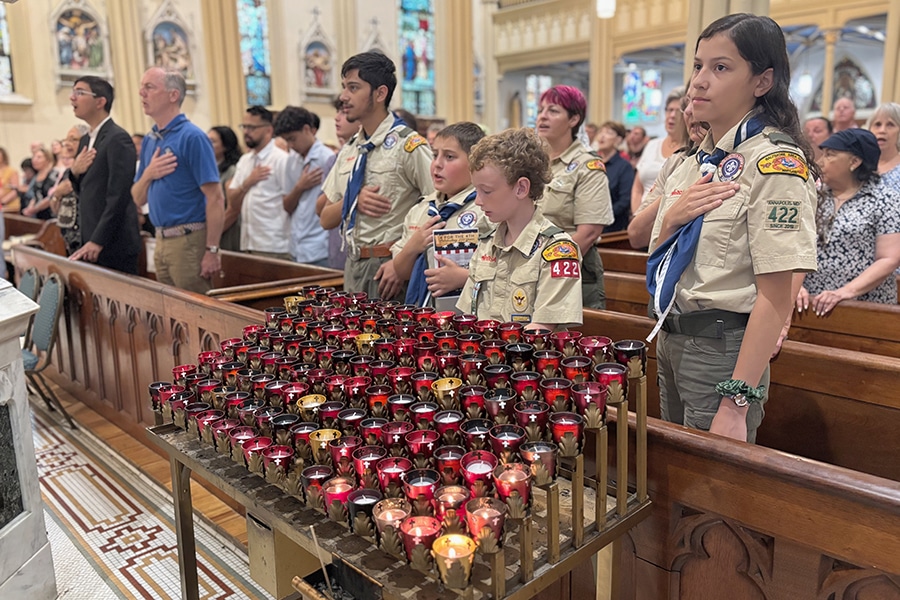
As a Catholic FIU student, I can attest to this personally. Faith-based activity is a constant, visible part of public campus life at FIU. In fact, I rarely go a single day on campus without seeing it in some form. Students can often be seen reading the Bible or walking around wearing shirts with messages like “Jesus loves you” on them. Student-led Christian clubs set up tables and host on-campus Bible studies.
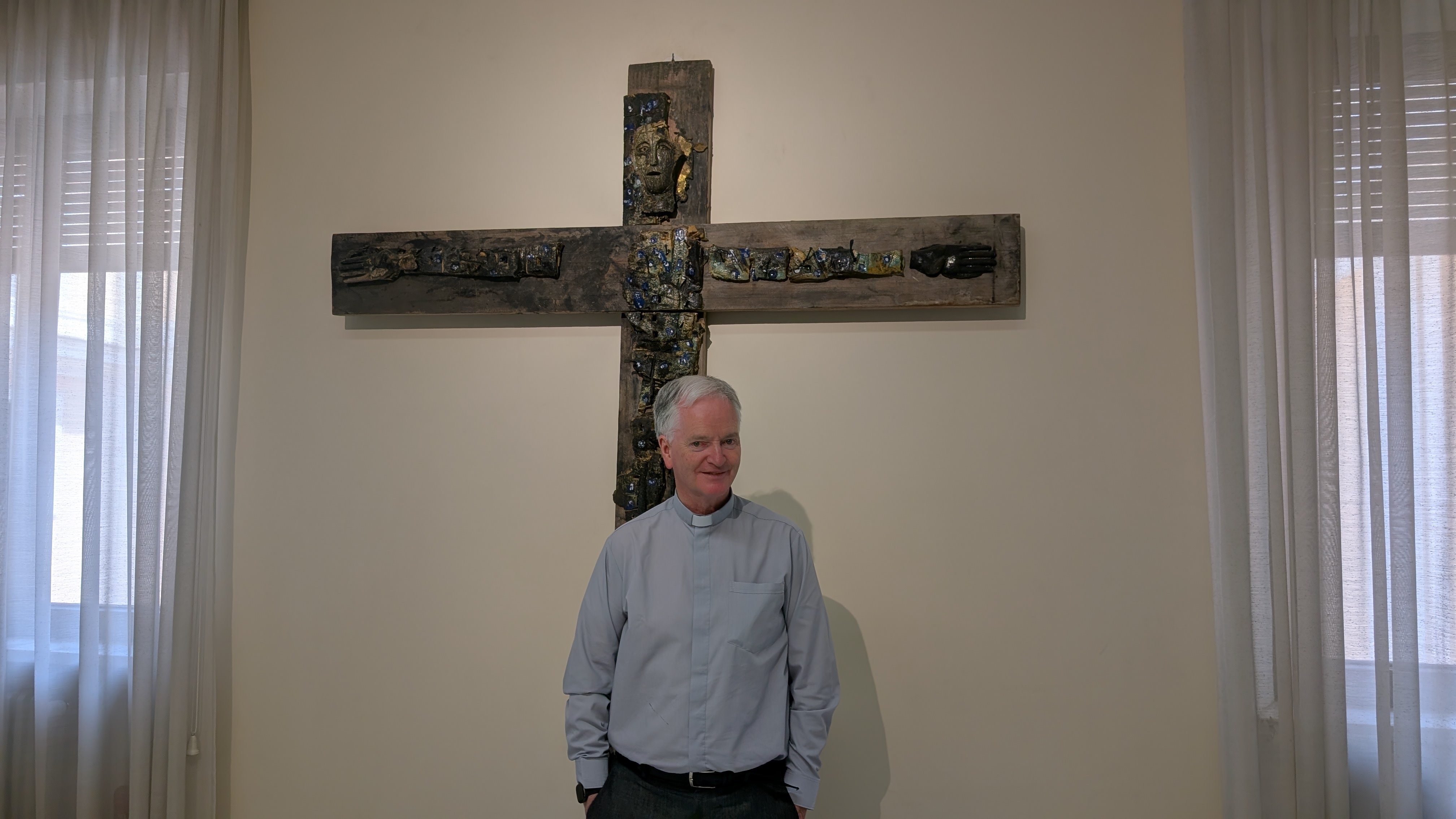
“The college years for a young adult are very formative. Students are shaping the person they intend to be, not simply intellectually and career-wise, but hopefully also spiritually,” said Fr. Luis Pavon, chaplain of our Catholic Campus Ministry at FIU.
“Faith,” he continued, “tackles the ultimate questions many students have: ‘Does God exist? What is my purpose? Who am I?’ Campus ministry provides a space for faith to be explored in community and dialogue.”
“Campus ministry has really impacted my college life, socially, spiritually, and brought such joy to my life,” said Daleisa Garcia-Pagan, a 20-year-old undergraduate junior at FIU. “I have made lifelong friendships that have been so genuine, because we love each other so much. I play sports with my ministry, learn about my faith, and I have a beautiful community surrounding me.”
Anthony Pardo-Pagan, a 22-year-old senior, said, “Campus ministry has allowed me to find people with different backgrounds to go to class with, hang out with, and live life with.”
He says a place for religion is not just important, but necessary: “If what we actually wish to achieve in universities is better individuals, that includes religious and non-religious individuals. Public universities should have a space for both.”
For Min Yue Jo, an international student from Peru, the campus ministry gave her “a sense of belonging and community” after leaving her home country to study in Miami.
She says having friends who shared her values created strong personal bonds: “These friendships are stable and unconditionally supportive, like the roots that give firmness to a tree. We’re all pursuing truth and happiness, while trying to make the most out of each opportunity.”
Both history and present-day student life show that religion is a meaningful part of the university experience. Excluding it does not make education more balanced or rational; rather, it is left sorely incomplete. Higher education isn’t just career prep, it’s a search for truth, and universities cannot afford to ignore the eternal Truth that gives meaning to our lives.
Photo by Zhanhui Li on Unsplash