















Do Whatever Inner Peace Demands

There’s a story of a man who prayed to God persistently for the same intention: “Lord, please help me to win the cash lottery.” One day, God answered his prayer with a simple question, “When in the world are you actually going to go and buy a lottery ticket?”
We can be like the man in this story when it comes to peace. We can beg God persistently to give us peace without actually doing anything to attain it. Devoid of any action on our part, our desire for peace remains just that—an empty desire.
God Desires to Give Us Peace
The book of Numbers shows us that God desires to give us peace, and He takes the initiative to offer it to us. He asks Moses to tell Aaron the exact words to say over His people, and He would bless them with peace: “The Lord bless you and keep you! The Lord let His face shine upon you and be gracious to you! The Lord look upon you and kindly give you peace!” (Nm. 6:22-27). Our God is a God of peace, and He has an intense desire to give it to us.
God’s Direct Offer of Peace
God does not only desire to give us peace; He actually does something. He gives us His very self, through the Blessed Virgin Mary, so that we might have that inner peace that comes with being His beloved children. As Scripture affirms, “When the fullness of time had come, God sent His Son, born of a woman, born under the law, to ransom those under the law, so that we might receive adoption as sons.”
Nothing in this world can give us infallible proof that we are God’s children because our peace does not come from this world—“In the world you will have tribulations” (Jn. 16:33). But God gives us proof in our hearts by the power of His Spirit, as St. Paul teaches, “As proof that you are sons, God sent the Spirit of His Son into our hearts, crying out, ‘Abba, Father!’” (Gal. 4:4-7). In every moment of our lives, the Spirit affirms us in our spiritual adoption and gives us proof that we are indeed His children. Thus, we can have the peace of God within us even in the midst of chaos in our world.
My dear brothers and sisters in Christ, it is not enough for us to beg God for peace. We must also ask ourselves what we are ready to do and give in order to experience this inner peace as God’s beloved children.
There are four things that we can do to have this inner peace:
1. We must have a loving relationship with Jesus.
Our loving Father knows and loves us as we are. As His beloved children, shouldn’t we also seek to know and love God more and more? This mutual love is the key to inner peace even in the storms of our lives.
This is the peace we find in the heart of Mary during the Nativity. She could have lost her peace when giving birth to Jesus in a manger and not having any of Joseph’s relatives in Bethlehem offering her accommodation. She could have given in to self-pity and feelings of rejection and abandonment. She could have doubted her calling.
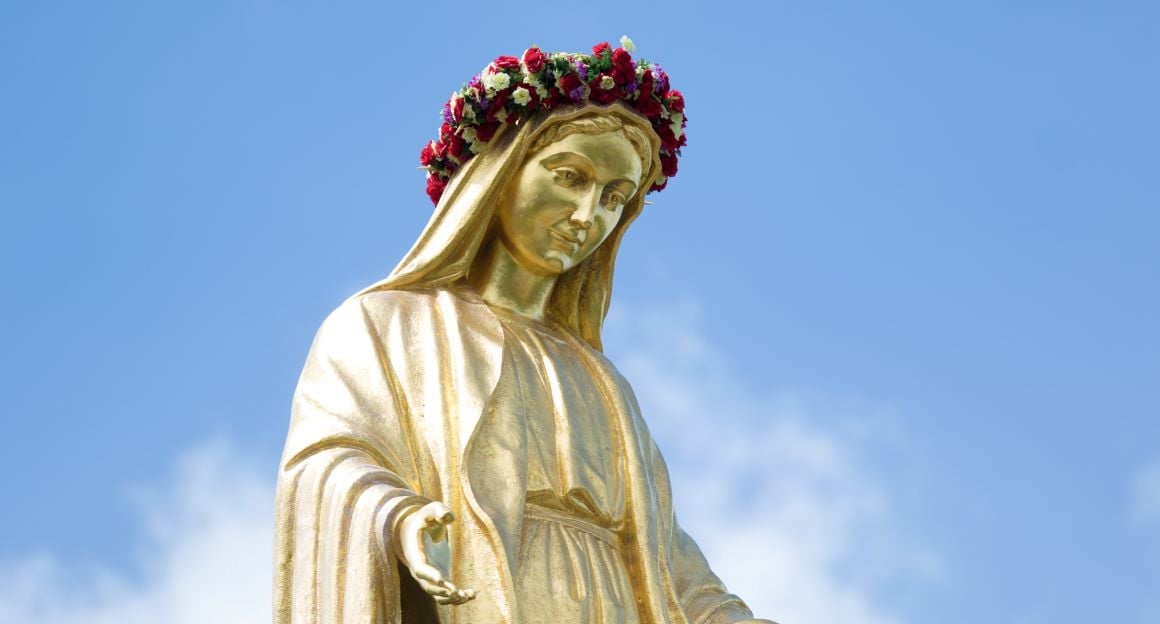
She did not do any of these things, but we are told that she “kept all these things, reflecting on them in her heart” (Lk. 2:19). She kept all these things in her heart because her heart was full of God’s love for her and her love for God. She pondered silently because she was being attentive to the many ways in which God was inviting her to advance in her love for Him in those trying moments. She was seeking to love God more in all the circumstances and conditions of her life. This is why she is truly both Mother of God and Queen of Peace.
In our prayer lives and sacramental practices, we must give priority to this relationship with Jesus Christ. We must not pray just to receive things from God or to feel good. We also do not receive the sacraments out of duty. If our spiritual practices are all directed toward knowing and loving God more, in all the circumstances of our lives, then we open our hearts to an interior peace that this world’s chaos cannot diminish.
2. We must seek to do the will of God.
The angels sang at the birth of Jesus, “Glory to God in the highest and on earth peace to people of good will” (Lk. 2:14). We have good will when we are bent on doing what is pleasing to God, giving glory to His name, and doing what is truly beneficial to our brothers and sisters—no matter the cost. We connect with the peace of God when we have this good will.
Nothing destroys inner peace like self-will. We forsake inner peace when we seek only what is pleasurable or beneficial to us without any regard for the glory of God. We are interiorly tormented when we choose to will evil for others or refuse to do for them the good that we can. The Spirit of peace flees from us when we are willfully living in sin and dominated by selfish thinking.
3. We must not be slaves of anything.
Children of God are not slaves to any created or earthly thing, as St. Paul confirms, “So you are no longer a slave but a son, and if a son, then also an heir, through God” (Gal. 4:7). We have this glorious freedom that we should not lose for anything.
We cannot be at peace when we live as if we cannot do without certain things or feel that we cannot get enough of them. That is voluntary slavery. We ruin our peace when we are slaves of sin, hurt feelings, fear, worry, pleasure, power, money, approval, etc.
4. We must share our peace with others.
What we share with others will grow. What we try to keep to ourselves will slowly fade away. We have this peace as a gift from God, and we are to share it generously with others: “Without cost you have received, without cost you are to give” (Mt. 10:8).
We strive to share this peace by living in peace with others and offering reconciliation. We readily initiate reconciliation and sacrifice our hurts for the sake of a new beginning in our relationships with others.
As we encounter Christ in each Eucharist, let us remember that He is the Prince of Peace whose desire for our peace was not just an empty desire. He gave all and continues to do everything for our peace. He continues to give Himself to us in each Eucharist so that His peace may be a reality in our lives.
Our desire for peace must not be an empty desire. By the grace of each Eucharist, let us also strive to do what we should do and give what we should give so that we have the abiding peace of God’s beloved children.
Glory to Jesus!!! Honor to Mary!!!
Image from Wikimedia Commons