
















What Gifts Do We Bring? Reflections on the Epiphany & the Magi


Each year, at the Solemnity of the Epiphany, we hear the story of the Magi visiting Jerusalem and then their discovery of Jesus in Bethlehem. As we hear this biblical episode, it is good to consider how its details can inform the daily lives and spiritual pilgrimages of average disciples, beyond the day of the solemnity. A review of the Gospel account (Mt. 2:1-12) provides valuable wisdom and practical help during any person’s quest for the Lord and ongoing relationship with Him.
“Wise Men from the East”
After announcing the time and place of Jesus’ birth, the author tells us, “wise men from the east came to Jerusalem.” These wise men—magi in Greek—were the intelligentsia of the civilizations east of Israel. They were astronomers, alchemists, and, specifically, priests within the empires that had succeeded Babylon in the Near East.
But the description of their provenance was more than a mere geography lesson. Throughout the Old Testament narrative, since the story of Genesis, “East” always had a negative connotation and signified being out of relationship with the One, True God. Adam and Eve were exiled from the eastern entrance to the Garden (Gen. 3:24), and Cain went east after he murdered his brother (Gen. 4:16). Thus, the biblical author intended to highlight the fact that these peoples were outside covenant relationship with God.
We also ought to be struck by the fact that these Magi came to Jerusalem to find new royalty. Why didn’t they go to the centers of military, empirical, economic, or intellectual power—Athens, Corinth, Carthage, or Rome? The text tells us that it had to do with the ascendant star they had noticed. Clearly, they knew the Jewish people were unique in history and the search for divinity.
Specifically, they knew to look for a star and where to go because of a biblical prophecy from centuries before: “…a star shall come out of Jacob, and a scepter shall rise out of Israel…” (Num. 24:17). But how would they have known this minute and specific line of the Torah, which was not written to their cultures? It helps to recall that Daniel, the faithful Jew who was exiled from Judah to Babylon was elevated to “chief prefect over all the wise men [magi] of Babylon” (Dan. 2:48). Surely, Daniel used his position to share the wisdom and prophecies of the Torah as the Magi engaged in scientific study and priestly activity.
These details can inspire deeper consideration. How do I seek knowledge and wisdom? Do I seek such outside the wisdom of biblical revelation and the Church? Do I find ways to engage with secular culture, even advancing and earning respect, while still maintaining familiarity with and fidelity to the biblical narrative of salvation? Essentially, the stewardship I make of my mind and actions within secular culture is a gift I can offer to the King of Kings.
Outside the Establishment
Before getting to the very heart of the episode, it is necessary to look at the response of the religious establishment who met the Magi. Herod, the king of Judea, was “troubled, and all Jerusalem with him”; thus, he assembled “the chief priests and scribes of the people,” so he could ascertain the location of this new King. A king and the cultural establishment around him would only be troubled if they perceived an impending loss of power and influence. Out of his duplicity, Herod directed them, “Go and search diligently for the child.” (From a later text [Mt. 2:16-18], we know that is why Herod acted duplicitously, intending and attempting to eradicate the newborn King.)
How does this inform the gift(s) I make to the Lord? As I engage in secular life—work, neighborhood HOAs, or holiday shopping—how do I approach others who seem to encroach on my influence, authority, and public honor? Do I think similarly about God when He presents opportunities for humility, meekness, and poverty? If I am directed by someone who seems incompetent or even duplicitous, do I continue to “search diligently” for truth and goodness in my work or civic interactions? Do I seek to act virtuously, regardless of how I might be perceived by the culture around me? Although it seems to come from unusual sources, humility is a gift we can make to the Lord, which may be most valuable of all.
Joy in God’s Presence
When the star led them at last to the Savior’s location, “they rejoiced exceedingly with great joy.” The repetition used here should jar our usual sensibilities. This was no ordinary birth: the Magi knew it, and the biblical author wanted to declare it, too. The Magi had an excitement, a holy expectation, that God was fulfilling the prophecies of old.
While they were still rejoicing, they went “into the house, [and] they saw the child.” Even though they knew not the specifics of the place or the culture, their search had led them to the Fullness of Revelation. They could continue learning and serving and celebrating, but now with the understanding that everything was ordered toward this Person.
The biblical author adds another important detail we should consider. The Magi first saw the child “with Mary.” These words add something substantial to the meaning of the passage. By them, we know that the Lord wills to reveal Himself through, and along with, His Mother. Thus, devotion to the Blessed Virgin Mary becomes an ingredient in our search for and encounter with Jesus and the gifts we make to Him.
Dispositions like these can become gifts, too. What causes me to be so joyful that I just cannot contain myself? If those things are not God, do they ultimately lead me closer to Him? Do I experience joy at knowing where to find the King of Kings, and going there? Do I make an offering to the Lord by making a pilgrimage to my parish church for Sunday Mass or an adoration chapel? Have I consecrated myself to Jesus through Mary, allowing her to foster my relationship with her Son?
Worship & Offering
At the moment they arrived in Jerusalem, the Magi announced their intention to worship the newborn King of Jews the moment they arrived in Jerusalem. After learning the Old Testament prophecies more deeply and finally gleaning His location, they traveled the short distance to Bethlehem, where “they fell down and worshiped him. Then, opening their treasures, they offered him gifts, gold and frankincense and myrrh.”
The Magi have brought themselves and the wealth of their cultures—from animals to servants to material gifts—for the purpose of worship, and there are important lessons for us. Like the Magi, our first appropriate response at God being revealed to us is adoration. Quite simply, we recognize Him as God and praise Him simply for who He is. The most proper response when we enter a church or chapel, or when the consecrated Host is elevated at Mass, is “My Lord and my God!”
Once we have recognized and encountered the Living God, who took on flesh in Jesus for us, it is natural for us to desire to return thanks in some way. That’s when we offer specific gifts, symbolized by the three-fold gifts of the Magi. The gold of the Magi represents our material resources, our possessions. The frankincense represents not only our prayers, but our prophetic mission as well. As prophets we are called to pray for the needs of others and the world; and we are called to witness to truth and goodness in a culture where it may be ill-received or rejected. So we offer the proclamation along with the rejection. The myrrh represents the tiny deaths to self—to pride, vanity, greed, or lust—called forth from us every day.
These things that occupy our mental and emotional energy—our resources, daily operations, work, travel, social interaction, prayers, and sufferings—are the gifts we lay at His feet. We make all that we are and all that we have a sacrifice of ourselves in thanksgiving for His provision. This is what makes our lives a “living sacrifice, holy and acceptable to God” (Rom. 12:1).
Conversion & Mission
After their encounter with the Newborn King, the Magi could not be the same. Thus, “they departed to their own country by another way.” Their conversion to Jesus would necessarily transform their mundane lives within their culture. In that setting, surely, they would have had opportunities to share their encounter with the Messiah and Lord. If their encounter was real and transformative, they could not have done otherwise than to take those opportunities. Thus, they became evangelists ad gentes.
Do I recognize my own conversion as a gift from God? Do I return that gift for His glory, letting others know what He has done?
After this celebration of the Epiphany—after packing away Christmas decorations and blessing our homes for 2026—let’s continue looking to the Magi for the pattern of bringing gifts to the King for the sake of the world. Let’s seek their intercession for this coming year and all the remaining years we are gifted by the Lord.
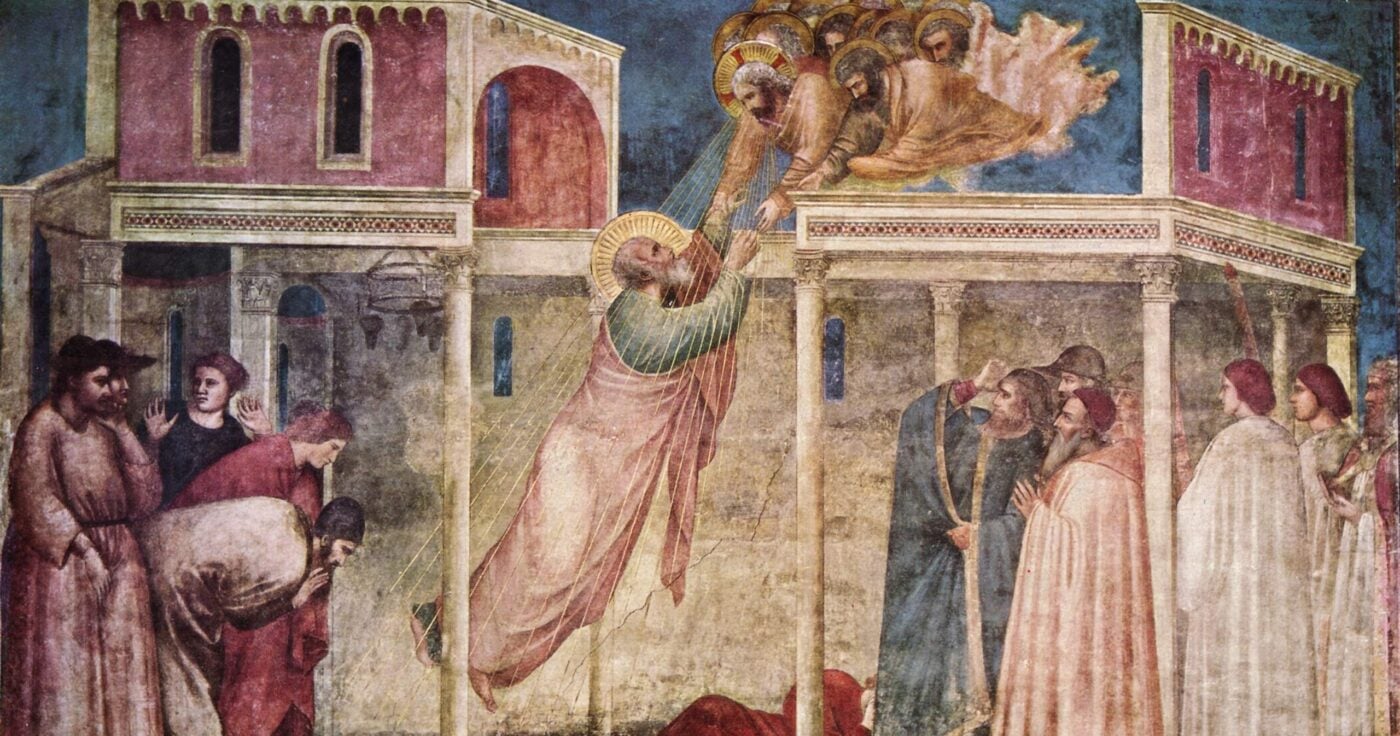
Image from Wikimedia Commons